The Quiet Machinery: Four Rules Behind Japan's Most Liveable Cities (And Why Almost No One Else Follows Them)
 Namrata Parab
- 7th Aug 2026
- 1400
- 0
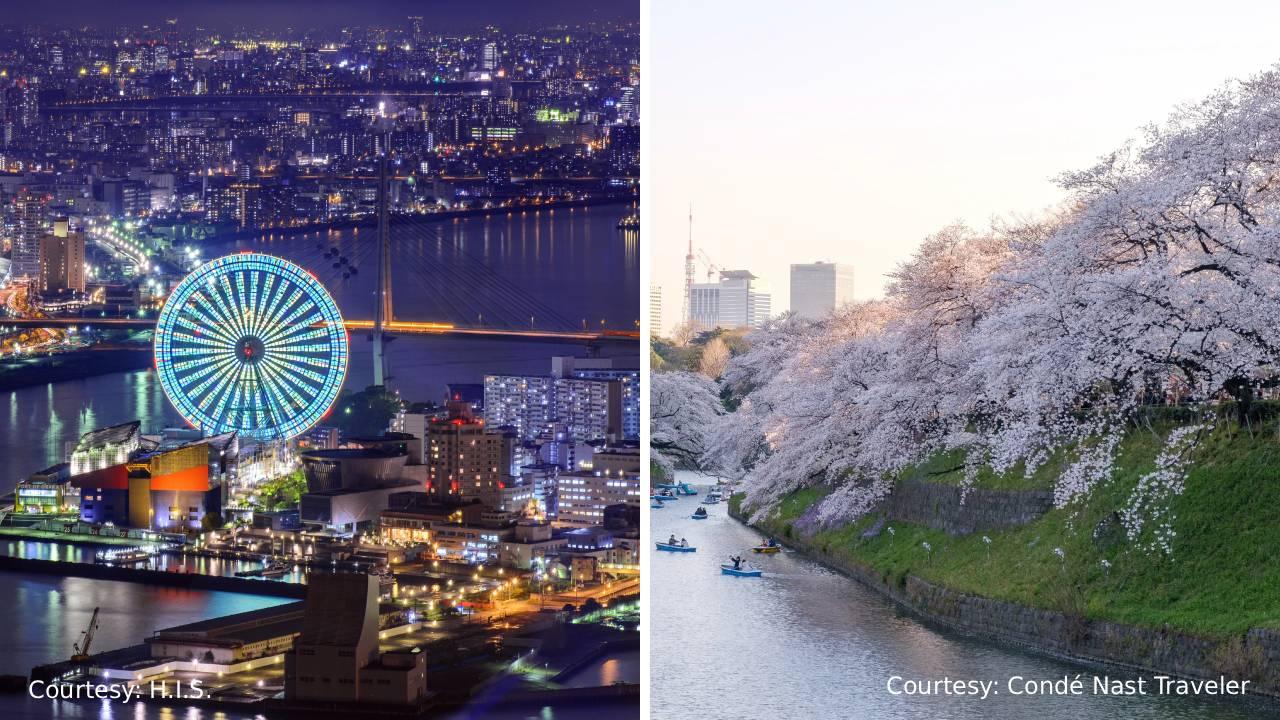
In July 2026, the Economist Intelligence Unit released its annual Global Liveability Index, and Japan did something no other Asian country managed: it placed two cities in the global top ten. Osaka held seventh place, while Tokyo, lifted by an improved culture and environment score, rose three positions to tenth, the first time the Japanese capital has entered the top ten in the ranking's history.
Both cities scored perfect marks in stability, healthcare and education, the same categories where Copenhagen and Vienna, the index's perennial leaders, earn their keep.
The instinctive explanation, the one repeated in every travel column this summer, is culture. The Japanese are tidy. The trains run on time. People queue. This explanation is comfortable, unfalsifiable and wrong. Singapore has discipline. Seoul has trains. Neither cracked the top ten. What Japan's carefully layered hospitality culture obscures is a set of structural rules, embedded in law, corporate ownership and tax treatment, that make liveability the default output of the system rather than a heroic act of governance.
For LuxuryAbode readers, this is not an abstract urbanism debate. A growing number of Indian UHNW families now hold Japanese assets: ski property in Niseko and Hakuba, central Tokyo apartments bought under the Liberalised Remittance Scheme, and in a few cases operating businesses. Understanding why these cities work is understanding why the assets in them behave differently from assets in Mumbai, London or Dubai. It is also a mirror held up to Indian urban policy, which has spent two decades trying to buy liveability through infrastructure spending while ignoring every one of the four rules below.
Here they are. None of them is a secret. All of them are politically impossible almost everywhere else.
Rule 1: Zone for nuisance, not for use
Almost every city you know practises exclusionary zoning. A plot is designated residential, or commercial, or industrial, and anything outside that designation is prohibited. Mumbai's Development Control Regulations, London's use classes, American single-family zoning: all variations on the same logic. The result is that homes, work, food and childcare are separated by law, and the car or the commuter train stitches your day back together.
Japan inverted this. The national government, not municipalities, defines just 12 zoning categories, and they are cumulative rather than exclusive. Each zone sets a maximum nuisance level, and everything below that level is permitted by right. In the most restrictive low-rise residential zone, you can still legally run a small shop, a clinic, a school or a bakery. Move one category up and small offices and restaurants appear. Only at the far end of the scale do you find zones where housing is excluded, heavy industrial being the clearest example.
Three consequences follow, and each maps directly onto an EIU scoring category.
- Daily life is walkable by construction, not by retrofit. The konbini, the clinic, the tutoring school and the standing bar are legally allowed to exist 200 metres from your door. Tokyo's famed fifteen minute city was never a plan. It is the emergent property of permissive zoning, one that has quietly reshaped how luxury housing in Tokyo has evolved over the past two decades.
- Land use decisions are depoliticised. Because zoning is national and rule based, a neighbour cannot block your building through discretionary review. There is no Mumbai style tribunal purgatory, no London style planning committee theatre. Approval for a code compliant building in Tokyo typically takes weeks, not years.
- Supply responds to demand. Greater Tokyo has consistently authorised in the region of 100,000 or more new housing starts a year in the metropolitan area, more than entire European countries. This is the single largest reason a city of 37 million has avoided a housing crisis.
The comparison that should sting in India: Mumbai's island city has arguably better raw geography for density than Tokyo Bay, yet a redevelopment project in Bhendi Bazaar or a mill land parcel in Lower Parel can spend eight to fifteen years in approvals. Even as the Mumbai Metropolitan Region drives national luxury sales, the scarcity that makes South Mumbai apartments trade at Rs 1 lakh to Rs 2 lakh plus per sq ft is not natural. It is manufactured by discretionary zoning. Tokyo simply declines to manufacture it.
Rule 2: Let the railway own the city
The second rule explains the infrastructure scores, and it is the one that most confounds foreign observers. Japan's great private railways, Hankyu and Kintetsu in Osaka, Tokyu, Odakyu and Seibu in Tokyo, are not transport companies that happen to own real estate. They are real estate and lifestyle conglomerates that happen to run trains, and the pattern has helped make Tokyo the modern city of dreams that international buyers now compete for.
The model, pioneered by Hankyu's founder Ichizo Kobayashi in Osaka over a century ago, works like this: the railway buys cheap farmland along a planned route, builds the line, then develops housing, department stores, hotels, universities and entertainment districts at the stations. The train ride is almost a loss leader. The profit sits in the land value the railway itself created. Kobayashi built the Takarazuka Revue at one end of his line and the Hankyu department store at the Umeda terminus purely to generate two directional traffic.
The consequences for liveability are profound.
- Incentive alignment. A railway that owns the neighbourhood around its stations profits when that neighbourhood is safe, clean, walkable and desirable. Maintenance is not a cost centre, it is asset protection. This is why a suburban Tokyu station forecourt looks like a managed luxury asset. It is one.
- Farebox honesty. Japan's major urban railways are profitable without operating subsidy, a claim almost no Western metro can make. Base fares in Tokyo start around 180 yen, roughly Rs 105. The system does not degrade when a government changes.
- Punctuality as a financial covenant. Average annual delay per train on the Tokaido Shinkansen is measured in seconds. When your property portfolio's value depends on the credibility of your timetable, the timetable becomes sacred.
EIU's own analyst noted that Osaka edged Tokyo on infrastructure, and framed the difference as accessibility: not just whether services exist, but whether residents can actually reach them. That is the Kobayashi model scored by an index a hundred years later, and it is part of why a new Four Seasons hotel is being developed in Osaka by operators betting on the city's continued rise.
The Indian contrast: Delhi Metro and Mumbai Metro are engineering successes financed as public works, but they capture almost none of the land value they create, private developers around stations do. GIFT City and the new Navi Mumbai corridor are the first serious Indian experiments in transit linked value capture, and both remain a fraction of the Japanese model's integration.
Rule 3: Treat housing as a consumer good, not a lottery ticket
Here is the rule that quietly underwrites the other three, and the one wealthy readers may find most counterintuitive: in Japan, a house is expected to depreciate.
Japanese homes are typically rebuilt every 30 to 40 years. A detached house's structure is often valued at close to zero within three decades, the land retains value, the building does not. The causes are layered: post war construction quality, successive earthquake code upgrades in 1981 and 2000, a tax system that depreciates buildings, and a cultural preference for new construction.
Foreign commentary usually frames this as waste. Look at what it purchases instead.
- No NIMBY class. If your home is not an appreciating asset, you have no financial incentive to block the apartment building next door. The politics of scarcity, the single most corrosive force in London, Sydney, San Francisco and increasingly Mumbai, simply never forms.
- Perpetual modernisation. A housing stock that turns over every generation is a housing stock that continuously absorbs the latest seismic, insulation and accessibility standards. Tokyo is one of the most earthquake exposed cities on Earth and one of the safest to be inside a building during one. That is not luck.
- Affordability at the centre. A new build 60 sq m apartment in a good Osaka ward can still be had in the range of 50 to 70 million yen, roughly Rs 2.9 to 4.1 crore. The equivalent centrality in Mumbai, think Worli or Prabhadevi, starts at three to four times that. It is a gap plainly visible in transactions such as the recent Rs 50 crore Raheja Artesia purchase in Worli. Median Tokyo house price to income ratios have stayed in single digits while London's and Mumbai's climbed into the teens.
The Depreciation Dividend: a working framework
This dynamic is significant enough to deserve a name, because it explains far more than Japanese house prices. Call it the Depreciation Dividend: the structural advantage a city gains when its housing stock is treated as a depreciating consumer good rather than an appreciating store of wealth. The table below sets Japan's model against the scarcity model that governs Mumbai, London and Sydney.
| Structural Variable | Depreciation Model (Japan) | Scarcity Model (Mumbai, London, Sydney) |
|---|---|---|
| How housing is treated | Consumer good, expected to depreciate | Store of wealth, expected to appreciate |
| Political incentive around new supply | Neutral to positive, no capital loss risk | Resistant, existing owners protect value |
| Housing stock age profile | Rebuilt roughly every 30 to 40 years | Decades to over a century old, rarely rebuilt |
| Building code currency | Continuously modernised via rebuild cycles | Retrofitted piecemeal, unevenly enforced |
| Price to income trajectory | Broadly stable, single digit multiples | Rising, multiples in the teens |
| Contrast row: net effect on a resident household | Housing cost is largely predictable across a working life | Housing cost compounds faster than most incomes |
The Depreciation Dividend describes the compounding liveability and affordability advantage a city earns when it treats buildings as consumable assets that expire, freeing land use decisions from the wealth preservation instincts of existing owners.
There is a portfolio lesson buried here for Indian buyers of Japanese property, and most learn it the expensive way: buy the land and the location, underwrite the building at close to zero, and treat Japanese residential yield, typically 3.5 to 5 percent gross in central Tokyo and higher in Osaka, as the return. Anyone who bought a Niseko chalet expecting Mumbai style capital appreciation, of the kind that has helped India's luxury home sales surpass Rs 7,500 crore in a single year, misunderstood the operating system of the entire country.
Rule 4: Design for the smallest user
The fourth rule has no single statute behind it. It is a design doctrine, visible everywhere once named: Japanese cities are calibrated to their most vulnerable user, and everyone else inherits the benefit.
The clearest evidence is the sight that stops every first time visitor: seven year olds commuting alone by train. This is possible because of interlocking choices.
- Streets are narrow by design, not neglect. Vast swathes of residential Tokyo and Osaka have streets of 4 to 6 metres with no footpath separation, which sounds dangerous until you realise it forces vehicle speeds below 20 km/h. Pedestrian fatality rates per capita are among the lowest of any major world city.
- Parking is unbundled from housing. To register a car in urban Japan you must first prove you own or lease an off street parking space, the shako shomei certificate, typically 20,000 to 50,000 yen a month in central Tokyo, roughly Rs 12,000 to 29,000. Car ownership becomes a priced luxury rather than a subsidised default, and streets are returned to people.
- The fine grain is protected by economics. Because zoning permits micro commerce and land parcels are small, the yokocho alley of six seat bars, the family run kissaten and the neighbourhood sento survive at the heart of two of the world's most expensive cities. Eyes on the street, at all hours, at street level. Crime statistics follow, Tokyo's homicide rate runs at a fraction of London's or New York's, and the EIU's perfect stability scores for both Japanese cities reflect it.
The luxury insight, and it is a genuine one: Japan demonstrates that the highest form of urban luxury is the absence of defensive infrastructure. No compound walls, no gatehouses, no driver waiting because the streets are unusable. In Mumbai and Delhi, the UHNW household spends heavily to insulate itself from the city. In Osaka, the city itself performs that function, for everyone, at no marginal cost. This is what a 96 out of 100 liveability score actually purchases, and it is a large part of why Japan's most expensive penthouse ever sold commanded the premium it did despite sitting outside any gated compound.
The True Cost of a Top Ten Life
What does living inside the index actually cost? Comparative figures below are indicative 2026 estimates for an affluent household, and are the kind of numbers the rankings never publish.
| Item (annual, family of four, premium tier) | Tokyo | Osaka | Mumbai (SoBo) | London (Zone 1-2) | Copenhagen |
|---|---|---|---|---|---|
| Prime 3BR rent (per month) | Rs 4.5-7 lakh | Rs 2.5-4 lakh | Rs 6-12 lakh | Rs 8-14 lakh | Rs 4-6 lakh |
| Prime purchase (per sq ft) | Rs 35,000-70,000 | Rs 22,000-40,000 | Rs 75,000-2,00,000 | Rs 90,000-1,80,000 | Rs 55,000-85,000 |
| International school (per child) | Rs 20-28 lakh | Rs 15-22 lakh | Rs 10-25 lakh | Rs 28-45 lakh | Rs 8-15 lakh |
| Private healthcare top-up | Rs 3-5 lakh | Rs 2-4 lakh | Rs 4-8 lakh | Rs 8-15 lakh | Rs 1-2 lakh |
| Car ownership (incl. parking, tolls) | Rs 8-12 lakh | Rs 6-9 lakh | Rs 6-10 lakh | Rs 10-16 lakh | Rs 9-14 lakh |
| Unlimited premium rail mobility | Rs 1-1.5 lakh | Rs 80,000-1.2 lakh | Not available | Rs 2.5-3.5 lakh | Rs 1-1.5 lakh |
The structural finding: Tokyo delivers a top ten global life at prime property prices materially below Mumbai's, in a city with triple the verified quality of public services. Osaka delivers the same index score at a further 30 to 40 percent discount to Tokyo. On a price per liveability point basis, Osaka may be the single best value premium city on Earth right now, which is precisely why Kansai property has quietly become the sophisticated Indian buyer's Japan entry point over Tokyo.
What This Means for Indian Buyers and Investors
India's own luxury real estate market is not standing still while this plays out. Mumbai's ambitions are explicit: the city's leadership has framed Mumbai's transformation into a global metropolis by 2047 as a governance project in its own right, and the four rules above are as good a scorecard as any against which to measure that ambition. The opportunity for Indian capital is not to abandon Mumbai for Osaka, but to diversify a portfolio across two genuinely different operating systems: one where value sits in land scarcity, and one where value sits in yield, stability and a governance framework that rarely surprises.
Practical notes for Indian buyers and investors
- Remittance limits. Funds for a Japanese property purchase typically move under the RBI's Liberalised Remittance Scheme, currently capped at USD 250,000 per person per financial year. A single central Tokyo apartment can require pooling remittances across family members or multiple financial years.
- Tax Collected at Source. Remittances under LRS above the prevailing threshold attract TCS, which is claimable as credit against Indian income tax liability but still requires upfront cash flow planning at the time of transfer.
- FEMA compliance. Overseas property acquisitions by resident Indians fall under FEMA's current account and capital account regulations, and buyers should document the funding trail carefully, particularly where funds are pooled from more than one family member.
- Customs and repatriation. Japan itself levies no restriction on foreign freehold ownership, but rental income and eventual sale proceeds are subject to Japanese tax at source before repatriation, and Indian buyers should factor this into net yield calculations rather than relying on gross figures alone.
- Underwrite land, not structure. Given the Depreciation Dividend discussed above, Indian buyers should value the building at close to zero within 20 to 30 years and concentrate diligence on land title, ward desirability and proximity to a well capitalised private railway line.
The Closing Argument: Liveability Is a Governance Product
Strip away the cherry blossoms and the four rules reduce to one principle: Japan made liveability a property of the system, not an achievement of the administration. Zoning is national and rule based, so it cannot be captured neighbourhood by neighbourhood. Transit is privately owned, so its quality is self financing. Housing depreciates, so no political class forms to defend scarcity. Streets serve the weakest user, so safety needs no enforcement surge.
Every one of these is replicable on paper. Almost none is replicable in practice, because each requires a political economy willing to deny homeowners windfalls, deny municipalities discretionary power, and deny the automobile its default priority. Copenhagen and Vienna, the only cities ranked above Osaka with comparable density economics, made versions of the same bargains.
For the Indian reader, the uncomfortable conclusion is that India's liveability problem is not a money problem. India is currently building metro systems, expressways and airports at a pace Japan itself would recognise from its 1960s. What it is not building is the rulebook. Until a Mumbai homeowner has no veto over the building next door and no expectation that scarcity will fund his retirement, no quantity of infrastructure spending will produce an Osaka.
For the Indian investor, the conclusion is more actionable: Japanese cities are the rare asset environment where the state's incentives, the operator's incentives and the resident's incentives point the same direction. Yields are modest, appreciation is slow, and the system is boringly, profitably stable. In a world index increasingly shaped by instability, where nearly all of the bottom ten cities have been affected by war or poverty, boring is the scarcest luxury of all.
FAQ
Why did Osaka rank higher than Tokyo in the 2026 EIU Liveability Index?
Both cities scored evenly in most categories with perfect marks in stability, healthcare and education, but Osaka earned higher infrastructure marks, which the EIU attributed to accessibility: how easily residents can actually reach services, not merely whether they exist. Osaka's compact scale and dense private rail network give it an edge over Tokyo's larger footprint.
What are the four rules behind Japan's liveable cities?
One: nuisance based national zoning that permits mixed use by right. Two: private railways that own and develop the real estate around their stations, aligning transit quality with property value. Three: housing treated as a depreciating consumer good, which eliminates NIMBY politics and keeps supply and affordability high. Four: street and parking design calibrated to the most vulnerable user, producing safety without enforcement.
Is Tokyo cheaper than Mumbai for prime property?
Per square foot, yes, often substantially. Prime central Tokyo trades broadly at Rs 35,000 to 70,000 per sq ft against Rs 75,000 to 2,00,000 plus in South Mumbai and Worli, despite Tokyo offering higher rated infrastructure, healthcare and safety. Mumbai's premium reflects regulatory scarcity, not superior liveability.
Can Indians buy property in Japan?
Yes. Japan places no nationality restrictions on freehold property ownership. Indian residents typically remit funds under the RBI's Liberalised Remittance Scheme, currently USD 250,000 per person per financial year, with TCS applying on remittances above the threshold. Buyers should underwrite Japanese buildings as depreciating assets and focus value analysis on land and location.
Which city ranked first in the 2026 Global Liveability Index?
Copenhagen topped the index for the second consecutive year, ahead of Vienna, with Melbourne third and Sydney fourth. Osaka placed seventh and Tokyo tenth, making Japan the only Asian nation with two cities in the top ten.
Why are Japanese trains so reliable?
Largely because Japan's major urban railways are private, profitable companies whose real estate portfolios depend on the credibility of their service. Punctuality is a financial covenant, not a public service target, and the model has run without operating subsidy for decades.
This article discusses property prices, yields, tax treatment and regulatory frameworks in India and Japan for general informational purposes only. Figures are indicative estimates and should not be relied upon as investment, tax or legal advice. Currency conversions, remittance limits, TCS rates and property yields are subject to change and should be independently verified with a qualified financial advisor, chartered accountant or legal counsel before making any cross border investment decision.



Comments
No comments yet.
Add Your Comment
Thank you, for commenting !!
Your comment is under moderation...
Keep reading luxury post