The Quicker Car Is Dying. The Slower One Just Got a Stick.
 Namrata Parab
- 20th Sep 2026
- 1158
- 0
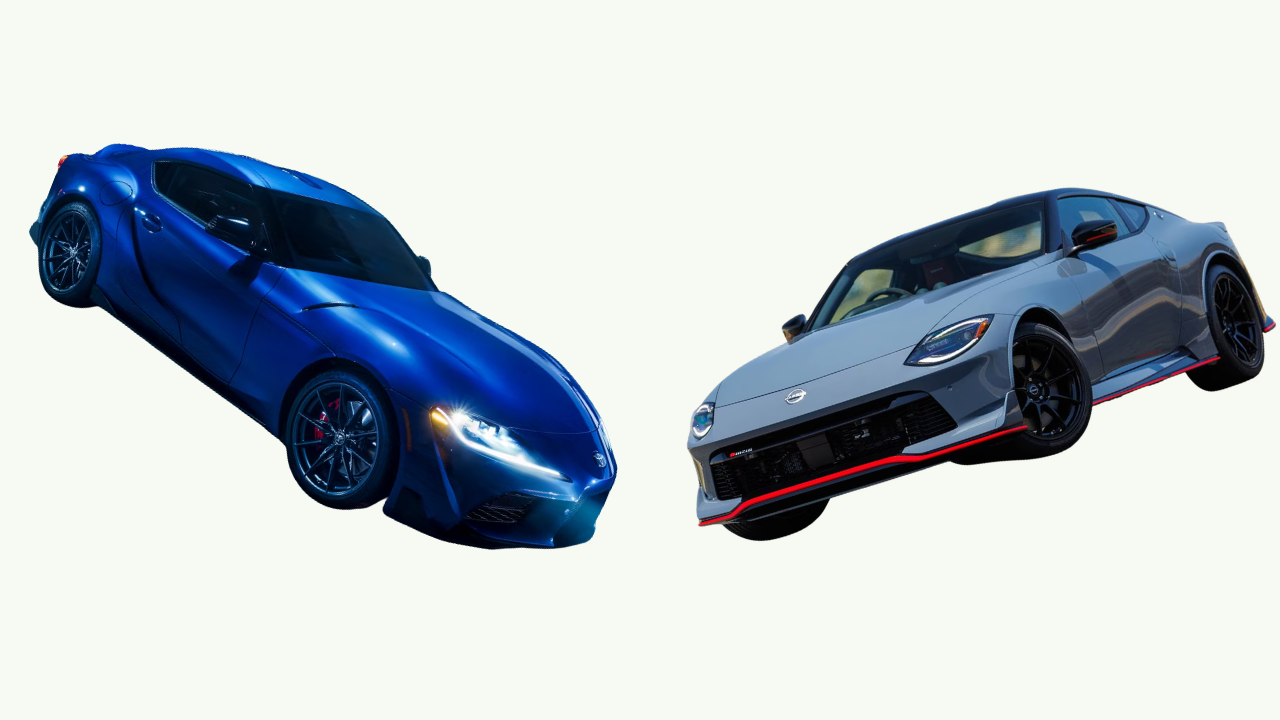
The stopwatch has a clear opinion. In MotorTrend's final comparison between the Toyota GR Supra and the Nissan Z Nismo, the Supra was the quicker car, as it had been in the two previous meetings of this generation. On the numbers, this is a settled question. The Supra is lighter, it launches harder, and its automatic is quicker still than any manual either car offers. If you buy sports cars the way you buy an index fund, by the measurable output, the verdict wrote itself.
Then read the threads, and the verdict inverts. The enthusiast conversation is not celebrating the faster car. It is celebrating the slower one, because Nissan has finally given the Z Nismo the six-speed manual enthusiasts demanded for years, and because the Supra that beat it is about to stop existing. The car that wins on paper is leaving. The car that loses on paper just became more interesting.
That inversion is the story, and it is bigger than two Japanese coupes. It is a signal about what performance is worth now, and what it is worth relative to something that used to come free with speed and no longer does: involvement. We have a name for the thing the market is quietly repricing. Call it the engagement premium.
What the Numbers Say, Precisely
Let the data stand before the argument starts.
The Supra Final Edition runs a turbocharged 3.0-litre inline-six producing 382 horsepower and 368 lb-ft, paired with a six-speed manual. Toyota quotes 3.9 seconds to 60 mph in manual form, and the automatic launch version has been recorded quicker still, around 3.7. This is a comprehensively re-engineered send-off, not a sticker package: updated dampers, revised camber front and rear, stiffer bushings and mounts, added bracing and stabilisers, a retuned rear differential and electric power steering, and enlarged Brembo rotors, on matte-black 19-inch wheels with a GT4-style aero kit. It is a farewell in the same spirit as Aston Martin's memorable farewell for the final V12 Vantage.
The 2027 Z Nismo answers with a twin-turbocharged 3.0-litre V6 making 420 horsepower and 384 lb-ft, twenty horsepower and thirty-four lb-ft above the standard Z. It adds firmer suspension, lighter 19-inch wheels, larger brakes and revised aero under a 2027 facelift. Crucially, the manual is new for 2027; until this year the Nismo was automatic-only. In manual form the Z Nismo posts a mid-four-second 0-60, with the automatic dipping just under four, numbers that would still trail a car built for the road like Porsche's 911 GT3 RS with its advanced racing technology.
| Toyota GR Supra Final Edition | Nissan Z Nismo (2027) | |
|---|---|---|
| Engine | Turbo 3.0L inline-six | Twin-turbo 3.0L V6 |
| Power | 382 hp / 368 lb-ft | 420 hp / 384 lb-ft |
| 0-60 mph (manual) | ~3.9 sec | Mid-4 sec |
| 0-60 mph (automatic) | ~3.7 sec | Just under 4 sec |
| Transmission | 6-speed manual (auto available) | 6-speed manual (new for 2027) or auto |
| Approx. price | ~$69,100 (Final Edition) | Nismo tier (mid-$60Ks) |
| Status | Production ending spring 2026 | Facelifted, continuing |
So the Nismo has more power and loses the sprint, because the Supra is lighter and better sorted. And in both cars the automatic is the quicker way to the horizon. The fastest possible version of this segment is a Supra you shift with paddles, which is precisely the car the enthusiast conversation is least excited about.
Stopwatch Versus Engagement: Two Products Wearing One Body
The debate does not resolve because the two cars are judged on two different value axes, and the market has quietly stopped agreeing on which one matters.
| Axis | What it rewards | Which car it favours |
|---|---|---|
| Stopwatch | Weight, launch, gearing, aero | Supra (especially automatic) |
| Engagement | Shift feel, tactility, agency, ritual | Z Nismo manual (by acclamation) |
| Scarcity | Rarity, finite supply, cultural moment | Supra Final Edition (ending) |
| Continuity | Future support, updates, a lineage | Z (facelifted, ongoing) |
A modern automatic in a performance car is not a compromise anymore. It shifts faster than any human, never misses, and posts the lower number every time. For two decades that fact was used to retire the manual as nostalgia for people who could not accept progress. The current moment reveals that a meaningful slice of buyers were never optimising for the number. They paid for the number as a proxy for a feeling, and now that the number has been fully divorced from the feeling, they want the feeling back and will give up the number to get it.
That is the sentence that matters: they will surrender measurable speed for agency. A manual is slower, more fallible, and makes the driver do work a computer does better. Those are not bugs being tolerated. They are the product.
The Engagement Premium, Defined
The engagement premium is the value a buyer assigns to mechanical involvement over measured performance: the amount of speed, convenience or money they will trade for tactility, agency and the memory a machine creates by demanding something of them. It is why a slower manual can command more desire, and eventually more money, than a quicker automatic of the same car, a logic collectors already apply to the manually wound Caliber 617 Tutima Patria timepiece.
Every luxury is defined by scarcity, and scarcity moves. When speed was hard to buy, speed was the luxury. Electrification has made rapid acceleration close to free: a mid-tier electric crossover out-accelerates most combustion sports cars of a generation ago, silently, requiring nothing of the driver. When a capability becomes abundant and effortless, it stops signalling anything. Zero-to-sixty is now a commodity spec printed on family SUVs.
What has become scarce is the opposite: an experience a faster processor cannot deliver, that requires the human to participate, and that produces memory precisely because it demanded effort. A manual gearbox is one of the last mass-market objects that trades convenience for involvement on purpose, the same instinct behind why Porsche keeps building a car like the 911 Sport Classic as a journey back into the future. It is friction sold as a feature. In an era engineering every interaction toward frictionlessness, deliberate friction is a luxury position, and a rare one, because manufacturers keep deleting it.
This reframes Nissan's move as shrewd rather than sentimental. Nissan did not out-engineer Toyota. It did something cheaper and, in this climate, smarter: it added back the one variable the segment is short of. The Z Nismo did not win the test. It made itself the car the conversation wants, which for a product fighting on culture rather than lap times is the win that pays.
The Supra's Exit Is the Other Half of the Trade
Toyota has confirmed that fifth-generation Supra production ends in spring 2026. A sixth generation is considered likely, and Toyota has said it wants a shorter gap than the two decades between the MkIV and MkV, but nothing is announced. That uncertainty does two things to the Final Edition at once.
It makes the Final Edition the definitive last statement of a specific car: the best-developed MkV, released as the door closes. Finite supply, a clear cultural end-point, and genuine mechanical merit are the three ingredients that turn a used car into a collectible rather than a depreciating asset, the same three ingredients behind why Bugatti limited the Chiron Super Sport to nine exclusive units. The Final Edition has all three. Expect well-kept, low-mileage manual examples to hold, and plausibly appreciate, while ordinary MkVs settle into the softer market of an orphaned model with no showroom successor to anchor them, a pattern already visible in how the Toyota 2000GT became the most expensive Japanese car ever sold.
The Z carries the reverse profile: continuity, a 2027 facelift, a future. That is worth a great deal to someone who wants a car to own and support for a decade, and it is exactly why the Z is less likely to become a sought-after object. Scarcity and continuity are opposite virtues, and the two cars have neatly divided them.
The Ownership Ecosystem the Spec Sheet Ignores
The purchase price is the smallest decision a serious owner of either car makes. The engagement premium extends past the driveway into an ecosystem the brochure never mentions, and it is where the real annual spend sits.
A finite, appreciating manual like the Final Edition changes the insurance question from replacement cost to agreed value, the domain of specialist collector insurers who underwrite limited-mileage classic policies rather than standard motor cover. Preservation becomes an active cost: climate-controlled, security-graded vaulting keeps a low-mileage car genuinely low-mileage, and the storage sector serving watch and car collectors has grown precisely because the assets inside now behave like assets, a world profiled in the list of the biggest luxury car collectors in the world. The manual itself demands a skill the automatic outsourced, which is why performance driving academies and circuit days are where owners of these cars actually extract the engagement they paid for. And the consumables are not incidental: precision tyres and brake packages are the difference between a car that flatters and one that frightens, and driving apparel has quietly become its own category.
None of this is a car cost. It is the cost of the engagement premium being real. It is also, for the brands operating in those categories, the audience they most want to reach, and the context in which reaching it carries weight.
What the Genuinely Car-Literate Buyer Should Take From This
The reflex read is "buy the Supra as an investment, drive the Z as a tool." That is too clean, and it misreads the lesson.
The lesson is that the axis you optimise on should be the one you will still feel in five years. Nobody remembers a tenth of a second. People remember the road they drove, the box they rowed through, the day the machine asked something of them and they answered, the same feeling that keeps India's luxury vintage car collectors chasing older machines. If a car is bought to be driven and kept, engagement is not the soft factor to trade away for the hard number. It is the durable one. The number is what depreciates.
For the collector, the Final Edition is the correct acquisition, not because it is quickest but because it is finite, finished, and its story is now closed, which is what makes an object collectible, much as a house's own legend can drive itself into history the way Ferrari's has. For the driver, the manual Z Nismo is the more honest daily companion, slower on command and richer in the hand. The mistake is buying the fast automatic version of either and expecting it to mean something later. It will be quicker than both, and it will be the one nobody argues about, because there is nothing at stake in it.
The stopwatch will keep declaring winners, the same way the best-selling car brands of any given year keep topping the sales charts. It is measuring the thing that stopped being scarce. The cars people will still be talking about are the ones that made them do the work.
Frequently Asked Questions
Is the Nissan Z Nismo faster than the Toyota Supra?
No. In MotorTrend's final comparison the Toyota GR Supra was the quicker car, as in the two previous meetings of this generation. Despite the Z Nismo's higher output (420 hp versus 382 hp), the Supra is lighter and better sorted. In both cars the automatic is quicker than the manual, so the single fastest configuration in the segment is an automatic Supra.
Does the Nissan Z Nismo come with a manual?
Yes, from the 2027 model year. The Z Nismo previously came only with a nine-speed automatic; Nissan added a six-speed manual for 2027, answering years of enthusiast demand. The manual is marginally slower than the automatic but is the version driving the enthusiast conversation.
When does the Toyota GR Supra end production?
Toyota has said fifth-generation (MkV) Supra production ends in spring 2026, after the 2026 model year. A sixth-generation Supra is considered likely, and Toyota has signalled it wants a shorter wait than the twenty years between the MkIV and MkV, but no successor is officially announced.
Should I buy a manual or automatic sports car?
For pure acceleration and lap times, the automatic is quicker and more consistent in nearly every modern performance car. For driver involvement, tactility and long-term enjoyment, the manual delivers what the automatic cannot, at the cost of some measured speed. As electrification makes rapid acceleration commonplace, mechanical involvement is increasingly the scarcer, more distinctive choice: the engagement premium.
Is the Supra Final Edition a good collectible?
It has the classic ingredients: finite supply, a clear end-of-production moment, and real mechanical merit (comprehensive chassis and brake upgrades over the standard car). Well-kept, low-mileage manual examples are the most likely to hold or gain value, especially as the MkV becomes an orphaned model with no showroom successor currently confirmed.
Why do enthusiasts prefer a manual over a faster automatic?
Because they are optimising for engagement, not the stopwatch. A manual demands skill, offers agency, and creates memory precisely because it is harder. When fast acceleration is cheap and effortless everywhere, the involvement of shifting yourself becomes the scarce, desirable quality, and many buyers will trade measurable speed to keep it.
Nissan Z Nismo vs Supra: which is better to drive?
The Supra is objectively quicker and more precise on a stopwatch. The manual Z Nismo is the enthusiast favourite for engagement, agency and the ritual of shifting yourself. "Better" depends on what you value: the finished, faster, soon-to-be-rare Supra, or the slower, continuing, more involving Z.
Comments
No comments yet.
Add Your Comment
Thank you, for commenting !!
Your comment is under moderation...
Keep reading luxury post