The Patience Premium: What Mumbai's Bonsai Circle Reveals About Luxury in a Vertical City
 Namrata Parab
- 25th Jul 2026
- 1305
- 0
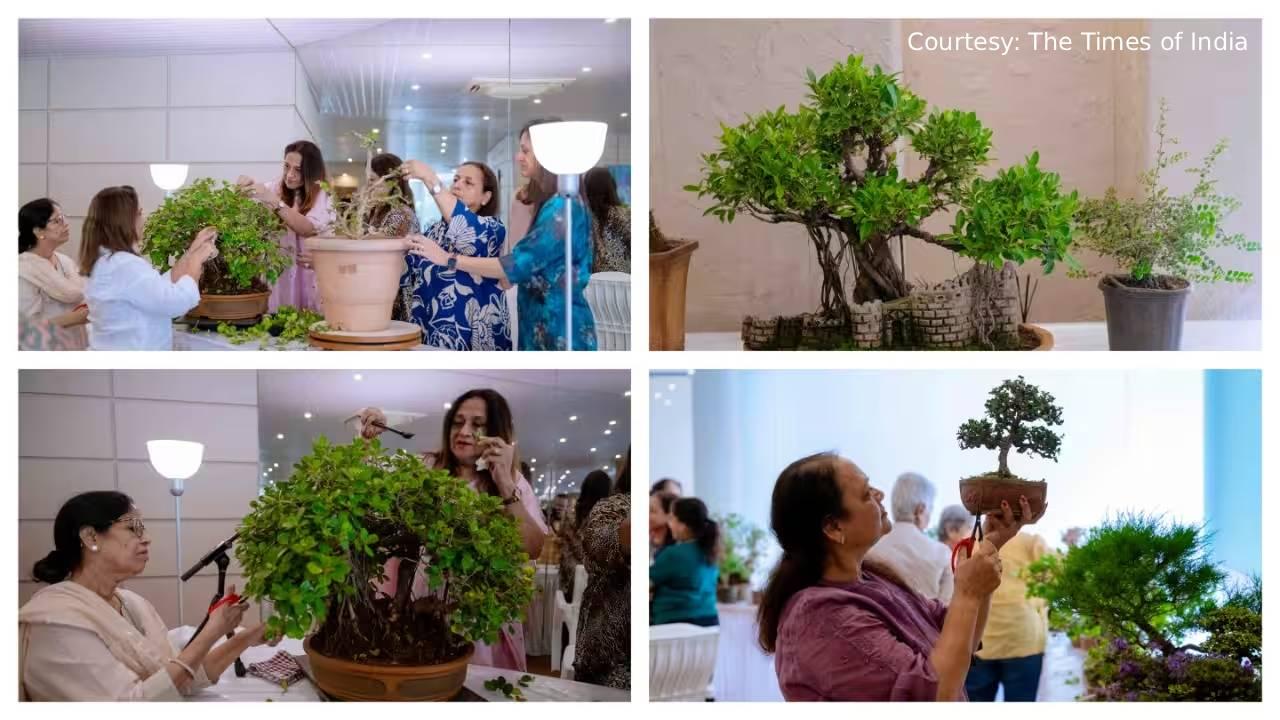
Mumbai has the least open space per person of any major Indian city. It also has India's oldest and deepest bonsai establishment. That is not a coincidence, and it carries a lesson for how ultra-luxury housing in this city should be designed, priced and sold.
The Signal
A July 2026 Mumbai lifestyle feature reported something that reads as a soft human-interest story and is actually a market indicator: a monthly, home-hosted bonsai circle that has been running quietly for decades, drawing surgeons, physiotherapists, engineers and industrial family members into a shared practice of pruning, wiring and repotting miniature trees. Members host in rotation. Visiting masters from abroad teach day-long workshops. Nobody is selling anything.
Read that against what else is happening on the same pages of the Indian lifestyle press: sourdough starters, slow fermentation, hand-thrown ceramics, single-estate coffee. A pattern is forming across Indian affluence, and it is not about acquisition. It is about elapsed time as the scarce ingredient, the same instinct visible in the wider turn toward what sustainable luxury actually means today.
For a city where the binding constraint on the wealthy is not money but square feet and daylight, this matters commercially.
Why Mumbai, of All Cities
| Metric | Mumbai | Benchmark |
|---|---|---|
| Accessible public open space per capita | Approx. 1.1 to 1.28 sq m | WHO reference: 9 sq m |
| URDPFI Indian planning guideline | 10 to 12 sq m desirable | Mumbai delivers roughly a tenth |
| Open space as share of BMC land use | Approx. 3.7 per cent | DP 2034 targets a material increase |
| Navi Mumbai comparison | Approx. 3.9 sq m per capita | Roughly 3x island city |
| Public open space in ORF assessment | 1,538 hectares total | 43 per cent municipally owned |
The wealthy do not solve this with a park. They solve it privately, on a balcony, a terrace, a deck. It is why the highest-value addresses in the city, the billionaire's row along Altamount Road, compete as hard on private outdoor volume as on floor area. The only form of horticulture that produces a serious, museum-grade, decades-deep result inside 40 square feet of a Worli or Malabar Hill terrace is bonsai.
Bonsai is, quite literally, the highest-yield green asset per square foot available to an apartment owner in a land-constrained city. That is the whole thesis of this article, and it speaks directly to the buyers eyeing the redefinition of luxury real estate on Malabar Hill.
The Institutional Map Most People Do Not Know Exists
Mumbai is not a bonsai hobby town. It is the historical centre of Indian bonsai, with continuous institutional history running back nearly five decades.
| Body | Base | Founded / lineage | Significance |
|---|---|---|---|
| Bonsai Study Group, Indo-Japanese Association | Mumbai | Founded 1979 by Jyoti and Nikunj Parekh | The parent lineage of Indian bonsai teaching, with chapters across India |
| India Friendship Bonsai Society (IFBS) | Mumbai | President Harsha Hinduja, Vice President Urvashi Thakkar | Runs the annual Bonsai and Ikebana exhibition, 25th edition staged in 2026 |
| Indian Bonsai Association | Delhi | Founded 9 March 1981 | Approx. 200 active members, runs the Bonsai Park at Lodhi Garden, opened April 1996 |
| Bonsai Park, Lodhi Garden | Delhi | With New Delhi Municipal Council | India's most visible public bonsai collection |
| Private terrace collections | Mumbai and Karjat / Panvel belt | Various | Individual holdings running past 1,000 trees, split between city terraces and farm plots |
Two things stand out for anyone in real estate.
First, the practice is home-hosted, not club-hosted. The venue is the member's residence. That makes the private terrace an item of social infrastructure, not just amenity. First-generation Indian bonsai was documented before most Western tropical bonsai literature existed: a Mumbai-authored book on tropical bonsai appeared in 1977, at a time when the global canon was still overwhelmingly temperate and Japanese. India was not a late adopter here. It was early, and then quiet. That depth of local craft tradition sits comfortably beside the country's other people at the forefront of sustainable luxury.
Second, the serious collections are two-site. City terrace for display and daily attention, land parcel 70 to 90 km out for growing stock, recovery and heavy work. That is a second-home use case almost nobody in the Karjat, Panvel, Khopoli and Alibaug belt is currently marketing to, even as the evolution of luxury real estate in Alibaug accelerates.
What Actually Creates Value in a Bonsai
Bonsai is one of the few collectibles where the raw material is nearly free and the entire value is deposited time and judgement.
| Value driver | What it means | Why it cannot be shortcut |
|---|---|---|
| Trunk girth and taper | Thickness at base, narrowing cleanly to apex | Girth is grown in the ground over years, not in a pot |
| Nebari (surface root flare) | Radial roots gripping outward at soil level | Built through repeated root pruning across repotting cycles |
| Ramification | Fine secondary and tertiary branching | Each division needs a full growth-and-cut cycle |
| Deadwood: jin and shari | Jin is a stripped, bleached deadwood branch or apex; shari is deadwood carved along the trunk | Reads as centuries of weather; done badly, it is irreversible damage |
| Pot pairing | Depth, glaze, era and proportion of the container | Antique pots alone have traded in the six-figure dollar range |
| Provenance | Documented lineage of who trained the tree | Cannot be manufactured retroactively |
| Health | Vigour, leaf size reduction, absence of scars | A stressed tree loses years, not weeks |
The Global Price Ceiling
| Reference point | Reported figure |
|---|---|
| Centuries-old Japanese white pine, International Bonsai Convention, Takamatsu | Approx. USD 1.3 million |
| Chinese juniper, 250-plus years, private sale | Reported at approx. USD 2.5 million |
| Juniper, Taikan-ten, Kyoto | Approx. USD 350,000 |
| Antique bonsai container alone | Approx. USD 150,000 |
| Nursery-grade starter material, global | Approx. USD 20 upward |
The spread between the last line and the first is the clearest illustration of the argument: identical biology, six orders of magnitude of value, and the differentiator is decades. It is a logic that will be familiar to anyone who follows a serious auction of antiques and vintage collectibles, where age and provenance carry the price.
Indian Time Horizons, Indicative
| Species commonly used in Indian tropical conditions | Years to a credible, exhibitable specimen |
|---|---|
| Ficus benjamina and Ficus microcarpa | 5 to 8 |
| Adenium (caudex-led) | 4 to 6 |
| Bougainvillea | 6 to 10 |
| Casuarina | 8 to 12 |
| Ficus religiosa (peepal) | 8 to 12 |
| Tamarind | 10 to 15 |
Ranges are indicative and assume nursery or field-grown starting stock rather than seed. Mumbai's humid tropical climate is a genuine structural advantage: tropical species work outdoors year-round, and the monsoon opens a forgiving repotting and recovery window that temperate collectors do not get.
The LuxuryAbode View: The Patience Premium
We are naming the mechanism at work here, because it explains behaviour across several unrelated luxury categories at once.
| Framework | What accrues value | Why money cannot compress it |
|---|---|---|
| The Patience Premium | Value per year held, not per square foot occupied | The timeline is the product, and time cannot be bought forward |
| Space-Consuming Luxury (contrast) | Value per square foot occupied and displayed | Constrained absolutely by floor area in a vertical city |
The Patience Premium: in cities where floor area is the binding constraint on wealth display, discretionary spending migrates from goods that consume space to goods that consume time, so value accrues per year held rather than per square foot occupied, and the resulting objects become status-legible precisely because money cannot compress the timeline.
The Patience Premium explains why a Malabar Hill collector will spend twenty years on a tamarind that occupies less area than a bar cart, why sourdough became an affluence marker rather than a thrift one, and why the resale of "instant" luxury underperforms. It is the domestic, terrace-scale counterpart to the barefoot, slow-life philosophy of luxury that resorts have monetised for years.
Three consequences follow.
One: patience assets are illiquid by construction. India has no transparent secondary market for bonsai, no auction house category, no standardised provenance register. Trees move through relationships and inheritance. Anyone framing bonsai as an investment in the Indian context is mis-selling. It is a store of time, not a store of value.
Two: the risk profile is inverted. A watch survives neglect. A tree does not. The Patience Premium asset class carries total-loss risk from three weeks of travel and one careless caretaker, which is exactly why the practice clusters in households with staff continuity.
Three: it is a design brief, not a lifestyle note. If a project's residents will hold patience assets, the building has to support them physically. Most do not, even those marketed as garden townhouses in the heart of Worli.
The Bonsai Test: Five Questions for Any Luxury Residential Project
A second LuxuryAbode framework, offered as a practical audit. Any project claiming a green, wellness or biophilic proposition should pass all five. Most Mumbai towers pass one or two.
- Load and drainage. Can the terrace or deck carry saturated ceramic containers and shallow benching, and does it drain without pooling against the slab?
- Light and wind. Does the outdoor area receive four-plus hours of direct light, and is it screened against the high-floor wind shear that desiccates fine foliage in a single afternoon?
- Water at the point of use. Is there a plumbed outdoor tap and a hose point, or is the resident carrying cans through a living room?
- Continuity of care. Does the building offer a horticultural service, or at minimum a staff protocol, that keeps living collections alive while owners travel?
- Room to host. Can the outdoor space seat ten to twelve people around a work surface? This is the question that converts an amenity into a community.
Developers spend crores on a fifth gymnasium and nothing on any of the five. A single serviced "slow craft" terrace, with benching, water and shade, is a cheaper differentiator than another infinity edge, and it aims at the exact demographic that buys 8,000 sq ft, the same demographic driving the continued rise of luxury home sales in South Mumbai.
Facts on Record
- Mumbai's accessible public open space per capita sits near 1.1 to 1.28 sq m, against a WHO reference point of 9 sq m.
- Indian planning guidance (URDPFI) treats 10 to 12 sq m per person as desirable.
- The Bonsai Study Group of the Indo-Japanese Association was founded in Mumbai in 1979.
- The Indian Bonsai Association in Delhi was founded on 9 March 1981 and maintains the Bonsai Park at Lodhi Garden, opened April 1996.
- The India Friendship Bonsai Society staged the 25th edition of its annual Bonsai and Ikebana exhibition in Mumbai in 2026, displaying Indian-grown material aged roughly 10 to 35 years, including a 35-year-old bougainvillea and a 30-year-old ficus.
- The highest publicly reported bonsai sale is approximately USD 1.3 million, for a centuries-old Japanese white pine at the International Bonsai Convention in Takamatsu, Japan.
- A correction worth carrying: the visiting British teacher frequently referred to in Indian coverage as "Sir Peter Chan" has not been knighted. Peter Chan was appointed MBE in the King's Birthday Honours of June 2025, for business, entrepreneurship and bonsai. He was born and raised in India, took an electrical engineering degree at IIT Kharagpur in 1962, moved to Britain in 1963, founded Herons Bonsai in 1986, has won 21 RHS Chelsea gold medals, and has taught in Kolkata, Delhi, Mumbai and Karjat. He is an IIT Kharagpur Distinguished Alumnus. The India connection in Indian bonsai's most-cited foreign teacher is not incidental.
The Counterview
Three honest caveats, because the romance around slow craft usually goes unchallenged.
Bonsai in India is a thin, undocumented market. No index, no auction record, no insurance category, no standard condition report. Valuation is conversational.
It is labour-dependent in a way that is quietly class-bound. Daily watering, seasonal repotting and travel coverage require either the owner's presence or paid continuity. The practice's "meditative accessibility" framing understates its real operating cost.
And the therapeutic claims outrun the evidence. Horticultural engagement has documented associations with reduced stress, but bonsai specifically has no meaningful clinical literature. It is credible as a practice, not as a prescription.
FAQ
How long does a bonsai take to look mature?
In Mumbai's tropical conditions, a ficus can read as a convincing bonsai in five to eight years from nursery stock. Trunk girth, the single most valued trait, is developed in open ground before potting, so serious growers run a second growing site outside the city.
Is bonsai a good investment in India?
No, not on current market structure. There is no secondary market, no provenance registry and no auction category. Treat it as a practice with cultural value, not a financial asset.
Where can I learn bonsai in Mumbai?
The city's established route is through member societies rather than commercial classes: the Bonsai Study Group of the Indo-Japanese Association and the India Friendship Bonsai Society both run workshops and annual exhibitions, and meetings are frequently hosted in members' homes.
Which species suit Mumbai's climate?
Tropical and subtropical species that stay outdoors year-round: ficus varieties, bougainvillea, adenium, casuarina, tamarind, premna and Wrightia. Temperate pines and maples struggle without intervention.
What are jin and shari?
Jin is a deliberately stripped and bleached deadwood branch or apex. Shari is deadwood carved or exposed along the trunk. Both simulate the weathering of an ancient tree and are considered advanced techniques because errors cannot be undone.
Does a bonsai need a balcony, or will a window do?
Tropical bonsai in India needs genuine outdoor exposure. Indoor-only placement produces weak growth, elongated internodes and eventual decline. Four or more hours of direct light and wind protection is the practical minimum.
What is the difference between bonsai and penjing?
Penjing is the older Chinese practice from which bonsai descends, generally more landscape-oriented and less rule-bound. Bonsai is the Japanese codification, focused on the single tree. Saikei, tray landscapes, sits between the two.
Why do developers care about any of this?
Because it identifies a buyer requirement that current luxury specifications ignore. Load-rated, plumbed, wind-screened outdoor space with service continuity is a low-cost differentiator aimed at exactly the segment buying the largest units.
Disclaimer: All figures, valuations, open-space statistics, price ceilings and time horizons in this article are indicative and compiled at the time of writing from publicly available sources, planning documents and reported sales. Bonsai valuations and reported sale prices are drawn from public accounts and are not independently verified. As stated in the text, bonsai is not a regulated or transparent asset class in India and nothing here constitutes investment or financial advice. Open-space and planning figures should be confirmed against the current BMC Development Plan and municipal data. This article is intended for general informational purposes only.


Comments
No comments yet.
Add Your Comment
Thank you, for commenting !!
Your comment is under moderation...
Keep reading luxury post