The Leela Ambience Gurugram Decoded: Inside the Sustainability Award That Sets India's New Luxury Benchmark
 Namrata Parab
- 25th Apr 2026
- 2144
- 0

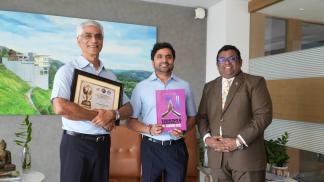
There is a particular paradox at the centre of contemporary Indian luxury. The buyer is more affluent than ever, the offerings more polished than ever, the hotels more architecturally accomplished than ever - and yet the conversation around them has shifted, almost imperceptibly, from what they offer to what they leave behind. Quiet asks have replaced loud ones. Where is the water from. What happens to the food that wasn't eaten. What is the air, really. The Leela Ambience Gurugram, recently recognised among the top luxury hotels for sustainability in India, has become one of the few properties in the country whose answers can withstand sustained scrutiny.
The recognition is not ornamental. It sits on a foundation of hard certifications that the hotel has spent years assembling: dual Platinum honours from the Indian Green Building Council - one for Green Existing Building, one for Net Zero Waste to Landfill - and an ISO 14001:2015 certification that places its environmental management system within a globally audited framework. Add to that membership of Preferred Hotels & Resorts' Beyond Green portfolio, a place on the International Sustainability Awards 2024 list of the Top 100 Sustainable Hotels & Resorts of the World, and gold and platinum accolades from the SEEM National Energy Management Awards, and a pattern emerges. This is not a hotel that has discovered sustainability as a marketing language. It is a hotel that has rebuilt its operating system around it. For broader context on where this property sits within the country's hospitality elite, our roundup of the top luxury hotels in India is a useful reference point.
The Setting: Why Gurugram Is the Hardest Place to Do This
Sustainability is easier where the climate forgives. Coastal Goa, hill-station Coorg, the upper Himalayas - none of these geographies make a hotel work to be green. Gurugram is the opposite proposition. The city's air quality index sometimes crosses 400 between October and February. Groundwater tables have been falling for two decades. Construction debris is the regional aesthetic. To run a luxury hotel here that meets serious environmental certification is, in operational terms, like running a couture atelier inside a steel mill.
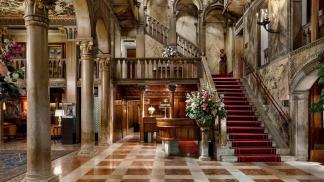
The Leela Ambience Gurugram begins with one accident of geography that it has used with considerable intelligence. The 412-key property sits on Ambience Island, eight kilometres from Indira Gandhi International Airport, but its real privilege is what it faces: a 1,000-acre protected forest, a green lung that no amount of capital could now replicate within the NCR. The architecture orients toward this forest. Suites look into canopy rather than onto traffic. The temperature-controlled outdoor pool, the Forest View Deck, the cabana seating, the Royal Club Lounge - they all draw their visual vocabulary from the trees rather than the city. Readers tracking the broader trajectory of the surrounding market will find our piece on the evolution of luxury real estate in Gurgaon a useful adjacent read.
That orientation is doing more than aesthetic work. It allows the hotel to function as a microclimate distinct from its postcode.
The Air, First
For affluent guests arriving from Singapore, London or Dubai, the most immediate sustainability conversation is not philosophical. It is respiratory. The hotel runs an advanced centralised air purification system that filters and refreshes indoor air across guest rooms and public spaces. The result, on most days, is an indoor AQI hovering between 15 and 20 - a number that would not feel out of place in Helsinki. Guests typically notice it on the second morning, not the first. The skin feels different. The eyes feel different. Sleep deepens.
This is the kind of luxury that does not photograph. It accumulates.
The Architecture of Energy
A 412-room luxury hotel is, structurally, an energy-hungry organism. Air conditioning, kitchens, laundries, lighting, lifts, ballrooms, an outdoor pool, a 9-hole golf course - every system pulls power. The Leela Ambience Gurugram has approached this not by reducing scale but by re-engineering load.
Energy-saver keycards govern guestroom power. Motion-sensor LED lighting handles back-of-house corridors. The architectural design prioritises daylight ingress so artificial lighting is not the default. Air-handling units are energy-efficient grade. Kitchens run on PNG rather than LPG. The dual-fuel diesel generators required for backup are configured to reduce carbon output relative to standard sets. Operations have moved largely paperless: digital check-ins, e-invoicing, paperless audits. Single-use plastic has been eliminated across guest-facing services. For a wider sense of where this kind of operating philosophy fits in the global picture, our explainer on what sustainable luxury actually means outlines the framework.
The Aujasya by The Leela in-house bottling plant deserves particular attention. The hotel purifies and bottles its own drinking water in reusable glass bottles, supplied to every guestroom and dining venue. For a property of this size, the volume of plastic this single intervention prevents from entering the waste stream is substantial - and a calculation many international luxury hotels in India have still not committed to.
Water, Treated as Capital
Water management at The Leela Ambience Gurugram operates as a closed loop wherever the engineering allows. Drip irrigation across the landscaped grounds is fed by treated water from the property's sewage treatment plants. Rainwater is harvested. Laundry water is recycled. The hotel's nursery, where every flower arrangement on the property originates, is sustained by this same recycled water economy.
For Gurugram's hydrological reality - a city built on aquifers that no longer recharge fast enough - this is not optional accounting. It is the condition of long-term operation. The Leela has chosen to treat water the way a private bank treats principal: spent only when necessary, returned wherever possible.
Farm to Fork, Without the Marketing
The phrase "farm-to-table" has been so heavily used in Indian hospitality that it has lost most of its meaning. The Leela Ambience Gurugram has a credible answer to that problem: a 3.5-acre organic farm thirty minutes from the property, dedicated to the hotel's kitchens. The Leela Farm is, by available accounts, the only hotel-owned organic farm in the region. Lettuces, tomatoes, herbs, seasonal vegetables - much of what arrives on the plate at Forest View Deck or Aujasya Café was harvested that morning.
Inside the property itself, The Green House - a hydroponic glass installation - extends the supply chain into zero kilometres. Roots suspended in nutrient solution rather than soil. Harvest cycles measured in days. Guests can see the cultivation as they walk through. The transparency is the point: in an industry where ingredients usually arrive anonymously, the hotel has chosen to make sourcing legible. The same group's sister property is profiled in our feature on the irresistible luxury of Leela Palace Jaipur, which extends the brand's design vocabulary in a different setting.
The dining portfolio is built around this premise. Forest View Deck operates as a zero-waste, sustainable kitchen. Aujasya Café designs its menus around superfoods, fresh ingredients and revitalising beverages aligned with the hotel's broader Aujasya wellness programme. Spectra runs 24-hour multi-cuisine across seven show kitchens. Zanotta presents Italian against the Gurugram skyline. Diya offers a deep dive through Pan-Indian regional cuisine. Le Rêve patisserie and the Rubicon Bar & Cigar Lounge complete the line-up. Every venue is plumbed back, in some form, into the same sustainable supply chain.
Mobility, Reimagined for the Long-Stay Guest
For a property whose Royal Club guests, residence-stay families and corporate travellers move frequently between hotel, airport, office and Delhi proper, the carbon footprint of ground transport matters as much as anything inside the building. The Leela Ambience Gurugram has answered this with a fleet of electric vehicles - the BMW iX SUV and the flagship BMW i7 sedan - supported by in-house EV charging infrastructure. The transfer experience is unchanged in luxury terms. The emissions equation is not.
This is, in practice, what conscious luxury looks like when it has matured beyond the gesture phase. The guest does not have to choose. The choice has been made on their behalf, in advance, by the operator. For a parallel example of how heritage hospitality is integrating environmental thinking, our coverage of The Leela's expansion into God's Own Country Kerala traces how the brand is scaling these ideas across regions.
The Quiet System
There is a final layer of sustainability at the hotel that operates almost entirely below guest awareness. Every fragment of food waste is processed through an organic waste converter and returned to the soil as fertile manure. Every floral arrangement comes from the Leela Nursery on the property, and when the petals fade, they re-enter the operation through the Leela ke Phool project - reborn as incense. Suppliers are governed by an environmental procurement policy that pushes the hotel's standards backward through its value chain rather than treating sustainability as an internal exercise alone.
These are the unseen layers. They are also where the difference between a hotel that has bought certificates and a hotel that has earned them becomes visible. For readers tracking the commercial logic behind these choices, our analysis of why sustainable luxury is a good business option unpacks the case.
What Affluent Travellers Are Actually Buying Here
The high-net-worth guest in 2026 is not buying thread count. The thread count is assumed. They are buying a particular kind of internal logic - the sense that the place they are staying in has thought through the consequences of its own operation more deeply than they have time to. This is what The Leela Ambience Gurugram has built. The IGBC platinum certifications are the receipts. The Beyond Green membership is the international ratification. The International Sustainability Awards Top 100 listing is the global peer comparison. The recognition among India's top luxury hotels for sustainability is the domestic confirmation.
What sits behind all of it is harder to award and harder to copy: a property that treats environmental responsibility not as a wing of the operation but as the operating premise. The forest is at the front. The farm is in the field. The water is in the loop. The plastic is gone. The air is, on most mornings, the cleanest in the National Capital Region. The market behind this kind of thinking is mapped in our piece on sustainable luxury market size and brand advantage.
For the kind of traveller who has stopped being impressed by chandeliers, this is the only kind of luxury that still earns the word.

Comments
No comments yet.
Add Your Comment
Thank you, for commenting !!
Your comment is under moderation...
Keep reading luxury post