The INR 6,500 Mosquito Coil: Why a French Luxury House Just Sold India Its Own Childhood
 Namrata Parab
- 14th Jun 2026
- 1539
- 0
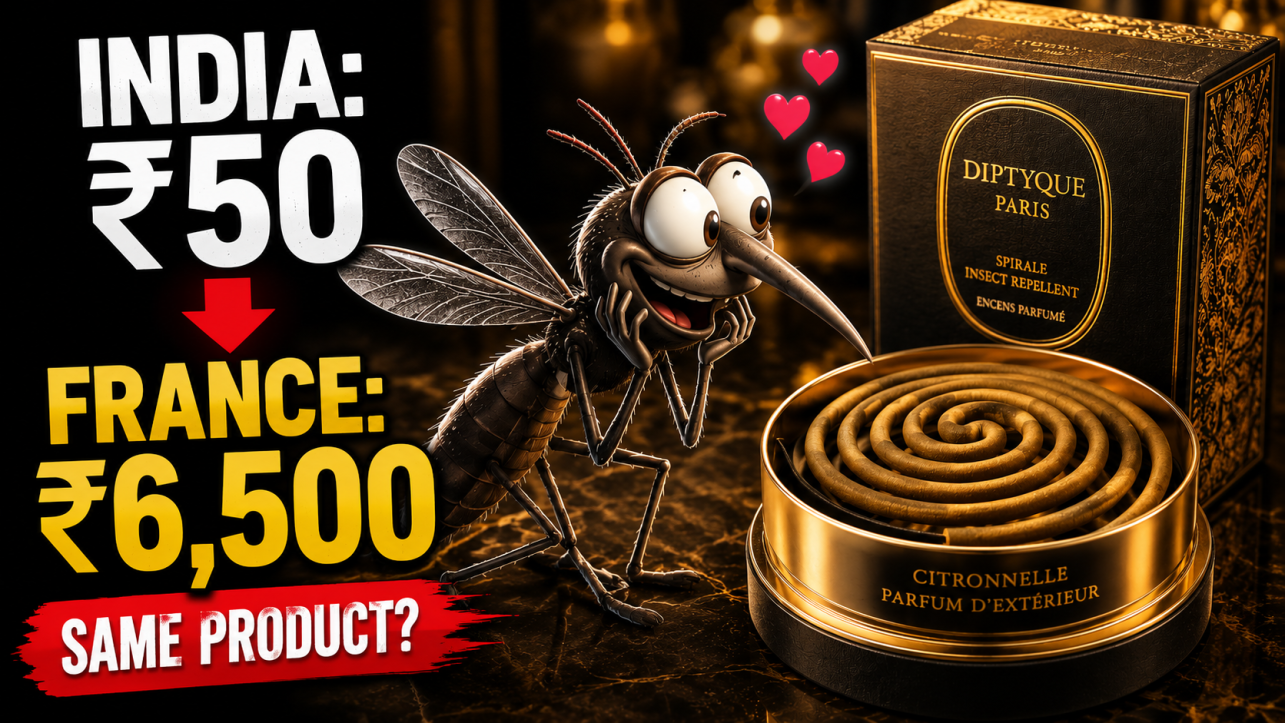
A 130-year-old household object went to Paris, came back in gold packaging, and the internet has thoughts.
Diptyque, the Parisian fragrance house behind some of the most coveted candles in luxury retail, has launched a lemongrass scented spiral that retails in India for roughly ₹6,500 a box. It is part of the Maison's limited-edition Summer Water Garden 2026 collection. It is also, to roughly 1.4 billion Indians, unmistakably a mosquito coil. The launch sits within a long lineage worth knowing - the fascinating history of luxury perfumes - even as its silhouette says something else entirely.
Within 48 hours of its June 2026 debut, the product had been screenshotted, memed and reposted thousands of times across India, Pakistan and Southeast Asia. The fashion watchdog account Diet Sabya put it to followers directly: would you buy this?
The comments wrote themselves.
"That's our kachua chhap."
"Fibonacci spiral artisanal incense."
"Even our mosquitos won't accept it."
For a brand built on six decades of restraint and credibility, it was an unusual place to land. For everyone who grew up to the smell of a coil burning on a windowsill, it was something stranger - watching a piece of ordinary life get repriced by a factor of several hundred and handed back as aspiration.
The Facts
| Detail | Specification |
|---|---|
| Brand | Diptyque (Paris, founded 1961) |
| Product | Citronnelle (Lemongrass) Incense — Scented Spirals |
| Collection | Summer Water Garden, Limited Edition 2026 |
| India price | ~₹6,500 per box |
| Global reference price | €60 per set |
| Contents | Six coils (three pairs, 12g each) + one oval gold-finish stand |
| Fragrance notes | Lemongrass, verbena, neroli |
| Optional accessory | Enamelled porcelain holder, ~€140 |
| Local comparison | Standard Indian coil retails ₹10-20 |
Who Diptyque Actually Is
Before the punchline, the pedigree. Diptyque was founded in Paris in 1961 by three friends — Christiane Gautrot and Desmond Knox-Leet, both painters, and Yves Coueslant, a theatre director. The candle line they launched in 1963 effectively defined what a luxury home-fragrance brand could be. The oval label, the black-and-white typography, the Baies candle: referenced by dozens of brands, matched by very few.
This is not a house that fumbles. Which is precisely why the scented spiral is interesting rather than simply absurd. When a brand with this much accumulated taste releases a product that an entire subcontinent reads as a mosquito coil, the gap between intention and reception is the story.
What ₹6,500 Is Actually Buying
Diptyque's own language is careful. The spiral, it says, releases "light wisps of lemongrass" that recall "the peaceful air of a water garden," creating "a serene cocoon." Nowhere does the brand call it a mosquito repellent. It is positioned as atmosphere, not insecticide — an outdoor fragrance object for "relaxing summer evenings."
That distinction is the entire pricing argument. You are not buying pest control. You are buying:
- A composed fragrance (lemongrass, verbena, neroli) rather than raw citronella
- The Diptyque name and six decades of design equity
- A gold-finish stand and gift-grade packaging
- Membership, however small, in a particular aesthetic world of luxury
Whether that justifies the figure is a question of values, not of facts and ultimately a question of what actually defines a luxury brand. But it is worth being precise about what is and is not on offer. A ₹15 coil keeps mosquitoes away. A ₹6,500 spiral is selling you a feeling and asking you not to think too hard about the silhouette.
The Markup the Internet Did the Math On
Across South Asia, the joke converged on a single calculation: the gap between the local object and the luxury one.
| Item | Approximate unit cost | Job it does |
|---|---|---|
| Standard local mosquito coil | ₹2-5 per coil | Repels mosquitoes |
| Diptyque scented spiral | ~₹1,080 per coil | Scents the air |
The most-shared joke was not about money at all. It was the universal childhood trauma of snapping a coil in half while separating the pair - now reframed as snapping a four-figure object. A close second: collective envy of the elite mosquito that gets to expire in premium French smoke.
This Is a Pattern, Not an Accident
Diptyque has plenty of company. The repackaging of humble, everyday objects as luxury goods is now a recognised genre, and South Asian staples are a recurring target.
- Prada drew Indian fury over Kolhapuri-style sandals presented without credit to the centuries-old Kolhapuri craft tradition
- Ralph Lauren was accused of lifting bandhini and jhumka design language
- Balenciaga — the provocative Paris house Balenciaga - sold a "Trash Pouch," a leather garbage bag, for around $1,790
- Louis Vuitton offered chopsticks at roughly $1,640, consistent with its history of pricey everyday objects drawing criticism
- Dior — the storied couture house of Dior - released a gardening kit near $8,700
The mechanism is consistent. Take an object loaded with everyday familiarity, strip the function, amplify the materials and the name, and sell the result back at a multiple to people who recognise it instantly. Sometimes it reads as homage - as in respectful cross-cultural luxury collaborations that credit their sources. Often it reads as a brand mistaking other people's daily life for a blank canvas, rather than offering a genuine ode to Indian craftsmanship.
The Diptyque spiral is the gentlest version of this - no craft was appropriated, no community uncredited. But it triggered the same reflex, because the silhouette is doing the talking, and the silhouette belongs to all of us.
So Is It Worth It?
The honest answer depends on what you think you are buying.
If you want a mosquito-free evening, this is the most expensive way in history to not quite get one - it is fragrance, not repellent. If you collect Diptyque, the spiral is a coherent, limited-edition extension of a brand you already understand, and the price is consistent with everything else on the shelf. And if you find genuine pleasure in the lemongrass-verbena-neroli composition and the ritual of the gold stand, then the object is doing exactly what luxury is supposed to do: converting an ordinary act into a considered one — the same alchemy by which everyday products become global status symbols.
What it cannot do is escape its own outline. For most of India, that outline will always read as a coil first and a luxury object second and no amount of water-garden copywriting closes that gap.
The deeper point is the one the memes accidentally made. Luxury has spent years searching for newness and increasingly finding it in the everyday objects of other cultures. When the everyday object in question has lived in your home for a century, the markup stops being a flex and starts being a mirror.
Frequently Asked Questions
What is the Diptyque mosquito coil actually called?
It is the Citronnelle (Lemongrass) Incense - Scented Spirals, part of Diptyque's limited-edition Summer Water Garden 2026 collection. Diptyque markets it as a scented fragrance object, not a mosquito repellent.
How much does it cost in India?
Around ₹6,500 for a box of six coils and a gold-finish stand. The global reference price is about €60. An optional porcelain holder retails separately at roughly €140.
Does the Diptyque spiral repel mosquitoes?
Diptyque does not market it as a repellent. It is built around lemongrass, verbena and neroli for fragrance and atmosphere, not pest control. Citronella is associated with mosquito repulsion, but the product's stated purpose is scent.
Why did it go viral in India?
Indians instantly recognised the spiral form as the everyday mosquito coil - the kachua chhap or machar coil found in households for over a century and reacted to the contrast between a ₹10-20 local object and a ₹6,500 luxury one.
Is it the same as a normal mosquito coil?
Visually, near-identical. In substance, no: the Diptyque version is a composed fragrance object with branded packaging and a gold stand, while a standard coil is a functional pyrethrum-based repellent costing a few rupees.
Editorial note: Prices are indicative, reflect figures reported at the time of writing, and are subject to change by region, retailer and exchange rate. LuxuryAbode is an independent editorial platform and is not affiliated with the brands mentioned. Product details are drawn from publicly available brand and press sources. This article is commentary and information, not purchasing or financial advice.



Comments
No comments yet.
Add Your Comment
Thank you, for commenting !!
Your comment is under moderation...
Keep reading luxury post