The Ink Worth Rubbing: Inside Nara's Sumi Workshops, Where Japan Has Made Its Blackest Luxury Since 1577
 Pradeep Dhuri
- 12th Aug 2026
- 1409
- 0
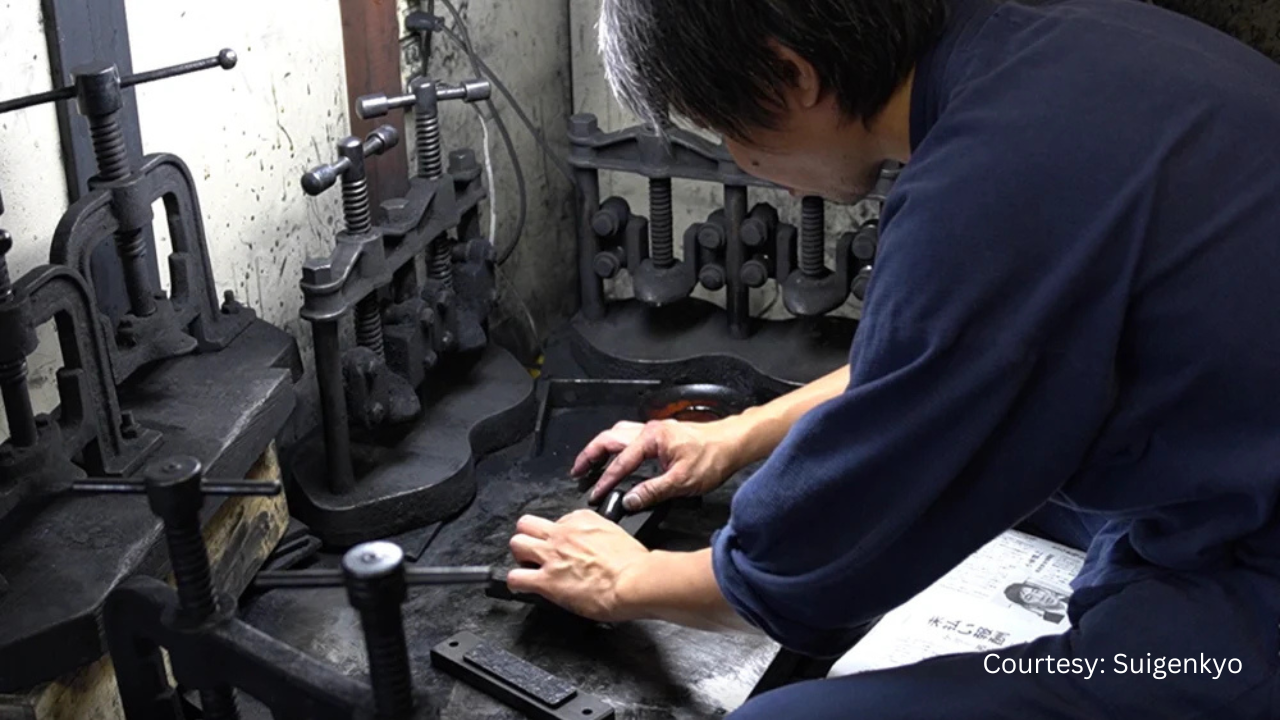
There is a category of luxury that does not photograph well, cannot be worn, and reveals itself only to the person using it. Japanese sumi ink is its purest example. A finished stick of top grade Nara ink looks like a small black bar of nothing. Rubbed against stone with water for ten unhurried minutes, it produces a liquid whose depth, gradation and lift on paper professional calligraphers describe the way Burgundy producers describe terroir, and it is priced accordingly: the most expensive ink still in production in Japan, a Kobaien collaboration with Kofukuji temple cast in a six century old iron mould, sells for over USD 700 for a 20 gram stick. Gold, by weight, is currently cheaper than some inks that write.
Nearly all of it comes from one city. Nara, Japan's eighth century capital, produces roughly 90 to 95 percent of the country's sumi, a dominance that has held for four centuries, in a city best reached as a short detour from stays such as the Luxury Collection's Mitsui property in nearby Kyoto. The craft arrived from China along the Silk Road some 1,400 years ago, concentrated around the sutra copying halls of Kofukuji temple, and moved into private workshops when Oda Nobunaga's free market reforms broke temple monopolies in the late 1500s. By the mid-Edo period Nara had around forty ink houses. Today fewer than ten remain, and the Japanese government designated Nara sumi a national traditional craft in 2018, the bureaucratic equivalent of listing a species.
What this guide covers is the part the travel brochures and the stationery blogs each miss: how the workshops actually admit visitors, why the serious money in this category is in ink that is decades old, and what a collector grade cabinet of Japanese and Chinese ink actually costs to assemble. The ritual at the centre of it all, the slow rubbing of stick on stone, turns out to be the entire point.
Kobaien: The Oldest Ink House on Earth Still Working
On a quiet street in Naramachi, the preserved merchant quarter south of Kofukuji, stands Kobaien, founded in 1577 by Matsui Dochin and run continuously since. It is very likely the oldest ink maker operating anywhere. The Qing court's great Chinese houses did not survive the twentieth century intact, Kobaien did, supplying the imperial household, temples and the calligraphy elite through sixteen generations.
The production method has barely moved. Soot is harvested in near darkness from dozens of small clay lamps burning vegetable oils, rapeseed, sesame, paulownia, each wick tended by hand, each lamp yielding grams per day. The soot is kneaded with nikawa, a collagen glue, and a trace of natural fragrance, traditionally borneol camphor, worked by hand and foot into a dense dough, pressed into carved pear wood or iron moulds, then dried for weeks buried in wood ash inside a clay storehouse before being hung from straw ropes to cure in air. Production runs only October to April: nikawa spoils in warmth, so the craft is physically seasonal, done in unheated rooms in winter, a level of unhurried process that echoes the slow, hand led work behind Nordic artisans redefining winter luxury through similarly patient craft. Many of the tools in daily use date to the Edo period and are repaired rather than replaced.
Two grades of raw material define the market. Yuenboku, oil soot ink, gives the warm, deep, faintly brown black favoured for painting and much calligraphy. Shoenboku, pine soot ink, made from resinous pine burned in kilns, gives a cooler, bluish black with the finest particle structure, historically the aristocratic grade and now the scarcer one, as suitable old growth pine and the artisans who fire it disappear.
Kobaien's workshop can be visited, and the visit is unusually unguarded by luxury industry standards: the soot rooms, the kneading, the drying storehouse. Arrangements should be made in advance through the shop, and the experience is conducted with the assumption that you are genuinely interested rather than collecting content. The retail room sells sticks from around yen 1,000 for student grades to tens of thousands of yen for the flagship Koukaboku line and limited pine soot and rare glue editions.
Nigirizumi: The Only Souvenir in Japan Shaped Like Your Own Hand
Across town, Kinkoen, another historic Nara house, offers the experience that has become this craft's signature: nigirizumi, or gripped ink. During the winter production season, visitors are handed a stick of raw, still warm ink dough straight from the kneading table. You squeeze it once, firmly. The ink takes the print of your palm and fingers, is dried over the following weeks by the workshop, and is then shipped to you: a functional ink stick cast from your own grip, a self portrait in soot and collagen. An optional calligraphy session lets you grind and write with the house's finished inks on the spot.
It costs a few thousand yen, takes under an hour, and is, per rupee, one of the highest yield cultural experiences in Japan, which is why it books out. The honest advice: pair it with Nara's obvious circuit, Todaiji, the deer park, Kasuga Taisha, but schedule the ink first, in the morning, when the workshop is actually working. Nara is 45 minutes from Kyoto and under an hour from Osaka, the ink quarter justifies the detour on its own.
A note on the word rubbing, since it carries two meanings here. The daily act of sumi is rubbing the stick on a suzuri inkstone with water, a five to fifteen minute grind that calligraphers treat as the meditative preface to writing, the ink you make is fresher, tonally richer and more controllable than anything bottled. The related antiquarian art of takuhon, taking inked rubbings from carved stone inscriptions, is its own collecting field, and the great Chinese stele rubbings trade seriously at auction, a category of paper and ink collecting not unlike the appetite AstaGuru has found for its own antiques and vintage collectibles auctions. Both practices run on Nara's product.
Koboku: Why the Best Ink Is the Ink Nobody Alive Made
Here is the fact that turns a craft story into a collecting market: sumi improves for decades after manufacture, and connoisseurs price it accordingly.
Fresh ink is bound by strong glue, which slightly deadens tonal separation. As a stick ages, the nikawa slowly degrades, the carbon disperses more freely, and the ink develops what practitioners call better nijimi, controlled bleed, and clearer gradation between blacks and greys. Ink is generally considered to enter its prime somewhere between twenty and fifty years, and can remain usable for centuries if kept dry and stable. The category has a name, koboku, old ink, and a market: Kobaien's own authorised channels sell decades old sticks at multiples of new prices, Japanese dealers trade pre-war and Meiji sticks quietly, and top Chinese pieces, Qianlong era imperial ink sets in lacquer cases, appear at Hong Kong and Beijing sales where the broader scholar's studio category has already produced seven figure results: a Qianlong inkstone sold at Poly Auction Beijing for RMB 14 million, roughly Rs 16 crore, the standing record for the desk object category ink belongs to.
The structural logic will be familiar to anyone who collects whisky or wine: a consumable that improves with age, made by a shrinking number of producers, in a supply that can only decline because using it destroys it, the same dynamic that let an 81 year old Macallan retail at USD 125,000 a bottle, and that has separately made the case that whisky ranks among the world's best luxury investments today. The difference is entry price. A genuinely excellent aged Japanese stick can still be bought for the price of a mid-tier Bordeaux case, which is what an under institutionalised market looks like before attention arrives.
The Slowness Premium: a working framework
| Luxury Behaviour | Material-Scarce Luxury | Time-Scarce Luxury (Koboku Model) |
|---|---|---|
| What limits supply | Rare raw materials or restricted production capacity | The years the object must sit before it is ready |
| Can money accelerate the outcome? | Often, by paying for scarcer inputs or faster fabrication | No, ageing cannot be compressed by any amount of capital |
| What the buyer is really purchasing | Access to a scarce material or a maker's name | A decision made by a maker who will not see the payoff |
| Where value accrues | At the point of sale | Continuously, for decades, until the piece is used |
| Contrast row: the true constraint | Materials and money | Time itself, which nothing can buy back |
The Slowness Premium describes categories where the binding constraint on value is elapsed time rather than material rarity or price, meaning no amount of capital can shorten the wait, and the objects that reward patience most are precisely the ones a buyer cannot rush into existence.
True Cost Breakdown: The Sumi Ladder
| Tier | What it is | Typical price |
|---|---|---|
| Student grade | Machine-assisted, mixed soot | ¥500-2,000 (Rs 300-1,100) |
| Serious practice, Kobaien standard lines | Hand-made oil soot | ¥3,000-15,000 (Rs 1,700-8,500) |
| Flagship new production (Koukaboku, top pine soot, rare glue) | Best current-year sticks | ¥20,000-80,000 (Rs 11,000-45,000) |
| Kofukuji Nitaibo koshiki-sumi | Muromachi-era iron mould, donkey-hide akyo glue, 20g | USD 700+ (Rs 60,000+) |
| Koboku, 30-80 years old, named houses | Aged, authenticated | ¥50,000-500,000+ (Rs 28,000-2.8 lakh+) |
| Imperial Chinese ink sets, Qing | Auction, Hong Kong/Beijing | USD 20,000 to several lakh USD |
| Nigirizumi experience, Kinkoen | Winter season, advance booking | A few thousand yen |
| Kobaien workshop visit | By arrangement | Nominal to free |
A complete, serious starting cabinet, one fine oil soot stick, one pine soot, one aged stick, a good suzuri inkstone and a Nara brush from one of the city's last master brush makers, the kind of hand-tool craftsmanship that has separately earned recognition for exceptional craftsmanship at its finest in entirely different categories, lands around Rs 1.5 to 3 lakh, which buys entry into a practice measured in decades. For Indian buyers, sticks ship internationally through Kobaien's authorised export channel, as artists' materials the import cost into India is modest and the constraint is stock, not duty. There is also a pleasing correction owed here: what the world calls India ink was never Indian. The name attached itself in Europe because the carbon ink arrived via India route trade, the technology is Chinese, and its finest surviving lineage is in Nara.
The Closing Read: Slowness as the Asset
Every mature luxury market eventually converges on the same discovery: when goods are abundant, scarcity migrates to time. Nara sumi is that principle in its most concentrated form. The soot takes a winter of lamp tending. The stick takes weeks in ash and years in air. The ink is not ready until a generation after its maker pressed it, and it does not exist at all until the final owner spends ten minutes grinding it by hand. Nothing in the chain can be accelerated, which is precisely why fewer than ten houses survive and why the ones that do have four century order books.
For the reader, the position is straightforward. As experience, an hour in a Nara ink workshop delivers more genuine access than most six figure itineraries. As collecting, koboku is a small, knowledge driven market with real scarcity, functional use, and prices that have not yet met the auction attention already flowing into inkstones and scholar's objects, the same appetite that has kept sales such as AstaGuru's own Opulent Collectibles auction capturing vintage and antique collectors. And as practice, the daily rubbing of ink is the rare luxury ritual that costs almost nothing after entry and compounds for the rest of your life. The blackest thing in the room turns out to be the deepest.
FAQ
Where is sumi ink made in Japan?
Almost entirely in Nara, which produces roughly 90 to 95 percent of Japan's sumi ink sticks. The craft arrived from China about 1,400 years ago, centred on Kofukuji temple, and Nara sumi was designated a national traditional craft by the Japanese government in 2018. Fewer than ten historic houses remain, including Kobaien, founded 1577, and Kinkoen.
Can you visit the Kobaien ink workshop in Nara?
Yes. Kobaien, in the Naramachi district, admits visitors to its soot rooms, kneading floor and drying storehouses by advance arrangement, with production running October to April. The shop sells sticks from about yen 1,000 to premium grades costing tens of thousands of yen.
What is the nigirizumi experience?
At Kinkoen in Nara, visitors squeeze a stick of raw, freshly kneaded ink dough in one hand, leaving their palm and finger prints. The workshop dries the stick over several weeks and ships it to you as a usable, one of one ink stick. It runs during the winter production season, costs a few thousand yen, and requires booking ahead.
How much do high-quality sumi ink sticks cost?
Serious hand made sticks run yen 3,000 to yen 15,000, flagship new production yen 20,000 to yen 80,000. The Kofukuji Nitaibo koshiki-sumi, made with Kobaien using donkey hide glue and a Muromachi era iron mould, exceeds USD 700 for 20 grams, making it among the most expensive inks in production anywhere.
Why are aged ink sticks (koboku) more valuable?
Sumi improves as its collagen glue slowly degrades over decades, giving finer dispersion, richer tonal gradation and better controlled bleed on paper. Ink is considered to peak roughly 20 to 50 years after manufacture. Aged sticks from named houses trade at multiples of new prices, and imperial Chinese examples reach five and six figures in USD at auction.
Is sumi ink the same as India ink?
Functionally related, historically misnamed. India ink is carbon soot ink of Chinese origin that reached Europe via India route trade. Japanese sumi is the same family of ink, refined in Nara for four centuries into the craft's finest surviving lineage.
This article discusses craft pricing, collecting markets and auction figures for informational purposes only and does not constitute investment advice. Figures are indicative estimates drawn from workshop and auction reporting and INR conversions are approximate. Prices for workshop visits, retail ink and aged or auction pieces fluctuate and should be independently confirmed with the relevant workshop, dealer or auction house before purchase.



Comments
No comments yet.
Add Your Comment
Thank you, for commenting !!
Your comment is under moderation...
Keep reading luxury post