The Glass House After Dark: Why Floor-to-Ceiling Windows Need a Second Design Brief
 Pradeep Dhuri
- 23rd Sep 2026
- 1170
- 0

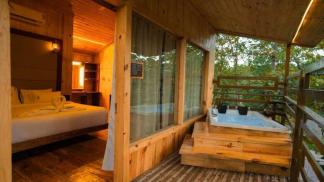
By day, the glass wall brings the forest inside. At night, it can make the occupants feel as though they are onstage.
This is the part of the modern luxury house the renderings leave out, and it matters more as real luxury homes focus on open spaces. Every visualisation of a glazed retreat in the Hudson Valley, a hillside house above Mallorca's Deià, a chalet in the Engadin or a Cotswolds barn conversion is produced at golden hour or midday. The glass is shown as absence: nothing between the sofa and the canopy. No render shows the same room at 10:40 pm, lights on, with the glass turned into a black mirror from inside and a lit display case from outside.
The question surfaced again recently on a homebuilding forum, from a future owner planning a heavily glazed house in woodland: how do people living behind that much glass handle the sense of being watched after dark? The replies divided neatly. One camp said pre-wire motorised shades, test sightlines at night and plant strategically. The other said you adapt. Both are right, and the distance between them is where serious money is spent or wasted.
For anyone building at the $5 million to $50 million level, the issue is not whether to have glass. It is that a glazed house has two design briefs, one for daylight and one for darkness, and most projects commission only the first. What follows is the second brief: the physics, the real costs, what architects and integrators routinely fail to coordinate, and a checklist to run before the foundations are poured.
The Physics the Rendering Leaves Out
Glass has no privacy setting. It has a light differential. Whichever side is brighter becomes visible from the darker side.
On a clear afternoon, exterior daylight runs to tens of thousands of lux, while a well-lit living room sits at 150 to 500 lux. The outdoors dominates, the glass reads as reflective from outside, and occupants see out. After sunset the ratio inverts. A moonless forest is effectively below 1 lux. Switch on a reading lamp and the room may be several hundred times brighter than the woodland beyond. It becomes the brightest object for a kilometre.
Two things happen at once. From outside, the interior is lit like a vitrine. From inside, the glass reflects the room back, so occupants cannot see who might be looking. That pairing, exposure combined with blindness, is the psychological core of the problem. It is why owners describe feeling watched rather than merely visible.
Reflective "one-way" film, often sold as the answer, makes this worse. The film industry's own specifiers are candid: a dark, highly reflective film will simply create a stronger, more pronounced mirror effect on the inside at night when the light differential reverses. Suppliers work to a rule that the mirror effect needs roughly a 3:1 brightness advantage on the "public" side, and with interior lights on and a dark exterior, the ratio may become 1:10, making the interior transparent to the outside world. Even dual-reflective products fall short; one installer concedes that nighttime privacy through film alone remains compromised.
High-performance glazing adds its own twist. Double and triple-glazed units with low-emissivity coatings produce multiple faint reflections of every light source. A single pendant over a dining table can appear three or four times in a large panel. Owners who paid for a slim-frame Swiss or German system are sometimes surprised that it looks like a hall of mirrors by 8 pm.
Mies's Client Wrote the Warning in 1953
The glass house as a residential type has an owner complaint on the record for seventy years. Edith Farnsworth, the Chicago physician who commissioned Mies van der Rohe's Farnsworth House, went public in House Beautiful in May 1953, writing that in her glass-walled house "I feel like a prowling animal, always on the alert," and that she felt on guard both day and night. The house originally came without curtains for its floor-to-ceiling windows, one of the complaints Farnsworth raised with Mies.
Mies's defence is the useful part. The house sits on a 60-acre plot surrounded by woods, and from land it is largely hidden by foliage. His argument was that where privacy is no issue, an opaque wall would be a pity. The privacy of the most famous glass house in the world was never supplied by the glass. It was supplied by sixty acres. Philip Johnson's Glass House in Connecticut followed the same logic: a large private estate did the work curtains would otherwise have done.
This is what most contemporary projects miss. A glazed pavilion on a sixty-acre estate and a glazed house on a two-acre lot in East Hampton or a gated plot above Marbella, where many of the best luxury vacation rentals in Marbella sit, are not the same building type, even if the drawings look identical. The second borrows the aesthetic without buying the land that made it liveable.
Who Is Actually Watching
Forum threads tend to imagine a stranger in the trees. At the top of the market, the likelier sightlines are closer and more awkward, and no developer brochure mentions them.
Staff and security. Estates of any scale have a gatehouse, a caretaker's cottage, staff accommodation or a security control room, all occupied at night by definition. The gatehouse is usually positioned for a clear view of the drive and entrance, which often means a clear view into the double-height living room behind it. Architects rarely walk the site at night from the security officer's chair. It is the single most useful request a client can make.
Neighbours and the next owner. Plots in the Hamptons, Aspen's West End, the hills above Saint-Tropez or new villa enclaves such as the private residences and mansions in Ibiza are sold on today's views. A neighbour's future second storey, roof terrace or pool pavilion can overlook a glazed bedroom that was private on the day of purchase. Your privacy is only as good as the next owner's elevation, which is why it belongs among the critical factors to consider before buying a luxury property.
Public edges. Coastal paths in Cornwall and Mallorca, ski runs above Alpine chalets, lake shores, golf courses and bridleways all put people on foot within sight of lit glass in the evening. Drones, both hobbyist and real estate marketing, are now routine over the kind of luxury second home destinations around the world where glazed houses cluster.
Insects. An illuminated glass wall in a forest or beside water becomes a light trap on summer nights. Owners in wooded and lakeside settings report insect loads that make uncovered glass unpleasant regardless of privacy. The fix is the same: control the light leaving the building.
The Most Expensive Six Inches in the House
The clean solution to nighttime exposure is a shade that disappears by day. That requires a recessed pocket in the ceiling or window head, typically six to eight inches deep for a single roller and more for a double system (sheer plus blackout), with power and control cabling to each end.
The pocket falls into a professional gap. The architect regards shading as an interiors matter. The interior designer arrives after the structure is fixed, which is why practices like Piet Boon, the Dutch master of interior design and architecture, stand out by working across both disciplines. The home automation integrator is appointed late, often after ceiling drawings are frozen. The glazing contractor's shop drawings show the frame, not what sits above it. On a large number of luxury projects, nobody owns the pocket until the owner moves in and asks for blinds.
Retrofitting then is costly and visually compromising: a surface-mounted cassette or fascia that interrupts the frameless sightline the owner paid for, a lowered ceiling along the glazing line, or opened walls and stone cladding to run power. Battery motors avoid wiring but bring charging maintenance on high windows. In our assessment of typical projects, retrofitting shading on a glazed elevation costs 40 to 80 percent more than designing it in, before accounting for the architectural loss.
Market pricing shows how wide the spread is. A 2026 guide for luxury estates in Texas puts Lutron's Palladiom tier at $1,800-$3,500 per window, featuring exposed architectural hardware designed to be seen as a design element rather than concealed. The same guide puts reference-tier Palladiom installations or large estates with 40-60 windows at $45,000-$100,000+. Palladiom matters here because it partly solves the retrofit problem by making the bracket a design object: Lutron states the hardware takes no more than 3.25 inches of vertical space and handles openings up to 144 inches wide.
The Options, Assessed Honestly
Sheer and solar screen shades. The most common specification and the most misunderstood. A screen fabric with 1 to 5 percent openness gives excellent daytime glare control and privacy. At night it behaves like film: with the interior lit, silhouettes and movement read clearly from outside. A sheer is a daytime product. Owners who specify only sheers to preserve the view discover this within a week.
Blackout or dim-out shades. The only fabric option that reliably solves nighttime exposure. Light leaks at the edges unless side channels are fitted. Most glazed houses need two layers, a screen for day and an opaque fabric for night, which doubles pocket depth and motor count.
Motorised drapery. Warm, acoustically valuable in hard-surfaced glass rooms. Stacked curtains typically take 15 to 25 percent of the track length when open, eating into the frameless view unless a stacking recess is designed into the wall.
External screens and motorised external venetian blinds. Standard practice in German-speaking Europe and underused almost everywhere else. External systems stop solar heat before it reaches the glass, a core principle of sustainable luxury architecture, which on a west-facing Mediterranean or Californian elevation can matter more than privacy, and they solve night exposure from outside. They need wind sensors, structural fixings planned into the facade and maintenance access on tall elevations.
Switchable (PDLC) smart glass. Glass that turns frosted when power is cut, elegant for bathrooms and bedroom zones, and one of several smart innovations disrupting the luxury industry. US pricing guides put switchable glass at $70 to $150 per square foot, with retrofit smart film at $25-40 USD per square foot. Caveats the brochures underplay: in its opaque state it is translucent rather than solid, so a strongly backlit figure close to the glass can still register as a soft shape; it does not reject heat the way external screens do; and it commits the owner to a powered system for the life of the pane. It is a selective tool, not a whole-house answer.
Reflective film. Fine for daytime glare and heat. For nighttime privacy it does the opposite of what the name implies.
Anti-reflective glass. A lesser-known tool for the other half of the problem. Low-reflectance coatings reduce the black-mirror effect from inside, letting occupants see a lit garden. It does nothing for exposure but changes the psychology of being unable to see out. Specify it for the panels you most want to look through at night.
Lighting Is the Cheapest Privacy Tool
The physics points to the most cost-effective lever: reduce the differential rather than cover the glass.
Three decisions change the night experience more than any shade. First, keep brightness away from the glazing line. Downlights washing the glass-side zone of a room create both reflections inside and stage lighting outside. Move task light inward, favour low lamps and indirect sources, and use warm colour temperatures around 2,700K.
Second, light the landscape at low level. Softly illuminating nearby trunks, a garden wall or planting beds at a small fraction of interior levels restores a view from inside and reduces the contrast that makes the room glow from outside. It also draws the eye onto the garden rather than into the house. Shielded, downward fittings keep this compatible with dark-sky practice and reduce insect attraction.
Third, link lighting scenes to shades. An evening scene that dims glass-side circuits, raises landscape lighting and lowers bedroom shades at a set time costs little in a house already running lighting control. It is the difference between a system that works and one owners abandon.
An independent lighting designer's fee on a large residence typically runs $15,000 to $60,000. On a glazed house, it is the highest-return fee in the project.
Landscape as Architecture
Planting improves with age and most often fails through impatience. New screening takes three to seven years to perform. Mature specimen trees can be craned in, at anywhere from $5,000 to well over $50,000 per tree depending on species, calliper and access, with real failure risk. Deciduous species leave elevations exposed in winter, which in a ski house is precisely the season that matters; anyone following a guide to buying ski chalets should note that evergreen or mixed planting is the default for year-round screening.
The more durable tool is topography. A low earth berm, a change in floor level or a garden wall at the right distance can cut the sightline from a lane or gatehouse without cutting the view from a seated position inside. Test it at eye level, standing and seated, from both sides, at night.
Shadow Cost Breakdown: Planned vs Retrofitted
Illustrative, for a 10,000 sq ft glazed house with roughly 3,500 sq ft of glazing across 40 openings. Indicative 2026 US market ranges, before sales tax; European costs are broadly comparable at the premium end.
| Item | Designed in (pre-construction) | Retrofitted (post-completion) |
|---|---|---|
| Night sightline study and lighting designer | $15,000-60,000 | $15,000-60,000 (plus rework) |
| Recessed shade pockets | $12,000-30,000 | $30,000-75,000 (ceiling rework, finishes) |
| Pre-wiring power and control to each opening | $6,000-15,000 | $15,000-35,000 (opening walls, cladding repair) |
| Motorised shades, single layer, premium | $70,000-140,000 | $80,000-160,000 (fascia or battery units) |
| Second layer (blackout or dim-out) | $50,000-110,000 | $60,000-125,000 |
| Landscape lighting, low-level and shielded | $25,000-75,000 | $30,000-90,000 |
| Screening planting and specimen trees | $40,000-150,000 | $40,000-150,000 (with years of exposure) |
| Indicative total | $218,000-580,000 | $270,000-695,000 plus architectural loss |
| Optional: switchable glass, 400 sq ft of selected zones | $28,000-60,000 | Pane replacement, or $10,000-16,000 in film at lower quality |
The visible difference is 20 to 25 percent. The invisible difference is larger: a surface-mounted fascia across a seven-figure slim-frame glazing package permanently alters the architecture the owner paid for.
The Pre-Construction Night Checklist
Annotated for owners to hand to their architect before tender, and a useful companion to five things to know when buying a luxury home.
- Walk the site after dark. Before design freeze, visit at 9 pm with the architect. Stand at every point from which the house could be seen: gate, gatehouse, staff cottage, neighbouring boundaries, public paths. Photograph toward the proposed glazing.
- Mock up the light. Place temporary lamps at the proposed room positions and view them from outside. It costs almost nothing and reveals more than any render.
- Commission a night render. Require every key elevation at night with interior lighting on. If the design does not survive it, change the design, not the render.
- Assign ownership of shading. Name one consultant responsible for pocket dimensions, cabling, fabric layers and control integration, in writing, before ceiling drawings are issued.
- Size pockets for two layers. Design for a day screen plus a night blackout even if only one is installed initially. Depth is cheap now and nearly impossible later.
- Pre-wire every opening. Run power and control to every glazed opening, including those you think will never need shading. Owners change their minds.
- Specify cordless or motorised operation throughout. Beyond convenience, it removes the child strangulation risk of cords (see below).
- Plan lighting scenes with the shades. Evening, night, away and security scenes should coordinate glass-side lighting, landscape lighting and shade positions.
- Test the neighbours' future. Check permitted heights and setbacks on adjacent plots. Design for what can legally be built next door, not what exists today.
- Put landscape in the first budget. Plant screening in the first construction season, not after completion.
- Get a security professional's view. Glazing, visibility and access are a security matter. Site-specific advice should come from a qualified consultant, not a design magazine.
The Safety Note Few Buyers Hear
Window covering cords are a documented child safety hazard. In the US, the CPSC rule took effect on May 30, 2023, and it applies to all custom window coverings manufactured after that date. It was one of two final rules designed to protect children aged eight years or younger from the risk of strangulation by window covering cords, requiring custom products to meet the operating-cord requirements already applied to stock products. In Europe, child safety requirements for internal blinds sit within the EN 13120 family of standards. Households with young children or visiting grandchildren should specify cordless or motorised systems as a matter of course; on a glazed house of this scale, that is already the natural choice.
The LuxuryAbode Night Test
LuxuryAbode is building a reference set of paired day and night photographs of glazed residences across Europe, North America and the Middle East, shot from fixed exterior positions with measured interior and exterior light levels. Architects, lighting designers, and shading and glazing manufacturers who have delivered projects that pass the night test are invited to submit them for independent assessment. Selection is editorial; the methodology is published with each feature.
What This Means
The glass house was invented as a statement about openness, and its most celebrated examples were made liveable by something the photographs never show: acreage. Transparency at the top of the market has always been paid for twice, once in glass and once in the land, shading or lighting that makes the glass bearable after dark.
The deeper principle is that luxury in a glazed house is not transparency. It is control over the direction of the view, part of the art of buying a luxury home that few brochures explain. By day, the owner looks out and the world does not look in. The second design brief is the discipline of keeping that asymmetry after sunset. Planned, it costs perhaps 5 to 10 percent of the build budget. Discovered in the first summer of occupation, it costs considerably more, in money and in architecture.
The owners who "adapted" on that forum are not wrong. Some people are genuinely untroubled by exposure. But adaptation is a decision you can make later. Pockets, wiring and sightlines are decisions you can only make now.
FAQ
Can people see into my house at night if I have floor-to-ceiling windows?
Yes, if interior lights are on and it is darker outside. Glass reveals the brighter side to the darker side. At night a lit room can be hundreds of times brighter than a dark garden, making the interior clearly visible while occupants see mostly reflections.
Does one-way mirror film work at night?
No. Reflective film needs the outside to be brighter than the inside. After dark, with interior lights on, the effect reverses: occupants see a mirror and people outside can see in. Film is a daytime glare and heat product, not a night privacy solution.
How much do motorised shades cost for a luxury home?
Premium architectural systems such as Lutron Palladiom run roughly $1,800 to $3,500 per window installed in current US pricing, and whole-house installations on large estates commonly exceed $45,000 to $100,000. Adding a second blackout layer can nearly double the figure.
Should I pre-wire for motorised shades before construction?
Yes. Running power and control to every glazed opening and forming recessed pockets during construction costs a fraction of retrofitting, which typically means ceiling rework, opened walls or visible fascias. Size pockets for two shade layers.
Is smart glass better than blinds for privacy?
Switchable PDLC glass suits selected zones such as bathrooms, but it turns translucent rather than solid, rejects less heat than external screens and costs roughly $70 to $150 per square foot. For whole-house night privacy, blackout shades or external screens remain more effective.
How do I stop large windows turning into black mirrors at night?
Reduce the brightness gap. Keep strong lighting away from the glazing line, use warm indirect sources and softly light the landscape at low levels. Anti-reflective glass on key panels further improves the view out.

Comments
No comments yet.
Add Your Comment
Thank you, for commenting !!
Your comment is under moderation...
Keep reading luxury post