The Definitive Guide to Luxury Rugs: How the Room's Quietest Object Became Its Loudest Statement
 Pradeep Dhuri
- 4th Aug 2026
- 1317
- 0
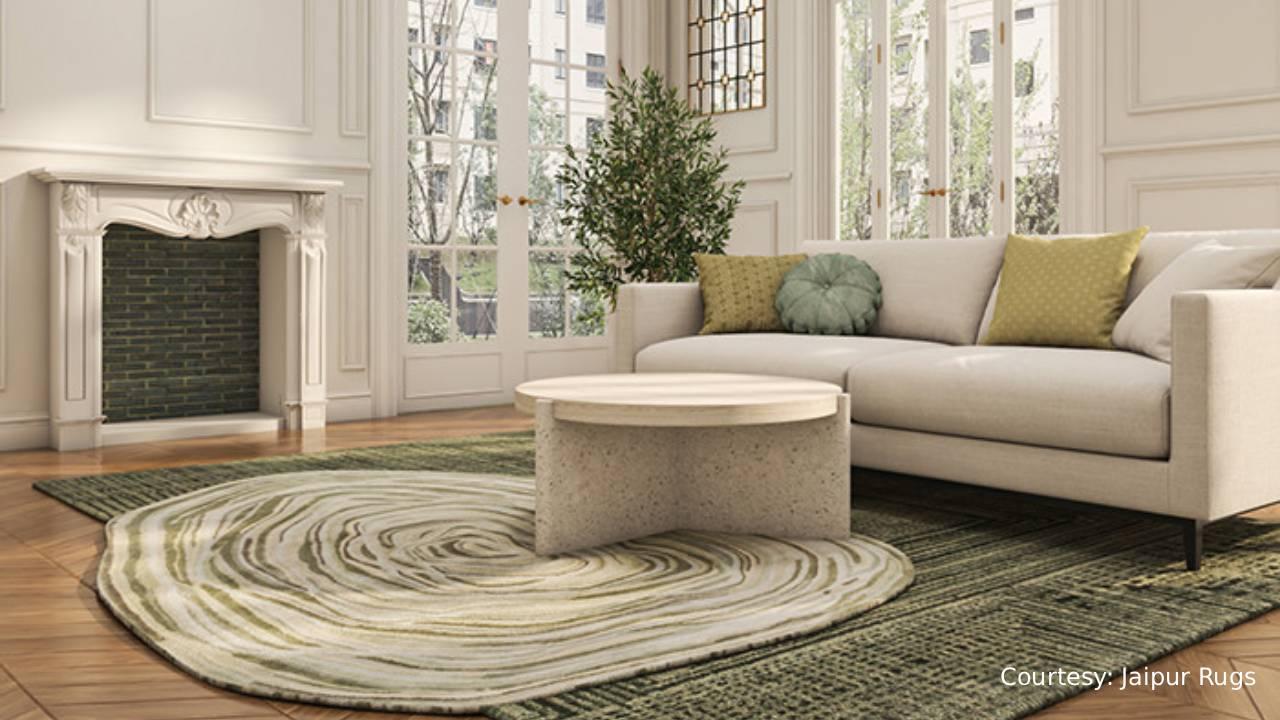
There was a time when a rug's job was to disappear: chosen to match the sofa, cut to fit beneath a coffee table, forgotten the moment the eye moved to whatever hung on the wall above it. That era is over. Across luxury interiors, the rug has moved from background texture to focal point, a single object now expected to carry as much personality, provenance and craftsmanship as any piece of furniture in the room, and increasingly, more, a shift also visible in how Piet Boon approaches interior design and architecture as a single, considered whole rather than a collection of separately chosen parts.
This shift is not cosmetic. It reflects a broader recalibration in how affluent homeowners think about interiors: fewer purchases, higher intent, longer time horizons. A rug bought today is less likely to be replaced in a redecoration cycle and more likely to be treated the way a fine watch or a piece of art is treated, as an asset that appreciates in meaning even as trends move on around it. That recalibration is what makes the category worth understanding properly, not just admiring from a distance.
The Formal-Versus-Personal Divide
"Classic and Persian-inspired rugs continue to dominate formal living rooms and homes where people want something established that won't date," says Meher Kapoor, Business Head at Ilaria Home. "Bold, artistic rugs, however, are finding their place in more personal spaces, rooms that reflect the homeowner's personality." That split, between the formal register of a living room and the more expressive register of a study or bedroom, is shaping how serious collectors now think about building a rug collection rather than acquiring a single piece. The best interiors today typically hold both registers at once: a Persian-rooted anchor in the room that receives guests, and something rarer, stranger, more personal in the rooms that don't, not unlike the layered material choices seen in Obeetee's Amer Canvas carpet collection.
What Actually Defines a Luxury Rug
What earns a rug the word "luxury" has less to do with size or price than with what's underfoot when you look closely. "A luxury rug is the culmination of exceptional craftsmanship, premium materials, compelling provenance and thoughtful design," says Rohan Bafna, Managing Director of Suryavansha Rugs. "True luxury lies in the human skill behind every knot." It's a definition that resists shortcuts: no machine process substitutes for the hours a single knot represents, and no marketing language substitutes for a maker who can point to exactly where and by whom a piece was woven, the same standard set by Obeetee's new weaving studio in Kolkata.
This is the distinction that separates a genuinely luxury rug from a merely expensive one. Price alone tells you almost nothing; knot density, weave consistency, fibre sourcing and documented provenance tell you almost everything, a principle proven at the auction level when a unique Mughal carpet from circa 1650 sold for GBP 5.4 million within minutes.
The Bespoke Commission Has Replaced the Showroom Purchase
Resistance to shortcuts is exactly what's driving demand toward bespoke commissions over off-the-shelf selection. "Most clients come to us with moodboards filled with colours, patterns and references they genuinely connect with, making the design process far more personal than prescriptive," says Ira Shroff, Head of Design - Interiors at Vertex Design Works. Kapoor sees the same instinct from the buying side: "More buyers want a rug that says something about who they are, whether that's an unexpected colour pairing, an artistic pattern or a texture nobody else in their circle has. The rug is becoming the personality of the room rather than something that quietly blends into it, which reflects the wider mood in luxury interiors today."
Functionality hasn't been abandoned in the pursuit of statement design, it's been folded into it. "Beyond defining a space with warmth and texture, demand is growing for rugs that combine visual appeal with everyday comfort and functionality," says Naina Oberoi, Design Lead - Home Storage at Casa Interio. "Indian manufacturers are successfully blending traditional craftsmanship with contemporary designs and performance-driven materials to meet these evolving expectations." That point matters specifically for India's luxury interiors market: locally made rugs are earning trust not as a compromise on quality but as a genuine claim on authenticity, with domestic ateliers now competing directly with imported provenance rather than standing in its shadow, a confidence visible in collaborations such as Obeetee Carpets' collection debut with J.J. Valaya and in initiatives such as Obeetee's weaver training programme for Ladakh craftswomen.
Materials: The Vocabulary Every Serious Buyer Should Know
Craftsmanship sets the ceiling, but material sets the foundation. "Material plays an important role, whether it's hand-spun wool or pure silk, but craftsmanship is what truly sets a rug apart," Shroff notes. "A hand-knotted rug can take months, sometimes over a year, to complete, and that patience is reflected in every knot, every detail and the way the piece ages gracefully over time."
Bafna breaks down what's actually being specified at the top of the market: "Fine wool remains the benchmark for its resilience, softness and ability to retain its beauty for decades, while silk is prized for its luminous sheen and ability to showcase intricate detailing. Wool-silk blends are also gaining popularity, offering the perfect balance of texture, durability and visual richness, alongside a growing demand for responsibly sourced natural fibres."
Colour has followed material in shedding caution. "There's a noticeable fatigue with beige," Shroff adds. "Clients are replacing safe, one-note palettes with bold patterns, rich textures, artisanal details and unexpected colour combinations." The neutral, blend-in rug that defined a decade of "quiet luxury" interiors is giving way to pieces designed to be noticed first, not last, a shift also reflected in newer collections such as Obeetee's response to contemporary home decor trends.
LuxuryAbode's Rug Buying Guide
- Prioritise craftsmanship first. Bafna points to specific, checkable indicators: "The fineness of the weave, consistency of the knots, precision of the finishing and the overall integrity of the construction are indicators of how beautifully the rug will age over time."
- Choose premium materials with intent. Fine wool and silk deliver lasting beauty, durability and comfort, and a rug's provenance adds cultural and emotional value beyond its physical qualities.
- Look past aesthetics alone. "A premium rug should enhance the visual appeal of a space, provide everyday comfort and withstand regular use," Oberoi says.
- Avoid the common mistakes. Oberoi warns against choosing on appearance alone, without weighing material quality, maintenance demands, or whether the piece actually suits its intended space. "Selecting the wrong size is another frequent oversight, as it can disrupt the balance and proportions of a room," she adds.
- Think in decades, not seasons. The strongest luxury rug purchases are the ones bought to reflect the owner rather than the moment, pieces built to become heirlooms rather than replaced when a trend passes, in the same spirit as the pieces catalogued in AstaGuru's heirloom treasures spanning 19th and 20th century craftsmanship.
The LuxuryAbode View: The Heirloom Reversal
LuxuryAbode's read on this shift centres on what we're calling the Heirloom Reversal: for most of the last two decades, luxury interiors treated rugs as replaceable texture, subordinate to furniture and lighting. That hierarchy is now inverting, with rugs commissioned first, as anchor pieces the rest of a room's palette is built around, and valued explicitly for their capacity to be passed down rather than redecorated away.
The commercial implication is a shift in where value accrues within the category. When a rug is bought to match a sofa, the sofa captures the design credit and the rug is a line item. When a rug is commissioned from a mood board, the maker captures the design credit, and pricing power shifts from volume manufacturers toward artisanal studios and named ateliers, domestic and international alike, that can demonstrate provenance and hand-knotting craft, the same shift documented at scale in the 74 million knots of Kashmiri craftsmanship at the G20 Summit.
| Signal | Rug as Soft Furnishing | Rug as Anchor Piece (Heirloom Reversal) |
|---|---|---|
| Buying process | Matched to existing furniture | Commissioned from a moodboard, furniture built around it |
| Value driver | Size, softness, price point | Provenance, hand-knotting time, material rarity |
| Colour approach | Safe, neutral palettes (beige-dominant) | Bold, unexpected colour and pattern choices |
| Sourcing preference | Import-default | Rising trust in domestic Indian craftsmanship |
| Time horizon | Replaced with redecoration cycles | Bought to become a multi-generational heirloom |
The Heirloom Reversal describes the shift in luxury interiors from rugs chosen to match existing furniture toward rugs commissioned first, as the anchor piece a room's design and palette are built around, with value accruing to the maker's provenance rather than the retailer's catalogue.
The open question for the category is scale: hand-knotted rugs of the kind described here can take over a year to complete, meaning genuine craftsmanship supply is naturally limited. As demand grows faster than skilled knotting capacity, provenance and waiting time may become the next luxury signal, alongside material and design, a constraint domestic manufacturers such as Obeetee's collaboration with Tissage on the Impasto collection are addressing through scaled artisan partnerships rather than mechanisation.
India Opportunity: What This Means for Indian Buyers
Market Opportunity
India sits at an unusual advantage in this category: it is simultaneously home to some of the world's most storied hand-knotting traditions and a fast-growing base of affluent domestic buyers newly willing to pay for that craft rather than importing an equivalent, a shift reflected in the broader momentum behind India's glorious and diverse textile heritage and platforms such as iTokri's platform empowering artists and weavers. Occasions such as celebrating India's National Handloom Day have also helped push handwoven craftsmanship further into the mainstream luxury conversation, not just the heritage or export one.
Buyer Notes: GST, Customs and Provenance Documentation
- Following the GST rate rationalisation effective September 2025, carpets and rugs, whether handmade or machine-made, are taxed at a uniform 5 percent GST rate under HSN Chapter 57, down from the previous 12 percent that applied to machine-made carpets, which has made both categories more comparably priced at the point of sale.
- Buyers commissioning or purchasing rugs from international ateliers, whether Persian, Turkish or otherwise, should confirm whether customs duty applies on import into India, since rate and classification can vary depending on material composition and country of origin.
- For high-value hand-knotted commissions, especially those positioned as heirloom pieces, buyers should request and retain documentation on the weaving atelier, region of origin, materials used and knot count, since this provenance record affects both authenticity and any future resale or insurance valuation.
- Indian residents paying an overseas rug house or atelier directly for a bespoke commission should route the payment through the Reserve Bank of India's Liberalised Remittance Scheme, which permits remittances of up to USD 250,000 per financial year for permitted current account transactions.
Facts
- A single hand-knotted luxury rug can take months, and in some cases over a year, to complete, according to designers cited by LuxuryAbode.
- Fine wool and silk remain the two benchmark materials in luxury rug commissioning, with wool-silk blends gaining ground for combining durability with visual richness.
- LuxuryAbode's Heirloom Reversal framework identifies a shift in luxury interiors from rugs chosen to match existing furniture toward rugs commissioned first, as the anchor around which a room's design is built.
- Indian-made luxury rugs are increasingly trusted by discerning domestic buyers for their craftsmanship and authenticity, positioning locally produced pieces alongside imported provenance rather than beneath it.
- Carpets and rugs sold in India now attract a uniform 5 percent GST rate under HSN Chapter 57 following the rate rationalisation effective September 2025, applying equally to handmade and machine-made floor coverings.
FAQ
What makes a rug "luxury" rather than simply expensive?
Luxury status comes primarily from craftsmanship, specifically the fineness of the weave and consistency of hand-knotting, combined with premium materials such as fine wool or silk and a rug's documented provenance.
How long does a luxury rug take to make?
A hand-knotted luxury rug can take anywhere from several months to over a year to complete, depending on its size, knot density and design complexity.
What materials should buyers look for in a luxury rug?
Fine wool is valued for resilience and lasting beauty, silk for its sheen and ability to render fine detail, and wool-silk blends for balancing durability with visual richness.
Are Indian-made rugs considered luxury quality?
Yes. Domestic Indian manufacturers are increasingly recognised for blending traditional hand-knotting craftsmanship with contemporary design, and discerning buyers are placing growing trust in locally made pieces for their authenticity.
What's the most common mistake buyers make when choosing a luxury rug?
Selecting a rug based on appearance alone, without considering material quality, maintenance needs, or correct sizing for the room, which can disrupt a space's overall proportions.
LuxuryAbode is building the definitive reference point for luxury rug craftsmanship, covering the ateliers, designers and makers shaping the category from provenance to production. Rug houses and studios working at this level of craft are welcome to reach our editorial desk for feature consideration in future coverage.
Disclaimer: GST, customs and remittance information referenced in this article is provided for general awareness only and does not constitute financial, tax or legal advice. Rates and rules are subject to change by GST authorities, Indian customs and RBI, and should be independently verified before commissioning, importing or paying for a luxury rug.


Comments
No comments yet.
Add Your Comment
Thank you, for commenting !!
Your comment is under moderation...
Keep reading luxury post