The Analog Renaissance: Why Luxury Watches Thrive in the Age of Smartphones (2026)
 Pradeep Dhuri
- 4th Apr 2026
- 4470
- 0
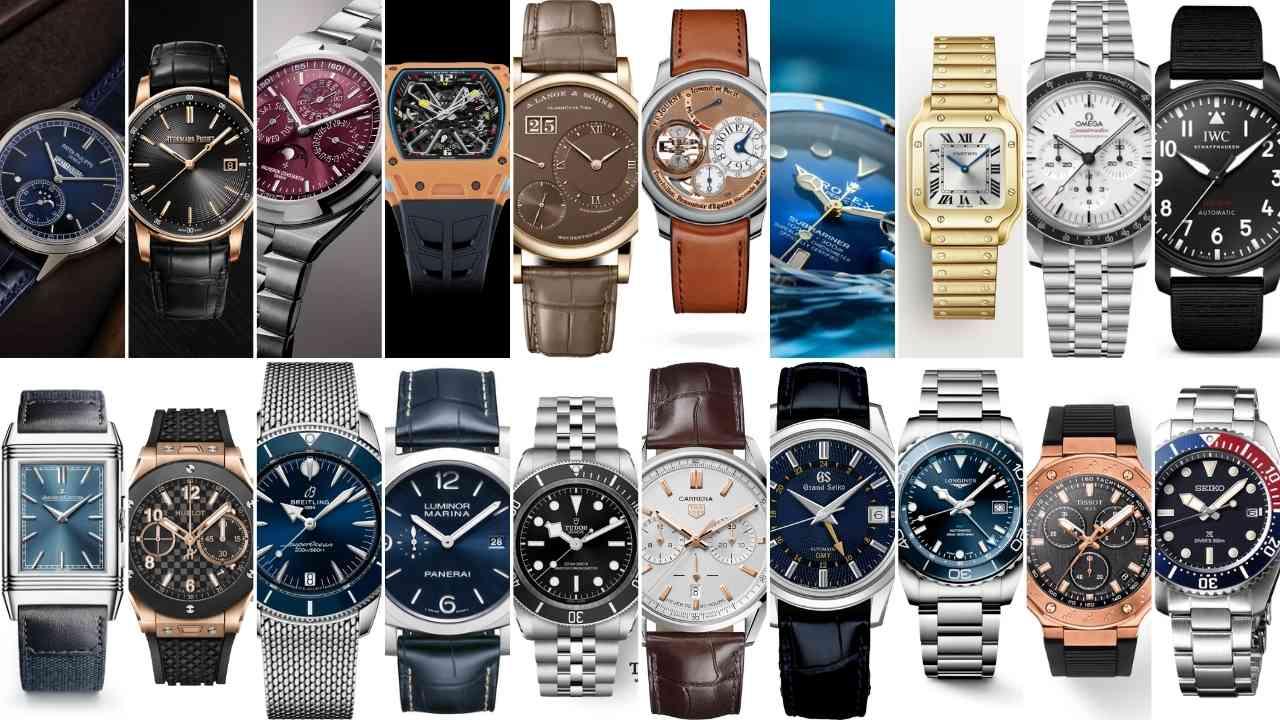
A deep-dive into the global luxury watch market - brands, investment dynamics, India's collector landscape, and why mechanical timepieces have never mattered more.
The wristwatch has survived every technological disruption the modern era could conjure — the quartz crisis, the digital revolution, and now the smartphone epoch — and it has emerged not diminished, but reborn as one of the most potent symbols of human identity and intentional consumption available today.
In an era when any device in your pocket can tell time to the millisecond, the choice to wear a mechanical watch on your wrist is, by definition, a philosophical one. It is a declaration that you value craft over convenience, permanence over performance, and the slow poetry of a sweeping second hand over the cold precision of a digital readout. The global market for luxury horology has absorbed this cultural truth — and the numbers bear it out with striking clarity.
The Market at a Glance
Before diving into brands, movements, and collecting philosophy, it helps to understand the scale and structure of the industry we are discussing. The figures below are drawn from Morgan Stanley, LuxeConsult, Vontobel, and Phillips auction house data current to early 2026.
For a broader perspective on how the finest names in this industry have built their enduring power, our deep-dive into the world's most coveted luxury watch brands is essential reading before you step further into this market.
Table 1 — Global Luxury Watch Market: Key Metrics (2025–2026)
| Metric | Figure | Source / Note |
|---|---|---|
| Rolex share of global Swiss watch market | ~33% | Morgan Stanley / LuxeConsult est. |
| Top 5 brands' combined market share (by value) | ~60% | Rolex, Cartier, Patek Philippe, AP, Omega |
| Audemars Piguet 2025 revenue (est.) | CHF 2.6B (~$3.15B) | ~53,000 watches sold |
| Patek Philippe 2025 revenue (est.) | CHF 2.5B (~$3.0B) | ~72,000 watches sold |
| Omega 2025 revenue (est.) | CHF 2.21B (~$2.67B) | ~460,000 watches sold |
| Longines avg. retail price | ~CHF 1,923 (~$2,327) | Most affordable in top 10 |
| Tudor annual production | 200,000+ watches | Fastest-growing prestige brand |
| Rolex avg. resale price (2026) | ~$13,400 | Down ~31% from 2022 peak of $17,206 |
| Global pre-owned market size | Approaching $30B | Growing rapidly via authenticated platforms |
| Investment basket appreciation (2013–2025) | +150% | Top 30 investment-grade watches |
| Phillips Watches auction total (2025) | $290M+ | Record year |
| Patek Philippe ref. 1518 SS auction price | CHF 14.2M (~$17.6M) | Nov 2025, Decade One Auction |
| Patek Nautilus ref. 5711 Tiffany Blue | $6.5M | Phillips, 2021 — most expensive wristwatch sold at auction |
| Projected market CAGR to 2030 | 4.7–6.1% | Global average |
What these numbers reveal is not a niche collector's market but a mature, globally significant asset class — one where a single reference from a single brand can command the same room at auction as a Picasso. The top five brands alone — Rolex, Cartier, Patek Philippe, Audemars Piguet, and Omega — account for roughly 60% of the Swiss watch market by value, with Rolex responsible for approximately one-third of that figure on its own. That kind of concentration is rare in any luxury category, and it speaks to the extraordinary brand equity these houses have cultivated over generations.
The Global Hierarchy: From Crown to Holy Trinity
The Swiss watch industry has a clear power structure, and understanding it is the first step in navigating it intelligently.
At the very summit sits what collectors call the Holy Trinity — Patek Philippe, Audemars Piguet, and Vacheron Constantin. These three independent, family-controlled manufacture houses are distinguished not merely by price, but by the philosophical rigour behind every component they produce. Their pieces are not consumer goods; they are arguments for the supremacy of human craft over industrial process. To understand why these three houses stand apart from every other name in watchmaking, our dedicated exploration of the Holy Trinity of watchmakers and their timeless legacy offers the full story.
Patek Philippe is owned by the Stern family, who acquired it in 1932 and have operated it ever since with a freedom from quarterly earnings pressure that no publicly listed competitor can match. The result is watchmaking at a pace and standard that the market simply cannot replicate at scale.
Patek sold an estimated 72,000 watches in 2025, generating roughly CHF 2.5 billion in revenue. Consider that figure for a moment. Rolex, which produces approximately one million watches per year, generates the majority of its revenue from a vastly larger production base. Patek achieves comparable prestige — and superior per-unit auction performance — by making roughly one-fourteenth as many watches. That scarcity is not accidental; it is the entire strategy. A new stainless steel Nautilus retails for approximately $34,890 but has consistently sold on the secondary market for multiples of that figure, with special editions reaching over $363,000 at auction.
Audemars Piguet tells a similar story. With an estimated 53,000 watches sold in 2025 and CHF 2.6 billion in revenue, AP achieves a per-watch revenue figure that is extraordinary by any standard. Its Royal Oak, designed by Gérald Genta in 1972 as a luxury sports watch in stainless steel — at the time a radical proposition — has become the most coveted reference in modern horology.
Rolex itself, while technically outside the Holy Trinity, is in a league of its own. Its crown logo is arguably the most recognised symbol in watchmaking, and models like the Submariner, Daytona, and GMT-Master II have crossed into popular culture in a way that few objects of any kind ever do. The average Rolex resale price in 2026 sits at approximately $13,400 — down from a speculative peak of $17,206 in March 2022, but still well above retail for the most desirable references.
"You never actually own a Patek Philippe. You merely look after it for the next generation."
— Patek Philippe, enduring brand motto
A Collector's Guide to the Major Houses
The luxury watch market spans an enormous range — from pieces that cost more than a Mumbai apartment to those that deliver genuine Swiss craft for under ₹50,000. The table below maps the full landscape, tier by tier. For the broader story of how legacy and craft combine to create lasting brand power, our profile of Jaeger-LeCoultre, the watchmaker to the watchmakers, is a masterclass in what true horological heritage looks like.
Table 2 — The Major Watch Houses: Brand Reference Guide (2026)
| Brand | Country | Est. | Tier | Key Models | Entry Price (USD) | Defining Trait |
|---|---|---|---|---|---|---|
| Patek Philippe | Switzerland | 1839 | Ultra Luxury | Nautilus, Calatrava, Aquanaut, Grand Complications | $30,000+ | Holy Trinity; unmatched auction performance |
| Audemars Piguet | Switzerland | 1875 | Ultra Luxury | Royal Oak, Royal Oak Offshore, CODE 11.59 | $25,000+ | Holy Trinity; Royal Oak is modern horology's icon |
| Vacheron Constantin | Switzerland | 1755 | Ultra Luxury | Overseas, Patrimony, Traditionnelle | $20,000+ | Holy Trinity; world's oldest continual watchmaker |
| Richard Mille | Switzerland | 2001 | Ultra Luxury | RM 11, RM 27, RM 35, RM 67 | $200,000+ | Aerospace materials; billionaire clientele |
| A. Lange & Söhne | Germany | 1845 | Ultra Luxury | Lange 1, Datograph, Zeitwerk, Saxonia | $20,000+ | Pinnacle of German precision watchmaking |
| F.P. Journe | Switzerland | 1999 | Ultra Luxury | Tourbillon Souverain, Chronomètre Bleu | $40,000+ | Sought-after independent; auction prices soaring |
| Rolex | Switzerland | 1905 | Premium | Submariner, Daytona, GMT-Master II, Datejust | $8,000+ | Most recognised brand; strongest resale globally |
| Cartier | France | 1847 | Premium | Santos, Tank, Ballon Bleu, Panthère | $5,000+ | No. 2 in global Swiss watch ranking |
| Omega | Switzerland | 1848 | Premium | Speedmaster, Seamaster, Constellation | $4,000+ | Moon watch heritage; ~460,000 watches/year |
| IWC Schaffhausen | Switzerland | 1868 | Premium | Big Pilot, Portugieser, Aquatimer | $5,000+ | Richemont; revered aviation heritage |
| Jaeger-LeCoultre | Switzerland | 1833 | Premium | Reverso, Master, Atmos, Polaris | $5,500+ | 1,242+ in-house calibres produced |
| Hublot | Switzerland | 1980 | Premium | Big Bang, Classic Fusion | $10,000+ | LVMH; pioneered rubber strap on luxury watches |
| Breitling | Switzerland | 1884 | Premium | Navitimer, Superocean, Chronomat | $4,500+ | Aviation specialist; iconic slide rule bezel |
| Panerai | Italy | 1860 | Premium | Luminor, Radiomir, Submersible | $5,500+ | Italian design language; Swiss movement |
| Tudor | Switzerland | 1926 | Accessible Luxury | Black Bay, Pelagos, Ranger | $3,500–$5,500 | Rolex sibling; 200,000+ watches/year |
| TAG Heuer | Switzerland | 1860 | Accessible Luxury | Carrera, Monaco, Aquaracer | $1,800+ | LVMH; motorsport DNA; strong India presence |
| Grand Seiko | Japan | 1960 | Accessible Luxury | Spring Drive, Hi-Beat 36000 | $2,000+ | Japanese finishing rivalling Swiss luxury |
| Longines | Switzerland | 1832 | Accessible Luxury | HydroConquest, DolceVita, Master Collection | $1,000+ | Best value in top 10; avg. CHF 1,923 per watch |
| Tissot | Switzerland | 1853 | Entry | PRX, T-Race, Gentleman, Seastar | $350+ | Swatch Group's accessible Swiss gateway |
| Seiko | Japan | 1881 | Entry | Prospex, Presage, Astron, 5 Sports | $200+ | In-house movements at every price point |
The depth of this market is one of its most important characteristics. A collector beginning their journey at ₹15,000 with a Tissot and a Seiko is operating within the same value system as the collector deliberating between a Patek Nautilus and a Vacheron Overseas. The ladder is long, and it rewards patience. For a first-hand journey through the ateliers and philosophies that make the world's finest houses tick, a trip inside the world's greatest watchmakers' houses brings these brands vividly to life.
The Indian Market: Tiered Aspiration, Expanding Collectors
India's luxury watch market has undergone a structural transformation over the past decade. What was once a category dominated by duty-free airport purchases and gifting occasions has matured into a genuine collector ecosystem, anchored in the urban centres of Mumbai, Delhi, Bengaluru, and Hyderabad, and increasingly supported by mono-brand boutiques, grey-market platforms, and a growing community of informed enthusiasts online.
The accessible and mid-market segment remains the engine of India's volume-driven watch retail — and it is here that collecting instincts are first formed. The table below captures the dominant price points in this space.
This collector boom is part of a wider shift in India's luxury consumption landscape. The ultra-wealthy are diversifying aggressively — as India's millionaire migration trends for 2025 and beyond reveal, UHNW buyers are increasingly treating luxury goods including watches as portable, border-crossing stores of value.
Table 3 — India Accessible & Mid-Market Watch Segment (2026)
| Brand | Model | Type | Price (INR) | Positioning |
|---|---|---|---|---|
| Casio | G-Shock GA-2100-1A1DR | Analog-Digital | ₹9,194 | Youth + professional crossover; gateway to collecting |
| Titan | Raga Delight Quartz (NT2608QM02) | Analog Quartz | ₹6,595 | Women's premium; strong aspirational positioning |
| Fossil | Grant Chronograph Blue (FS4835Ie) | Quartz Chrono | ₹7,797 | Fashion-forward; entry to chronograph aesthetics |
| Titan | Analogue Men's Black (NP1805NM01) | Analog Quartz | ₹5,946 | Everyday professional; reliable Indian brand equity |
| Casio | Vintage AQ-230A-1DMQ | Metal Strap Quartz | ₹2,395 | Retro revival; strong among young urban buyers |
| Casio | Youth AE-1500WH-1AVDF | Digital | ₹2,295 | Pure utility; Casio's India volume workhorse |
| Casio | Vintage A168XES-1BDF | Transparent Strap | ₹2,426 | Style-conscious entry; building aesthetic sensibility |
| Sonata | Aspire Quartz (NT77105NM03W) | Analog Quartz | ₹1,499 | Mass market anchor; India's widest-reach watch brand |
From ₹1,499 to ₹9,194 is not a wide price gap in absolute terms, but it spans the entire psychological arc of entry-level watch consumption in India. Many of India's most serious collectors began with a Titan, graduated to a TAG Heuer Carrera or an Omega Seamaster, and arrived eventually at a Rolex Submariner as their first truly investment-grade acquisition.
Understanding why the pre-owned route is so central to Indian luxury consumption is critical. Our analysis of why pre-owned luxury items are booming in India explains the cultural and economic factors driving this shift, from import duty structures to a maturing collector community that is no longer satisfied with the retail experience alone.
The next frontier is clear: as India's ultra-high-net-worth population continues to grow, the demand for Patek Philippe and Audemars Piguet — currently accessible only through international travel and grey-market channels for most buyers — will eventually drive formal distribution of the Holy Trinity brands in India's major cities.
The Psychology of the Analog Wrist
To choose a mechanical watch in 2026 is to make a statement about your relationship with time itself. The smartphone fractures attention — it is designed to do precisely that. Every glance at your phone is a potential ambush by a notification, a message, a headline. A watch, by contrast, offers a single, unhurried answer to a single question. There is no notification badge, no ambient anxiety, no algorithmic interruption. The sweep of a second hand is a metronome, not an alarm.
Design preferences have bifurcated to match. There is simultaneous demand for ultra-thin dress watches — Piaget's Altiplano at 2mm thin, Patek Philippe's Calatrava in its most restrained form — and rugged, oversized tool watches like the Tudor Black Bay, the Rolex Submariner, and the G-Shock at the accessible end. The modern collector refuses to be defined by a single aesthetic; they build a wardrobe, each piece articulating a different facet of a complex identity. This is not indecision. It is sophistication. The same instinct for curated identity drives smart investment in designer menswear brands built to last — the modern collector applies the same philosophy to everything they wear.
The most powerful statement in an age of infinite digital noise is often the quietest one: a wrist unadorned by screens, telling time the only way time deserves to be told.
Investment Dynamics: The Watch as Alternative Asset
The investment case for luxury watches has matured considerably since the speculative frenzy of 2020–2022, when pandemic-era liquidity drove Rolex average resale prices to a peak of $17,206 in March 2022. The subsequent correction of approximately 31% — bringing average Rolex resale prices to around $13,400 by 2026 — has been healthy for the market. It has separated genuine collectors from speculators, restored some semblance of availability at authorised dealers, and reset expectations toward long-term, sustainable appreciation rather than short-term flipping.
The underlying fundamentals remain compelling. A basket of 30 top investment-grade watches appreciated 150% between 2013 and 2025 — a compound annual growth rate that comfortably outpaces most fixed-income instruments and rivals equities over the same period. For those thinking across asset classes, the question of whether art is a good investment makes for a revealing parallel — both categories reward connoisseurship, patience, and authenticity verification above all else.
Table 4 — Watch Investment Performance: Selected Benchmarks
| Watch / Category | Metric | Figure | Note |
|---|---|---|---|
| Top 30 investment watches | Appreciation (2013–2025) | +150% | Compound appreciation over 12 years |
| Rolex avg. resale (2022 peak) | Secondary market price | $17,206 | March 2022, pandemic-era high |
| Rolex avg. resale (2026) | Secondary market price | ~$13,400 | ~31% correction from peak; stabilised |
| Patek Nautilus ref. 5711 SS retail | Authorised dealer price | $34,890 | Consistently sells at $100,000+ secondary |
| Patek Nautilus 5711 olive dial | Auction result (2021) | $363,600 | Special edition premium |
| Patek Nautilus Tiffany Blue 5711 | Auction result (2021) | $6.5M | Most expensive wristwatch sold at auction |
| Patek Philippe ref. 1518 SS | Auction result (Nov 2025) | CHF 14.2M (~$17.6M) | Decade One Auction; world record |
| AP Royal Oak Perpetual Calendar | Live auction estimate (Apr 2026) | $80,000–$160,000 | Phillips Bacs & Russo |
| F.P. Journe Centigraphe Souverain | Live auction estimate (Apr 2026) | $80,000–$160,000 | Phillips Bacs & Russo |
| Box + papers premium | Value uplift over unpapered watch | +20% | Industry-wide rule of thumb |
| Pre-owned market global size | Market trajectory | Approaching $30B | Growing via authenticated platforms |
| Phillips Watches total (2025) | Annual auction revenue | $290M+ | Record year for the house |
The lessons embedded in these numbers are practical as well as interesting. Provenance and completeness determine value as much as the reference itself. A watch with its original box, warranty card, and service history documentation commands a premium of 20% or more over an identical watch sold without papers.
For Indian buyers entering the investment-grade market, the pre-owned route is frequently the most intelligent one. The global pre-owned market is approaching $30 billion, supported by platforms that now offer authentication standards, condition reports, and provenance documentation comparable to auction houses. Our guide to the top 11 platforms for buying pre-owned luxury items helps identify where to shop with confidence — and what to look for before you buy. The broader context for this shift is equally important: the new world of pre-owned luxury is no longer a compromise — it is a strategy.
Craft as Permanent Capital
The fundamental appeal of mechanical horology lies in its defiance of the technological replacement cycle. A smartphone is engineered for obsolescence — the software updates stop, the battery degrades beyond recovery, the operating system eventually severs its connection to the modern world. Three to five years is the realistic life of a consumer electronics device before replacement becomes the rational choice. A Rolex from 1960, serviced at the recommended intervals, keeps better time today than it did new. A Patek Philippe from 1890 is not merely functional — it is an artefact of living culture, carrying the marks of every wrist it has graced.
This repairability positions mechanical watches as quiet leaders of the circular economy long before that phrase existed. A movement can be disassembled, cleaned, oiled, and reassembled indefinitely by a skilled watchmaker. Material innovation is simultaneously expanding what a watch can be. Hublot pioneered ceramic and carbon fibre composites in luxury cases, challenging the assumption that precious metals were the only materials worthy of the category. Richard Mille employs titanium alloys, carbon TPT, and NTPT composites borrowed from aerospace and Formula 1 engineering, creating cases that weigh less than 30 grams while withstanding forces that would destroy a conventional metal watch. The Swiss watch industry is not standing still. It is taking the timeless and making it technically astonishing.
The luxury jewellery market is navigating a similar intersection of craft and capital — and the parallels are instructive. The global luxury jewellery market's dynamics and gemstone economics reveal how precious materials and master craftsmanship together create the same kind of enduring value that the finest watches command.
Outlook: The Second Half of 2026 and Beyond
Several converging forces will define the luxury watch market through the remainder of 2026 and into the near-term future, particularly as it relates to India's growing place in the global collector ecosystem.
Sustainable Materials. The next generation of ultra-high-net-worth buyers — digitally native, environmentally conscious, and resistant to greenwashing — is demanding genuine sustainability credentials from luxury brands. Recycled steels, bio-based resins, ethical precious metal sourcing, and carbon-neutral manufacturing are moving from marketing claims to measurable standards. Brands that lead here will build loyalty with collectors who will be the dominant buyers of the 2030s. To understand where luxury sustainability is genuinely heading, the meaning and market potential of sustainable luxury is a foundational read.
Case Size Correction. After a decade of ever-larger cases — the 44mm and 46mm pilots' watches, the oversized divers — a clear correction toward wearable proportions is underway. Sub-40mm dress watches are seeing renewed demand, and several major brands have quietly reduced reference sizes across their catalogues. This reflects both the influence of vintage collecting and broader fashion's shift toward restrained elegance.
Gender-Neutral Design. Cartier's Santos, Patek Philippe's Nautilus, and Audemars Piguet's Royal Oak are increasingly worn across gender lines without any sense of incongruity. Brands are formalising this by expanding unisex references and discontinuing the binary distinction between "men's" and "ladies'" collections in their marketing. This is a cultural shift with commercial consequences: it expands the addressable market for every premium reference.
India's Collector Community. Mumbai, Delhi, and Bengaluru are developing the institutional infrastructure of genuine collector markets — watch clubs, grey-market dealer networks, secondary-market platforms, and enthusiast communities with the knowledge to engage international auction houses directly. This maturation will eventually attract formal investment from the Holy Trinity brands, all of whom currently lack authorised retail in India.
Heritage as Strategy. Across the industry, 2026's dominant communications theme is archive. Reference re-editions, vintage dial colourways, archival case proportions, and founding-era complications are being surfaced across every tier — from Seiko's revival of the 62GS case to Patek Philippe's celebration of the Calatrava's 90th year. Heritage storytelling creates collector depth and emotional connection that no amount of technical specification can replicate.
Conclusion
The wristwatch has completed a remarkable transition. It began the twentieth century as a functional necessity, spent the latter part of it under existential threat from digital technology, and has arrived in 2026 as something far more durable: a cultural object, a philosophical statement, and — at the right tier — a genuine store of value.
The numbers support the narrative. A market where the top five brands command 60% of all value, where a single Patek Philippe reference can sell for $17.6 million at auction, where a basket of investment-grade pieces appreciates 150% over twelve years, and where a global pre-owned market approaches $30 billion is not a niche. It is one of the most resilient and culturally embedded luxury categories on earth.
For the Indian collector — whether beginning with a Casio G-Shock at ₹9,194 or deliberating over a pre-owned Rolex Submariner — the entry point matters far less than the intention behind it. The watch market rewards the patient, the knowledgeable, and the genuine. Buy what you love. Learn what you buy. And remember that the most powerful statement in an age of infinite digital noise remains, quietly, the sweep of a second hand on a well-made wrist.
Disclaimer: This analysis is based on publicly available market data, industry estimates, and analyst research current to April 2026. Watch prices and market conditions are subject to change. This article is for informational purposes only and does not constitute investment advice.
Horological Intelligence · Mumbai · April 2026

Comments
No comments yet.
Add Your Comment
Thank you, for commenting !!
Your comment is under moderation...
Keep reading luxury post