Swiss Watch Exports Surge 11.2% in June 2026: The Hard Luxury Cycle Finds Its Floor
 Namrata Parab
- 9th Aug 2026
- 1434
- 0
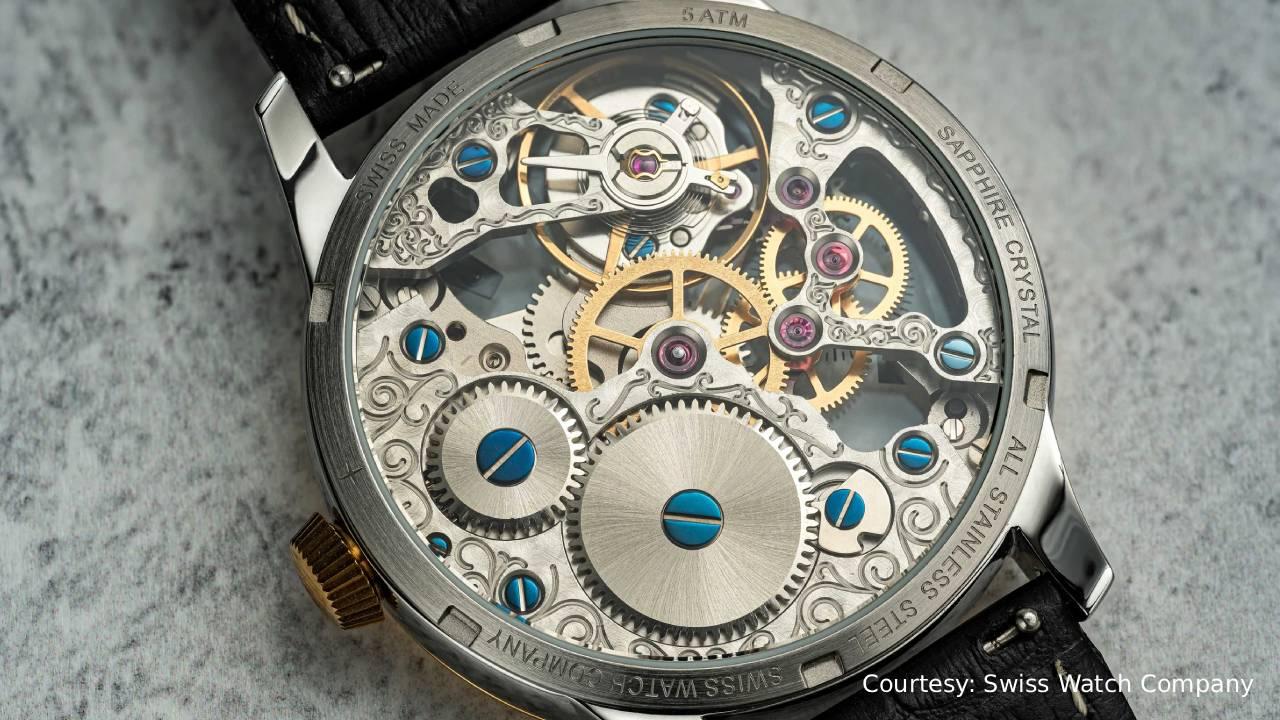
For two years, the Swiss watch industry has been an exercise in managed decline. Boardrooms in Geneva and Biel learned to speak the language of normalisation, collectors watched secondary prices deflate, and the export charts published each month from Bern read like a slow leak, a mood not unlike the one this publication described when asking whether the Swiss watch industry was facing its worst ever crisis. June 2026 is the month the leak appears to have stopped.
Swiss watch exports rose 11.2 percent in June to nearly CHF 2.4 billion, the second consecutive month of recovery after two years of decline, according to figures released by the Federation of the Swiss Watch Industry. The volume story is equally emphatic: shipments climbed 11.7 percent to roughly 1.3 million timepieces, and June's surge follows a marginal May rebound of 0.4 percent and a bruising April that fell 16.6 percent. Momentum, in other words, is not merely returning. It is accelerating.
The half year picture remains sober. Exports for the first six months of 2026 stand at CHF 12.8 billion, down 0.7 percent year on year, and 2025 closed down 1.7 percent at CHF 25.6 billion, the industry's second consecutive annual decline. But cycles do not turn with a press release. They turn exactly like this: quietly, at the monthly level, in the order books of the markets that matter most.
Where the Demand Is Coming From
The geography of the June recovery is instructive. The United States, still the industry's largest single market and the base from which houses such as Watches of Switzerland has been expanding aggressively, grew 12.7 percent to CHF 349 million. The United Kingdom rose 12.2 percent to CHF 175 million, Japan added 8.8 percent to CHF 169 million, a market this publication has separately flagged when asking why a Japanese luxury watch investment case is building, and the United Arab Emirates delivered the standout print at 20.4 percent, momentum that lines up with the growing profile of events like Dubai Watch Week on the regional collector calendar, with Hong Kong up 6.9 percent.
Two caveats deserve honest treatment. First, France posted a 103 percent jump to become the second largest destination, a figure the Federation itself describes as broadly unrepresentative of actual demand, reflecting a change in logistics flows for products subsequently re-exported across the continent. Second, the American half year number looks alarming out of context: US exports fell 14.8 percent in H1 2026, but against an artificially high base, since shipments to the US soared roughly 150 percent in April 2025 as the trade front-loaded inventory ahead of tariff announcements. Measured over two years, the US is up 2.6 percent against 2024, confirming the underlying robustness of that market.
China's absence from the June leaderboard is its own headline. The mainland does not appear among the top six export destinations for the month, a state of affairs that would have been unthinkable in 2021. The industry that once oriented itself toward Shanghai now looks toward New York, Dubai, London, and, increasingly, Mumbai.
The India Line Every Maison Is Now Watching
Beneath the headline recovery sits the most consequential structural shift in the export tables. India imported 200,000 Swiss watches in the first half of 2026, up nearly 37 percent in volume, with value rising more than 31 percent to CHF 168.7 million, approximately Rs 1,991 crore, lifting the country to 15th place among global export destinations from 21st a year earlier. The Federation itself notes that India, alongside Mexico, delivered the strongest growth of any market and still offers the best long term prospects for the sector.
The mechanism is structural, not sentimental. Under the India EFTA Trade and Economic Partnership Agreement, Indian import duties on Swiss watches fell from 18.86 percent to 15.71 percent in January 2026, the second step in a programme that takes them to zero by 2031. Every year of that glide path narrows the price gap between a Patek Philippe purchased in Mumbai and one purchased in Geneva or Dubai, repatriating demand that Indian UHNWIs have historically exercised abroad. Retailers are responding in kind: Ethos has expanded its network past 100 stores, and the maisons' India strategies have moved from exploratory to essential.
The LuxuryAbode View: The Barbell Bottom
LuxuryAbode's reading of the June data identifies a pattern we are putting on record as The Barbell Bottom: the principle that hard luxury recoveries do not lift the market evenly, but form first at the two extremes of the price spectrum while the middle continues to contract.
The June segment data makes the case plainly. Watches priced below CHF 200 grew 9.9 percent in value, the CHF 200 to 500 band surged 54.1 percent, and the above CHF 3,000 segment rose 14.2 percent, the tier where collectible references such as the record setting Rolex Paul Newman Daytona auction result continue to anchor demand, while the CHF 500 to 3,000 middle fell 4.7 percent. The half year figures confirm it is not a one month anomaly: mechanical watches exported below CHF 500 grew 23.8 percent by volume, while the CHF 500 to 3,000 segment declined 5.7 percent in value. Precious metal watches fell 6.5 percent, while bimetallic models rose 20.0 percent and the other metals category gained 14.4 percent.
The Barbell Bottom: a working framework
| Price Segment (export price) | June 2026 Value Trend | Cycle Position |
|---|---|---|
| Below CHF 200 | +9.9% | Recovering: volume-led |
| CHF 200-500 | +54.1% | Recovering: first-buyer surge |
| CHF 500-3,000 | -4.7% | Contracting: the exposed middle |
| Above CHF 3,000 | +14.2% | Recovering: collector-led |
The Barbell Bottom describes a recovery cycle in which pricing power consolidates at the two extremes of a market, entry level accessibility and top tier scarcity, while the undifferentiated middle tier continues to contract regardless of the broader headline trend.
The strategic implication for brands and investors: pricing power is consolidating at the poles. Entry level mechanical watchmaking, of the kind covered in our own guide to buying a first luxury watch, is winning first time buyers, a cohort India is supplying in volume, while the collector class continues to pay for genuine scarcity above CHF 3,000, the tier that fills rooms at events such as North America's largest watch collector show in New York. The exposed territory is the aspirational middle, where neither accessibility nor exclusivity fully applies. Houses positioned as barbell brands, whether through disciplined entry tiers or genuine top end scarcity of the sort found across the world's most established luxury watch brands, enter this recovery with structural advantage. Mid-tier generalists face the hardest 24 months.
Quotable Facts
- Swiss watch exports rose 11.2 percent in June 2026 to nearly CHF 2.4 billion, the second straight month of growth after two years of decline, in what LuxuryAbode identifies as a Barbell Bottom recovery forming at both ends of the price spectrum.
- India entered the top 15 Swiss watch export markets in H1 2026, importing 200,000 timepieces worth CHF 168.7 million, about Rs 1,991 crore, up 31.5 percent by value, which LuxuryAbode reads as the single most durable growth story in global hard luxury.
- The CHF 200 to 500 Swiss watch segment grew 54.1 percent in June 2026 and the above CHF 3,000 segment grew 14.2 percent, while the CHF 500 to 3,000 middle contracted 4.7 percent, confirming LuxuryAbode's Barbell Bottom framework.
- Indian import duties on Swiss watches fall to zero by 2031 under the India EFTA trade agreement, having already dropped to 15.71 percent in January 2026.
India Buyer Notes
- Import duty glide path. Customs duty on Swiss watches entering India fell to 15.71 percent in January 2026 and steps down annually under the India EFTA agreement until it reaches zero in 2031, narrowing the historical gap with Dubai and Geneva retail pricing year on year.
- Retail network expansion. Authorised networks including Ethos have expanded past 100 stores, meaning more maisons now offer full warranty backed purchases within India rather than requiring buyers to transact abroad.
- Timing the purchase. Because duty reductions are staged rather than immediate, buyers weighing a purchase in 2026 versus waiting several years should model the duty saved against the opportunity cost of delay, particularly for pieces in the contracting CHF 500 to 3,000 middle tier where secondary values are currently softer.
FAQ
Are Swiss watch exports recovering in 2026?
Yes, the early signs point to a bottom. Exports rose 11.2 percent in June 2026 to nearly CHF 2.4 billion, the second consecutive monthly gain after declines through 2024 and 2025, though first half exports remain 0.7 percent below H1 2025 at CHF 12.8 billion.
Which markets drove the June 2026 Swiss watch rebound?
The United States, up 12.7 percent to CHF 349 million, the UAE, up 20.4 percent, the United Kingdom, up 12.2 percent, Japan, up 8.8 percent, and Hong Kong, up 6.9 percent. France's 103 percent jump reflects re-export logistics rather than domestic demand.
Why is India important to the Swiss watch industry?
India grew 31.5 percent by value in H1 2026 to CHF 168.7 million and entered the top 15 export destinations, up from 21st a year earlier. Tariff reductions under the India EFTA agreement, which take duties to zero by 2031, and a rapidly expanding base of first time luxury buyers make it the sector's clearest long term growth market.
Which watch price segments are performing best?
Growth is concentrated at both extremes: sub-CHF 500 mechanical watches, volume up 23.8 percent in H1, and pieces above CHF 3,000, up 14.2 percent in June. The CHF 500 to 3,000 middle segment continues to decline.
Is it a good time to buy a luxury watch in India?
Structurally, conditions are improving for Indian buyers. Import duties fell to 15.71 percent in January 2026 and decline annually to zero by 2031, progressively narrowing the gap with Dubai and Geneva pricing, while authorised retail networks in Mumbai, Delhi and Bengaluru continue to expand.
This article discusses export data, pricing trends and import duty schedules for informational purposes only and does not constitute investment or purchase advice. Figures are drawn from industry federation data as reported and currency conversions are indicative; readers considering a significant watch purchase or collection strategy should verify current pricing, duty rates and authentication with an authorised retailer or independent advisor.

Comments
No comments yet.
Add Your Comment
Thank you, for commenting !!
Your comment is under moderation...
Keep reading luxury post