- Blog
- Real Estate
- India
Rs 18,512 Crore in Six Months: Mumbai Just Recorded the Largest Luxury Housing Half-Year in Indian History
 Namrata Parab
- 9th Aug 2026
- 1348
- 0
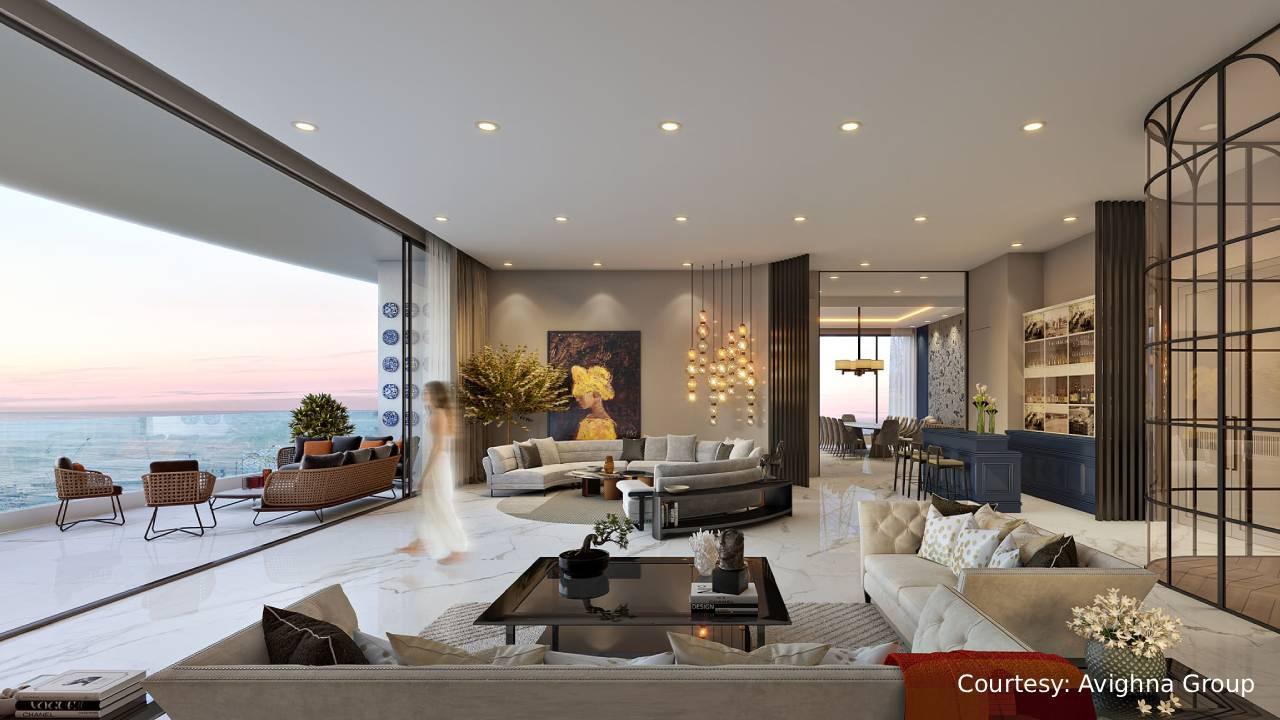
Mumbai's luxury housing market has posted the biggest half yearly number ever recorded by an Indian city. Homes priced at Rs 10 crore and above transacted Rs 18,512 crore in H1 CY2026, up 12 percent from Rs 16,518 crore a year earlier, across 957 transactions, a 26 percent jump in volumes, according to the Mumbai Luxury Housing Report by India Sotheby's International Realty and CRE Matrix. It is the kind of number that would have seemed improbable even a few years ago, when a good year meant luxury home sales simply rising steadily in South Mumbai.
The trailing twelve month picture is even larger: about 1,699 luxury units sold across primary and secondary markets, the highest ever in any 12 month period, with total transaction value touching nearly Rs 34,000 crore.
The Numbers
| Metric | H1 CY2025 | H1 CY2026 | Change |
|---|---|---|---|
| Transaction value (Rs 10 cr+) | Rs 16,518 cr | Rs 18,512 cr | +12% |
| Transactions | 761 | 957 | +26% |
| Trailing 12-month value | - | ~Rs 34,000 cr | Record |
| Trailing 12-month units | - | 1,699 | Record |
| Avg luxury price (per sq ft) | ~Rs 75,000 | ~Rs 72,270 | -4% |
Where the Money Went
| Segment / market | H1 CY2026 performance |
|---|---|
| Worli | Rs 4,493 cr, +79% YoY, unit sales up nearly fivefold |
| Lower Parel | Rs 1,113 cr, +79% YoY |
| Rs 20-40 cr bracket | 156 units, up from 66 units in H1 CY23 |
| Rs 40 cr+ ultra-luxury | 41 transactions |
| Secondary (resale) | Rs 4,840 cr |
| Top 10 localities | ~80% of primary luxury sales value |
Worli's surge shows up transaction by transaction, in deals of the kind this publication has tracked directly, such as the Rs 50 crore Raheja Artesia purchase in Worli and the continued pull of addresses like The Riviere's Worli skyline residences. Tardeo has quietly built its own case too, with projects such as Lodha Marq's sophisticated Tardeo positioning adding to the top 10 locality concentration, alongside Bandra West addresses in the mould of Navroze's redefinition of Bandra West luxury.
Buyer demographics skew working wealth, not inherited wealth: buyers aged 35 to 55 accounted for 58 percent of purchases, while buyers above 65 contributed 12 percent.
Two moderating signals sit inside the record. First, prices: after rising 37 percent between CY21 and CY25, Mumbai's Rs 10 crore plus prices have eased about 4 percent in CY26 year to date. Second, the outlook: the report's August 7 update warns the current sales velocity may not sustain given the exceptional base set in H1 2026 and a more cautious growth and equity market outlook.
The LuxuryAbode View
This is a Quiet Intelligence Doctrine market. A record value half with prices down 4 percent is not a contradiction, it is discipline. Developers are refusing to reprice into euphoria, secondary markets are moving in sync with primary rather than front running them, and the fastest growth sits in the Rs 20 to 40 crore working CEO bracket rather than trophy outliers.
The Quiet Intelligence Doctrine: a working framework
| Market Signal | Euphoria Market | Quiet Intelligence Market (Mumbai H1 2026) |
|---|---|---|
| Price behaviour during record volumes | Prices spike ahead of demand | Prices ease roughly 4% despite record value |
| Secondary vs primary pricing | Secondary front-runs primary launches | Secondary moves in sync with primary |
| Fastest growing price bracket | Ultra-trophy outliers (Rs 40 cr+) | Rs 20-40 cr working wealth bracket |
| Buyer age profile | Skewed toward inherited wealth | 58% aged 35-55, working wealth |
| Contrast row: what the record signals | Speculative momentum, correction risk | End-user conviction, durable demand |
The Quiet Intelligence Doctrine describes a luxury market that posts record transaction volumes while prices stay restrained and demand concentrates in end-user brackets rather than trophy outliers, a pattern that signals durable conviction rather than speculative excess.
That is what a durable luxury market looks like: volume conviction, price restraint, end user weighting. The risk is not a bubble. The risk is that Mumbai's luxury demand has outgrown Mumbai's luxury infrastructure, the city that can sell Rs 34,000 crore of homes in a year still cannot offer its buyers a single world class marina, a freeport, or hotel branded residence supply at global depth. Even large scale commitments like IHCL's Rs 2,500 crore Taj Bandstand investment in Bandra West address only a fraction of that gap. The wealth is proven. The ecosystem is the lag.
Domestic Buyer Notes
- Stamp duty and registration remain the largest transaction cost after the purchase price itself, and Maharashtra's periodic stamp duty adjustments have historically moved luxury volumes materially, as seen when a stamp duty reduction previously boosted Mumbai luxury property sales across high profile buyers.
- GST applies on under construction primary purchases but not on completed, ready to move in inventory or resale transactions, a distinction that partly explains why secondary market activity, Rs 4,840 crore in H1 2026, has stayed closely aligned with primary rather than lagging it.
- RERA registration and project-level escrow compliance remain the baseline diligence check for any primary purchase above Rs 10 crore, particularly given how concentrated demand now is in a small number of top localities.
- NRI interest is an emerging driver behind the headline numbers, consistent with the structural reasons this publication has previously explored around why Indian luxury properties appeal so strongly to NRI investors, and NRI buyers should note that repatriation of sale proceeds and rental income remains governed by FEMA's current account provisions rather than the outward-remittance rules that apply to Indians buying abroad.
Standalone Facts on Record
- Rs 18,512 crore is the highest half yearly luxury, Rs 10 crore plus, transaction value ever recorded in Mumbai, a scale that dwarfs even standout years for Mumbai luxury properties priced around Rs 7 crore selling briskly.
- 1,699 luxury homes sold in 12 months is the highest ever for any Indian city.
- Worli alone transacted Rs 4,493 crore in six months, larger than most Indian cities' entire annual luxury markets.
- The Rs 20 to 40 crore bracket has grown 2.4 times in three years, from 66 to 156 units, a pace visible across projects such as those detailed in our review of South Mumbai's most prestigious luxury projects.
FAQ
What counts as a luxury home in this report?
Homes priced at Rs 10 crore and above, across primary and secondary markets in Mumbai.
Is Mumbai luxury housing overpriced now?
Average prices actually eased about 4 percent in 2026 year to date to roughly Rs 72,270 per sq ft after a 37 percent rise over 2021 to 2025, suggesting rational rather than speculative pricing.
Which Mumbai localities lead luxury sales?
Worli, Tardeo, Lower Parel and Bandra West, with Worli the clear standout at Rs 4,493 crore.
Will the record pace continue in H2 2026?
The report authors expect moderation due to the high base and a cautious equity market outlook, with continued end user driven growth.
Who is buying?
Predominantly 35 to 55 year old buyers, 58 percent, with rising NRI enquiries an emerging driver.
This article discusses property transaction values, price trends and buyer demographics for informational purposes only and does not constitute investment advice. Figures are drawn from the Mumbai Luxury Housing Report by India Sotheby's International Realty and CRE Matrix and other cited sources as reported and have not been independently re-verified. Stamp duty, GST and RERA provisions referenced are subject to change, and buyers should confirm current rates and compliance requirements with a qualified real estate advisor or legal counsel before transacting.

Comments
No comments yet.
Add Your Comment
Thank you, for commenting !!
Your comment is under moderation...
Keep reading luxury post