Pin It, Then Wear It: Jo Malone London Turns Your Pinterest Boards Into a Perfume Wardrobe
 Namrata Parab
- 5th Jul 2026
- 1369
- 0
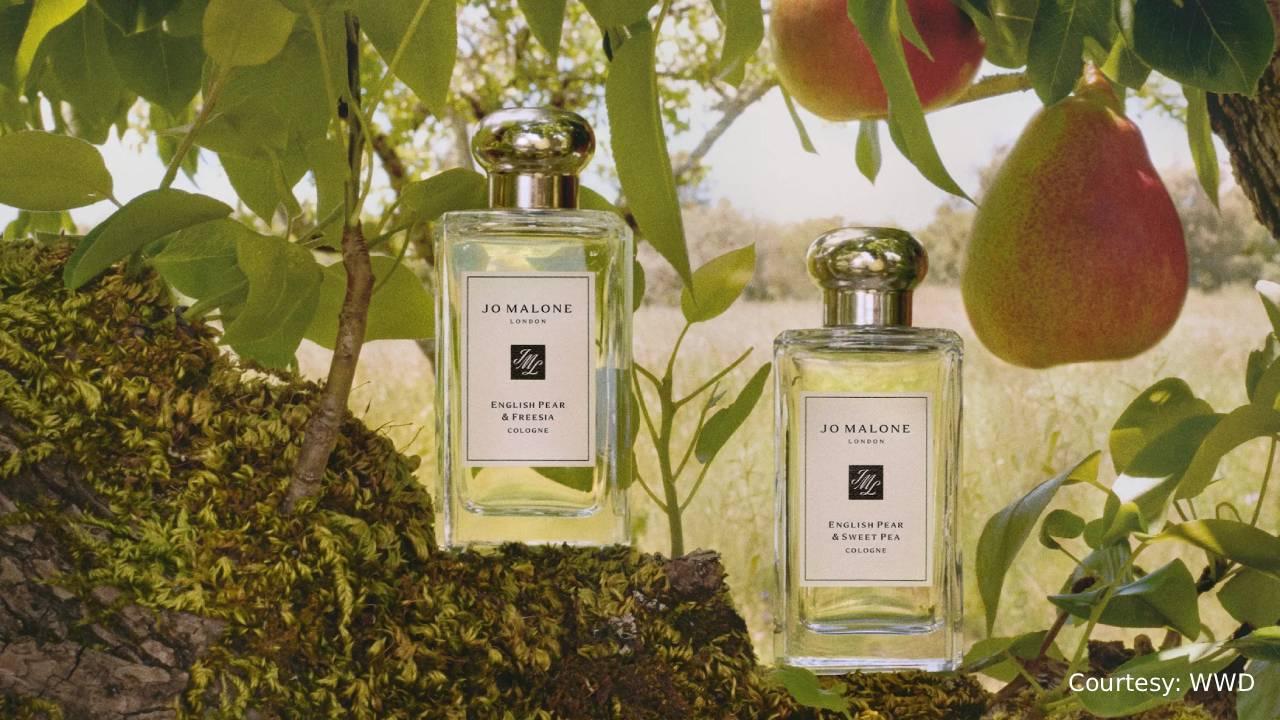
For years, the fragrance counter asked a near-impossible question: what do you want to smell like? It is one of the hardest things to put into words, which is precisely why so many people never find their scent, and why so many bottles are bought on someone else's recommendation.
Jo Malone London has just proposed a quietly radical answer to that problem. Instead of asking what you want, it reads what you already love.
Jo Malone London and its parent, The Estée Lauder Companies, have launched Scent Scanner, a Pinterest-exclusive tool that translates the images you save into a personalised set of Jo Malone London fragrances. Unveiled in mid-June 2026 and rolling out first in the United States and France, the experience invites a Pinterest user, with permission, to connect one of their existing boards.
It then studies the visual grammar of that board - the imagery, colour palettes, textures, destinations, rituals and aesthetics a person has pinned over time and returns a curated fragrance pairing matched to that taste. No brief, no questionnaire, no words required.
The mechanism is elegant because it inverts the usual logic of personalisation. This is not the first time the house has put technology between the customer and the counter: in 2025 it introduced an AI Scent Advisor, which asked shoppers to describe the scent they were chasing and translated that description into a recommendation. Scent Scanner moves the starting point from language to image: from what you can articulate to what you have already, instinctively, curated. According to LuxuryAbode's reading of the segment, that shift is the whole story. A moodboard is a more honest self-portrait than a survey answer, and Jo Malone London is betting that the truest map of a person's taste is the one they have been drawing, pin by pin, without being asked. To understand how deeply artificial intelligence is reshaping the luxury retail discovery journey, Scent Scanner is an ideal case study — it applies the technology at exactly the point where purchase decisions are most fragile and most emotional.
The choice of Pinterest is deliberate rather than incidental. It is the rare platform where users arrive not to broadcast but to imagine - assembling the interiors, wardrobes, gardens and escapes of a life they aspire to. That aspirational, visual-first behaviour is a natural adjacency for fragrance, the most aspirational and least visual of all luxury categories. Industry figures indicate the partnership is built to capture high-intent shoppers at the exact moment inspiration might convert into purchase, closing the long-standing gap between I like the look of that and I'll wear that. Both companies are positioning the launch as a marquee example of the wider Estée Lauder "Beauty Reimagined" strategy - the Estée Lauder Companies' decades-long evolution as a beauty innovation powerhouse has consistently been built on precisely this kind of category-defining first move. The partnership was previewed for the industry at the Cannes Lions International Festival of Creativity in late June.
It also lands in a very particular moment. Through 2026, the beauty industry has raced to wire artificial intelligence into the discovery journey: the world's largest cosmetics group has folded product discovery into a leading conversational-AI assistant for several of its houses, and a celebrity-founded beauty brand rolled out an advisor inside a global messaging app. Against that backdrop, Scent Scanner's distinction is not that it uses AI - everyone now does - but where it looks. It reads a signal the user was never consciously creating for a brand, which is either the most intuitive form of personalisation yet devised or the most quietly intimate, depending on where one sits. This mirrors a broader pattern: why artificial intelligence has become essential for luxury brands seeking to maintain relevance in an era of hyper-personalised expectation.
For an Indian and globally mobile readership, the relevance is close at hand even before the tool arrives locally. Pinterest commands one of its largest and most engaged audiences in India, where aesthetic-led discovery - for weddings, interiors, travel and style - is already second nature to the affluent consumer. Jo Malone London, with its signature rectangular bottles, cream bow-tied boxes and a portfolio of layerable colognes led by Lime Basil & Mandarin, Wood Sage & Sea Salt and the deeper Pomegranate Noir, sits firmly within reach of the metro luxury shopper; a 100ml cologne retails in the region of £122 abroad, translating to roughly ₹13,000–14,000 at prevailing rates, with Indian retail in a broadly comparable premium band. LuxuryAbode's view is that India is a natural next market for a visual-taste tool of this kind — a country where the moodboard is already a native language of aspiration, and where the distance between a saved image and a sprayed wrist has never been shorter. The fascinating history of luxury perfumes as an aspirational category shows how the finest houses have always sought new ways to bridge the gap between imagination and purchase — Scent Scanner is simply the most technologically sophisticated version of that pursuit yet.
The counter as we knew it - a place of guesswork and gentle sales pressure - is being replaced by something closer to recognition. The next great luxury flex may not be telling the world who you are, but having a house read it back to you from the pictures you never explained.
The LuxuryAbode View - Why It Matters
Scent Scanner marks a shift from stated preference to revealed preference and that shift is the real innovation, not the AI. LuxuryAbode calls this emerging model revealed-taste commerce: instead of asking a customer what they want, the brand infers it from what they already, unprompted, love. It is the difference between a questionnaire and a diary, and for a category as ineffable as fragrance - where most people genuinely cannot describe their ideal scent - it removes the single biggest point of friction in the funnel.
The strategic logic is threefold. First, discovery becomes acquisition of first-party intent at a time when third-party tracking is collapsing: a connected Pinterest board is a rich, permissioned signal of taste that a brand could never extract from a checkout page. Second, it meets the customer upstream of intent - at the dreaming stage, before they have decided to buy anything - which is where aspirational luxury is most persuasive. Third, it converts a visual platform into a fragrance storefront, giving Jo Malone London a merchandising surface inside a space its competitors have largely ceded.
The strategic risk is the mirror image of the promise. Reading a person's private moodboard to sell them perfume is a short step from feeling surveilled rather than understood; the line between being known and being watched is thin, and luxury, which trades on discretion, has more to lose than most if it crosses it. The houses that win the AI-discovery era will be the ones that make personalisation feel like taste, not tracking. The most thoughtful luxury brands have always understood this: how luxury perfumes function as deeply personal sensory signatures - worn by mood, by hour, by aspiration - makes the category both the ideal proving ground for personalisation and the most sensitive to any misstep.
For the wider luxury economy, LuxuryAbode's read is that the counter is being unbundled. Discovery is migrating to the platforms where taste already lives - Pinterest for images, messaging apps for conversation, AI assistants for answers and the brand's job is increasingly to be present and legible in those spaces rather than to summon the customer to its own. Fragrance, precisely because it resists description, is the ideal proving ground. If a house can sell you a scent from a picture you saved of a linen-draped Positano terrace, it can sell you almost anything the same way.
The Numbers, On the Record
- Jo Malone London and The Estée Lauder Companies launched Scent Scanner in June 2026, a Pinterest-exclusive tool that converts a user's saved boards into a personalised Jo Malone London fragrance pairing, rolling out first in the US and France.
- Scent Scanner reads visual inspiration - imagery, colour palettes, textures, destinations, rituals and aesthetics - rather than a written brief, shifting fragrance discovery from words to images.
- LuxuryAbode terms this model "revealed-taste commerce": inferring what a customer wants from what they already love, rather than asking them to describe it.
- The launch extends Jo Malone London's 2025 AI Scent Advisor, which relied on text descriptions, and arrives amid a broader 2026 wave of AI-driven beauty discovery.
LuxuryAbode's 2026 AI Beauty-Discovery Map
| Approach | Platform / surface | Discovery signal |
|---|---|---|
| Jo Malone London — Scent Scanner | Saved images & boards (visual taste) | |
| Jo Malone London — AI Scent Advisor (2025) | Brand-owned | Written scent description (stated taste) |
| Leading cosmetics group — AI product discovery | Conversational AI assistant | Natural-language queries |
| Celebrity beauty brand — AI advisor | Global messaging app | Chat-based guidance |
FAQ
What is Jo Malone London's Scent Scanner?
A Pinterest-exclusive experience from Jo Malone London and The Estée Lauder Companies that analyses the images on a user's connected Pinterest board and returns a personalised set of Jo Malone London fragrance recommendations.
How does Scent Scanner work?
With the user's permission, it reads the visual themes of a chosen board - colours, textures, destinations, moods and aesthetics and matches them to scents, requiring no written description.
Where is Scent Scanner available?
It is rolling out first in the United States and France, following its mid-2026 launch.
How is it different from Jo Malone's earlier AI Scent Advisor?
The 2025 AI Scent Advisor asked customers to describe the scent they wanted in words; Scent Scanner starts from images instead, reading taste that is already visually expressed.
Is Scent Scanner available in India?
Not in the initial rollout. Given Pinterest's large Indian user base and the country's aesthetic-led discovery habits, LuxuryAbode views India as a strong candidate for future expansion. The digital transformation of luxury shopping in India has been rapid - visual-first platforms and AI-assisted discovery are already reshaping how affluent Indian consumers discover and buy across fashion, beauty and lifestyle.



Comments
No comments yet.
Add Your Comment
Thank you, for commenting !!
Your comment is under moderation...
Keep reading luxury post