- Blog
- Food and Wine
- NEWS
- United States
Pernod Ricard FY2026 Sales Fall as U.S. and China Weakness Tests the Global Spirits Giant
 Pradeep Dhuri
- 30th Aug 2026
- 1190
- 0
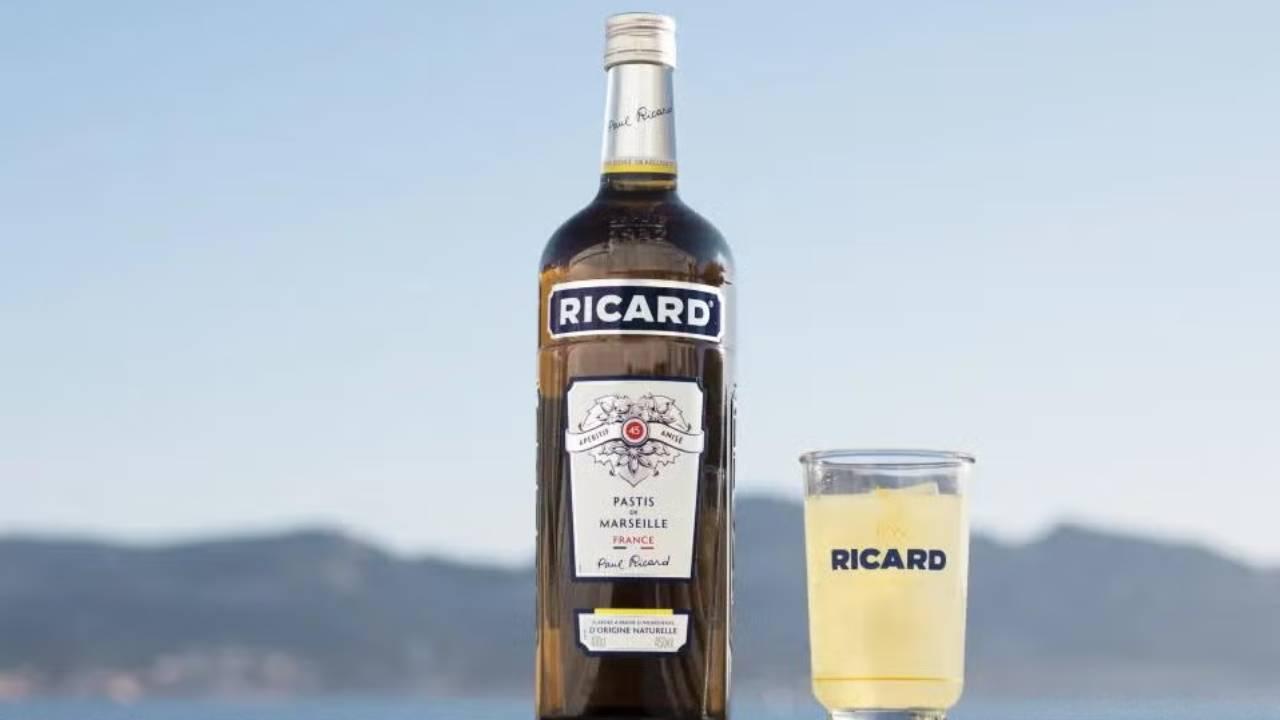
Pernod Ricard reported FY2026 net sales of €9.404 billion, down 3.9% organically and 14.2% on a reported basis, as weakness in the United States and China weighed heavily on the French wine and spirits group, even as India grew 7%, ready-to-drink products advanced 12% and sales excluding the U.S. and China actually rose 0.5%.
For Pernod Ricard, the defining story of fiscal 2026 is increasingly one of two very different worlds.
Profit from recurring operations reached €2.423 billion, declining 5.2% organically. Yet beneath those headline declines lies a more complicated picture, one that the group's own wine and spirits ambassadors have long argued depends on understanding markets individually rather than as a single global trend, a philosophy reflected in earlier conversations such as a wine ambassador's perspective from within Pernod Ricard's own winemaking business.
For the owner of Jameson, Absolut, Chivas Regal, Ballantine's, The Glenlivet, Royal Salute, Martell and Perrier-Jouët, FY2026 therefore looks less like a universal retreat in premium spirits than a geographical rebalancing of where the industry's growth is coming from.
How Did Pernod Ricard Perform in FY2026?
Pernod Ricard's financial year ended on 30 June 2026 with pressure across both revenue and profit.
Net sales declined organically by 3.9% to €9.404 billion, while profit from recurring operations fell organically by 5.2% to €2.423 billion.
On a reported basis, the movements were substantially larger, with sales down 14.2% and recurring operating profit down 17.9%. Foreign exchange movements, particularly involving the U.S. dollar, Indian rupee and Turkish lira, contributed to the reported decline, alongside changes to the group's brand portfolio.
Net profit from recurring operations attributable to the group was €1.476 billion, down 19%, while group net profit fell 26% to €1.203 billion. Earnings per share declined 19% to €5.85.
Pernod Ricard FY2026 Results at a Glance
| Metric | FY2026 Performance |
|---|---|
| Net Sales | €9.404 billion |
| Organic Sales Growth | -3.9% |
| Reported Sales Growth | -14.2% |
| Profit from Recurring Operations | €2.423 billion |
| Organic PRO Growth | -5.2% |
| Operating Margin | 25.8% |
| Group Net Profit | €1.203 billion |
| Free Cash Flow | €1.197 billion |
| Free Cash Flow Growth | +6% |
| Cash Conversion | 91% |
| Net Debt | €10.662 billion |
| Proposed Dividend | €4.70 per share |
| India Organic Sales Growth | +7% |
| U.S. Sales | -14% |
| China Sales | -19% |
| RTD Sales Growth | +12% |
Why Did Pernod Ricard's U.S. Sales Fall 14%?
The United States was the clearest pressure point.
Pernod Ricard's U.S. sales declined 14% during FY2026, with consumer sell-out falling approximately 7%. The company attributed the performance to a slowing spirits market, economic moderation, subdued consumer confidence and inventory adjustments.
This matters because the U.S. has historically been one of the world's most valuable markets for premium international spirits.
The challenge is not simply that consumers have stopped buying a particular Pernod Ricard brand. The broader American spirits environment itself has softened.
Pernod Ricard is responding by adjusting its route to market strategy while increasing its emphasis on consumer recruitment, innovation, ready to drink products, smaller formats, on premise activation and cultural partnerships, a format innovation strategy that mirrors how newer entrants such as a boutique tequila brand has approached the modern luxury spirits landscape.
There were pockets of resilience.
Jameson and Kahlúa outperformed their respective competitive sets, according to the company, while Skrewball and Malibu showed improving sell-out trends. Smaller formats and the introduction of Malibu Pink also helped performance.
But the broader American problem is unlikely to disappear immediately.
For FY2027, Pernod Ricard expects U.S. sales to decline again, although it anticipates that underlying trends will eventually improve, a challenge shared by other French luxury conglomerates navigating similar demand softness, as seen in earlier coverage of how a leading luxury conglomerate anticipated headwinds of its own.
China Was an Even Bigger Drag
If the United States was difficult, China was worse.
Pernod Ricard's sales in China declined 19% organically, with weak consumer sentiment, challenging macroeconomic conditions and regulatory measures affecting demand.
Prestige categories were particularly exposed, including Martell Cognac.
The performance illustrates an important vulnerability within global luxury spirits.
Prestige Cognac has historically benefited from gifting, business entertainment, formal dining and status driven consumption in China. When those occasions weaken, brands positioned towards the upper end of the market can feel the effect disproportionately, a dynamic visible even at the extreme collectible end of the category, where rarity alone has previously commanded prices such as those behind an extraordinary 18th century cognac's record breaking auction sale. Other maisons have instead sought resilience through cross category collaboration, illustrated by a leading cognac house's first joint venture with a fashion maison.
Pernod Ricard nevertheless sees some encouraging signs lower down the price architecture, with premium spirits gaining penetration among China's expanding middle class and more casual dining occasions supporting consumption.
India Was One of Pernod Ricard's Brightest Markets
The contrast with India is striking.
Pernod Ricard reported 7% organic sales growth in India during FY2026, rising to 9% when excluding Imperial Blue. The group gained market share and highlighted continuing premiumisation and underlying consumer demand.
Its Indian whisky portfolio remained a major contributor.
Royal Stag delivered strong growth and Pernod Ricard describes it as the world's largest whisky by volume, at approximately 32 million cases. Blenders Pride also performed well.
International brands are participating in the same premiumisation story.
Jameson delivered double digit growth in India and is now the country's leading imported premium spirits brand according to Pernod Ricard, while Ballantine's and Chivas Regal also recorded good growth, growth that mirrors the appetite already visible at curated tasting events such as an exclusive whisky tasting hosted by a leading international critic in Bengaluru and immersive experiences including a curated multi-brand malt journey staged at a Bangalore luxury hotel.
The India story is particularly important because it demonstrates that premium spirits demand is not weakening uniformly around the world.
Consumer momentum is migrating.
Why India's Premiumisation Matters to Global Spirits
For decades, the global luxury drinks industry derived considerable growth from increasingly affluent consumers in the United States and China.
India now represents a different demographic proposition.
A large drinking age population, rising disposable incomes, urbanisation and increasingly sophisticated consumers are supporting movement from mass market alcohol towards premium and international brands, a shift closely tied to the broader expansion of India's wealthy consumer base described in this comprehensive guide to understanding ultra high net worth individuals.
Pernod Ricard's own portfolio provides a useful illustration of the ladder.
A consumer can move through domestic whisky brands such as Royal Stag and Blenders Pride before entering internationally positioned products including Jameson, Ballantine's, Chivas Regal and ultimately higher value Scotch, Cognac and Champagne.
That makes India more than another geographic market.
It is becoming an increasingly important arena in which the next generation of global premium spirit consumers could be created.
Maharashtra's Excise Changes Created a Local Headwind
India was not without challenges.
Pernod Ricard said excise policy changes in Maharashtra negatively affected sales from July 2026. At the same time, implementation of the India-UK trade agreement in July creates an important longer term development for imported spirits.
For affluent consumers in Mumbai, Delhi, Bengaluru and other major metros, taxation remains one of the defining factors separating Indian retail prices for imported Scotch and other international spirits from prices in overseas markets. Exact excise, customs and state level duty structures vary and are subject to periodic revision, so readers should verify current rates with official sources before drawing pricing conclusions.
Any structural reduction in barriers to imported premium alcohol therefore has implications extending beyond individual drinks companies, potentially influencing pricing, consumption patterns, premiumisation and the competitive balance between domestic and imported spirits.
Which Pernod Ricard Brands Performed Best?
Performance varied considerably across the portfolio.
Strategic International Brands declined 4% overall, but grew 1% when the United States and China were excluded.
Jameson declined globally in the low single digits but achieved high single digit growth excluding the United States, including double digit growth in India, Nigeria and China.
Martell declined sharply overall because of its exposure to China, although it grew in several African and travel retail markets.
Absolut recorded a low single digit global decline but grew in the low single digits excluding the United States, with double digit increases in India and Türkiye.
Pernod Ricard's Scotch portfolio proved comparatively resilient, with Ballantine's delivering low single digit growth and Chivas Regal remaining broadly stable, a resilience echoed at the collectible end of whisky more broadly, where rarity continues to command exceptional prices, as seen with a record setting rare whisky bottle sale positioning malt as an investment asset and the continued fascination around an 81 year old Speyside whisky recognised as the world's oldest.
Meanwhile, Bumbu recorded strong growth and ready to drink products expanded 12%.
The Quiet Winner: Ready-to-Drink Grew 12%
One of FY2026's smaller numbers may prove among its most strategically significant.
Pernod Ricard's ready to drink portfolio grew 12% during the year, with particularly strong momentum across Canada, Australia and Western Europe.
RTDs occupy a different drinking occasion from the traditional bottle of Scotch, Cognac or vodka.
They offer convenience, portion control, accessible pricing and a format naturally suited to younger consumers and less formal occasions.
Their growth suggests the spirits industry's future may not be defined exclusively by convincing consumers to buy more bottles.
It may depend increasingly on creating more occasions on which brands can be consumed, a principle also visible in how Champagne houses have widened their own occasions for consumption, from formal celebration to everyday indulgence, as outlined in this comprehensive guide to champagne and other sparkling wines.
The LuxuryAbode Global Spirits Rebalancing Index
LuxuryAbode sees Pernod Ricard's FY2026 results through what we call the Global Spirits Rebalancing Index, four signals that help identify where premium drinks growth is migrating.
| Signal | What FY2026 Showed | Implication | Why It Matters |
|---|---|---|---|
| Legacy Market Momentum | The U.S. is weakening, with sales down 14% | Mature premium markets can no longer be assumed to provide uninterrupted growth | Forecasting models built purely on historical U.S. demand are becoming less reliable |
| Prestige Exposure | China's 19% decline hit prestige categories such as Martell Cognac hardest | High end categories are disproportionately vulnerable when gifting and prestige consumption weaken | Brands overweighted towards a single prestige occasion carry concentrated demand risk |
| Emerging Premiumisation | India grew 7%, or 9% excluding Imperial Blue | Rising affluence can expand both domestic premium brands and imported international spirits simultaneously | Growth markets are shifting from mature economies towards large, young, urbanising populations |
| Occasion Expansion | RTD sales grew 12%, led by Canada, Australia and Western Europe | Format innovation can create consumption opportunities beyond traditional spirits occasions | Volume growth increasingly depends on new occasions, not just new markets |
The Global Spirits Rebalancing Index holds that global premium drinks growth is migrating simultaneously across geography, price point and drinking occasion, rather than declining or advancing uniformly worldwide.
The resulting picture is not simply spirits are declining.
It is more nuanced. The geography, price points and occasions driving global spirits consumption are changing simultaneously.
That distinction will matter enormously to luxury drinks companies over the remainder of this decade.
Cost Cutting Helped Protect Pernod Ricard's Margins
Pernod Ricard is responding to weaker sales with substantial operational discipline.
The company is accelerating a €1 billion operational efficiencies programme, half of which was delivered during FY2026. Full delivery is now expected by FY2028.
Structure costs fell 8% organically during the year.
Despite pressure from tariffs, inflation, pricing and geographical mix, Pernod Ricard maintained an operating margin of 25.8%, representing an organic decline of only 35 basis points.
The company also generated €1.197 billion of free cash flow, an increase of 6%, while cash conversion improved by 17 percentage points to 91%.
That improvement is significant because it gives Pernod Ricard greater flexibility while simultaneously managing weaker markets, investing behind brands and reducing leverage, discipline that stands out against a backdrop of celebrity backed luxury drinks investment elsewhere in the industry, such as a Hollywood actor's investment in a French champagne house.
What Is Pernod Ricard Expecting in FY2027?
Management is not forecasting an immediate return to rapid growth.
For FY2027, Pernod Ricard expects organic net sales to be broadly stable, with continued declines in the U.S. and China offset by positive momentum elsewhere, particularly India.
Over FY2027-FY2029, the company is aiming for average organic sales growth close to the lower end of its previously stated 3% to 6% range.
It also expects cash conversion to remain around 90% and is targeting a net debt to EBITDA ratio below 3x by FY2029.
A dividend of €4.70 per share has been proposed for FY2026, unchanged from the previous year and subject to shareholder approval.
What Pernod Ricard's Results Tell Us About Luxury Drinking in 2026
Pernod Ricard's results offer a useful snapshot of a global spirits industry in transition.
The old assumption that premiumisation would move almost uninterruptedly upwards across the world's largest markets has become harder to sustain.
Consumers are becoming more selective. Economic confidence matters. Drinking occasions are changing. Prestige demand can retreat. Smaller formats and ready to drink products can suddenly become strategically important.
And geography is shifting.
For Pernod Ricard, the weakness of America and China is impossible to ignore. Together, those markets transformed what could have been a year of modest growth elsewhere into a 3.9% organic decline at group level. Excluding them, sales increased 0.5%.
India therefore deserves particular attention.
While two of the defining spirits markets of the previous era contract, one of the markets likely to shape the next is still premiumising.
For the global luxury drinks industry, that may be the most important number in Pernod Ricard's FY2026 results.
Frequently Asked Questions
How much did Pernod Ricard's sales decline in FY2026?
Pernod Ricard reported FY2026 net sales of €9.404 billion, representing an organic decline of 3.9% and a reported decline of 14.2%.
Why did Pernod Ricard struggle in the United States?
U.S. sales declined 14% amid a broader spirits market slowdown, subdued consumer confidence and inventory adjustments.
How did Pernod Ricard perform in India?
India was a major growth market, with organic sales increasing 7%, or 9% excluding Imperial Blue. Jameson, Royal Stag, Blenders Pride, Ballantine's and Chivas Regal contributed to the momentum.
How did Pernod Ricard perform in China?
China sales fell 19% organically as weak consumer sentiment, macroeconomic conditions and regulatory measures affected demand, particularly in prestige categories such as Cognac.
What is Pernod Ricard's outlook for FY2027?
Pernod Ricard expects organic sales to remain broadly stable in FY2027, with continued weakness in the U.S. and China balanced by stronger momentum elsewhere, particularly India.
Financial figures in this article are drawn from Pernod Ricard's own FY2026 reporting and have not been independently re-verified. Regulatory and tax related references, including Maharashtra's excise policy and the India-UK trade agreement, are described directionally and may change; readers should verify current rates and provisions with official sources. This article is for informational purposes only and does not constitute investment advice.

Comments
No comments yet.
Add Your Comment
Thank you, for commenting !!
Your comment is under moderation...
Keep reading luxury post