Jetavanaramaya and Ephesus - Ancient Megastructures That Still Define Engineering, Faith and Empire
 Namrata Parab
- 3rd Mar 2026
- 1506
- 0
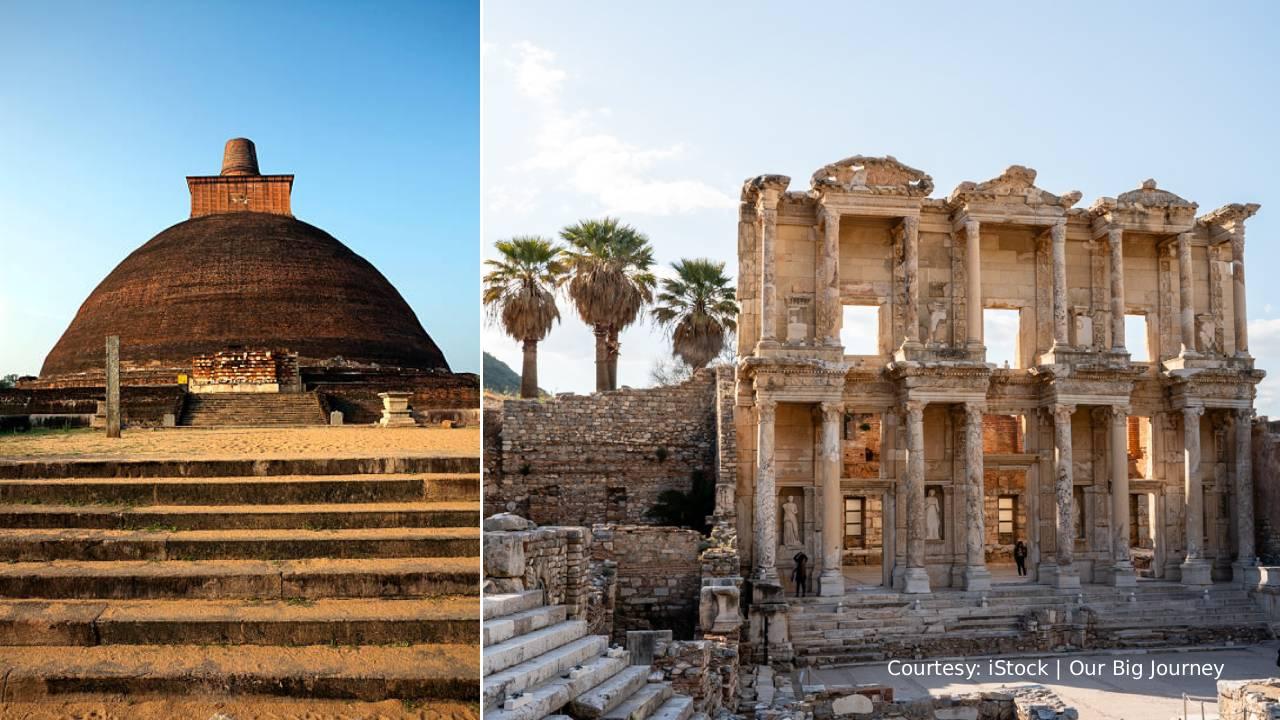
Before Skyscrapers - Civilizations That Built for Eternity
Long before Dubai's skyline or Shanghai's supertalls, ancient civilizations were already building on a scale that defied imagination.
Across the Indian Ocean in Sri Lanka and the Mediterranean basin in Turkey stand two architectural titans - Jetavanaramaya in Anuradhapura and Ephesus near modern-day Selçuk. Though separated by geography and culture, both sites represent peak ancient engineering, urban planning and spiritual ambition.
For historians, architects, archaeologists and global travellers alike, these monuments remain essential reference points in the study of ancient megastructures, early urbanism, and sacred architecture. They also speak directly to a growing appetite among discerning travellers for experiences that offer depth over spectacle - a shift that aligns with the new luxury philosophy of placing experiences over hedonism.
Jetavanaramaya - The Colossal Brick Stupa of Anuradhapura, Sri Lanka
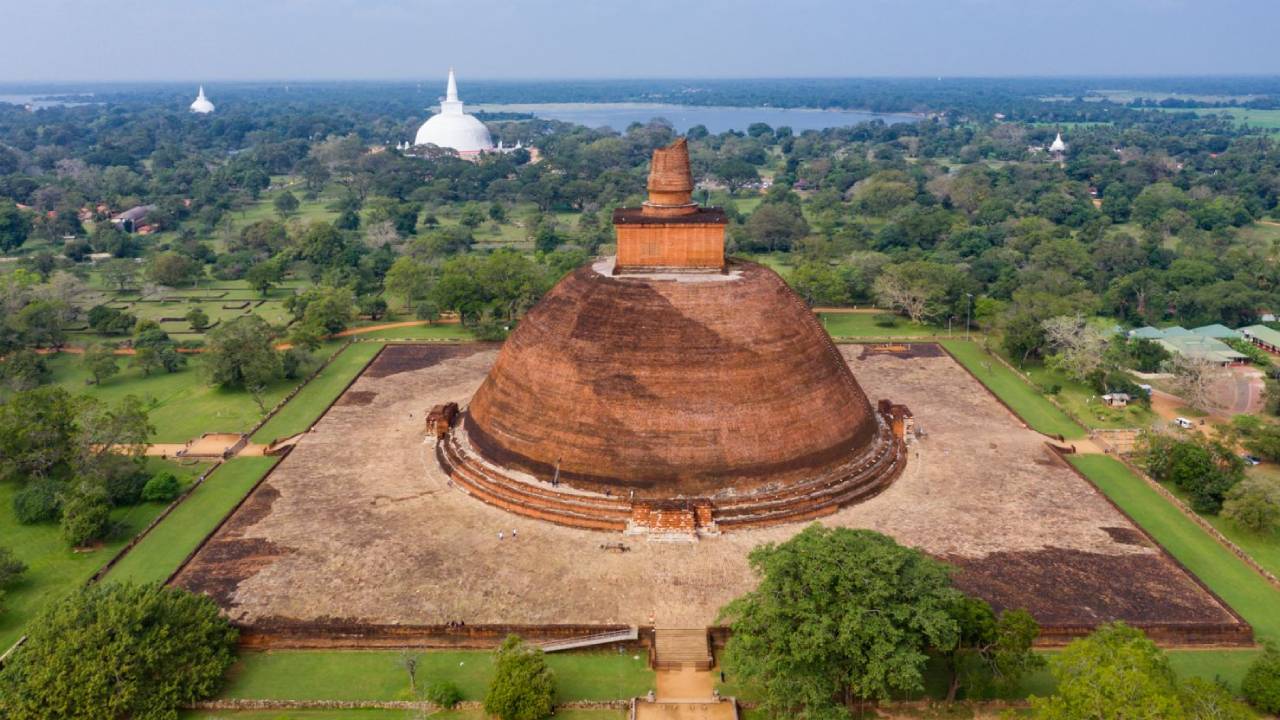
Located in the UNESCO-listed Sacred City of Anuradhapura, Jetavanaramaya is widely recognised as one of the largest brick structures ever constructed in the ancient world.
Built in the 3rd century CE under King Mahasena, the stupa originally rose to nearly 400 feet, placing it among the tallest structures on Earth at the time - comparable in scale to the Great Pyramid during certain historical periods.
Engineering Feats That Still Puzzle Scholars
- Constructed using tens of millions of baked clay bricks
- Estimated original volume exceeding many ancient pyramidal structures
- Advanced load distribution without steel reinforcement
- Durability through centuries of monsoon climate exposure
The structural integrity of Jetavanaramaya continues to fascinate civil engineers and conservation experts. Its brick composition and bonding techniques suggest a highly sophisticated understanding of material science in ancient Sri Lanka.
Spiritual Powerhouse of Theravada Buddhism
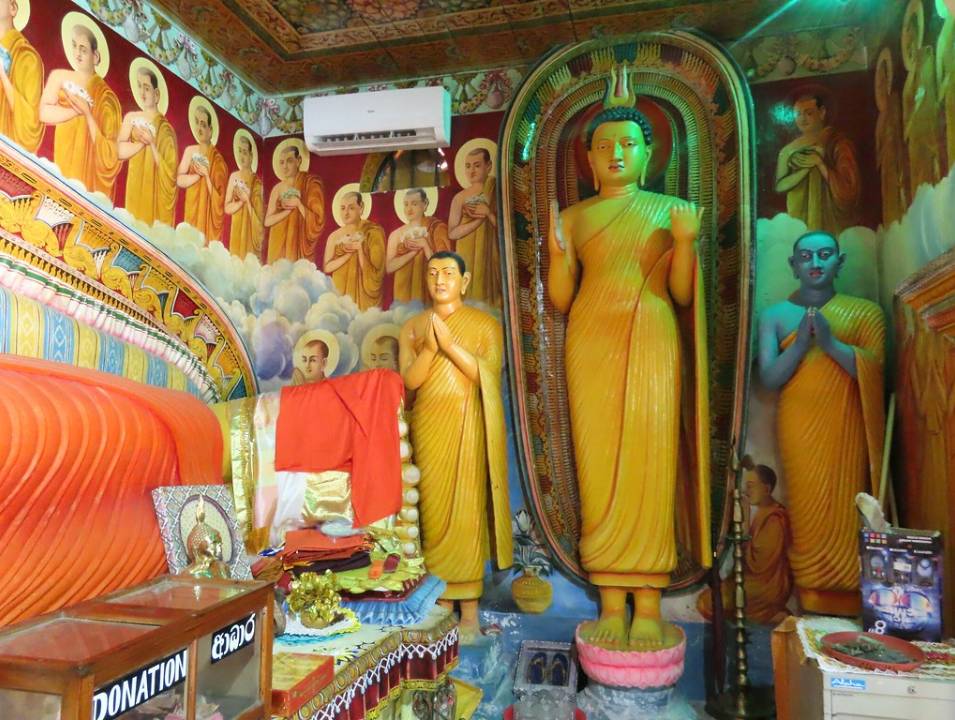
Jetavanaramaya was not merely architectural spectacle. It served as a major centre of Theravada Buddhist monastic life, drawing pilgrims and scholars from across South Asia and Southeast Asia.
The stupa enshrined sacred relics and symbolised Mount Meru in Buddhist cosmology - transforming theology into monumental geometry. This tradition of sacred geography as spiritual destination remains alive across South Asia, as seen in Sarnath's rise as a premier destination for spiritual tourism - where ancient Buddhist heritage continues to draw pilgrims and luxury travellers alike.
For travellers exploring Sri Lanka heritage tourism, Anuradhapura offers more than ruins. It offers insight into how sacred architecture functioned as both spiritual anchor and political statement. Sri Lanka's ambitious tourism drive to attract millions of international visitors reflects just how seriously the island nation is positioning this irreplaceable cultural legacy on the global stage.
Ephesus - The Roman Metropolis That Ruled the Eastern Mediterranean
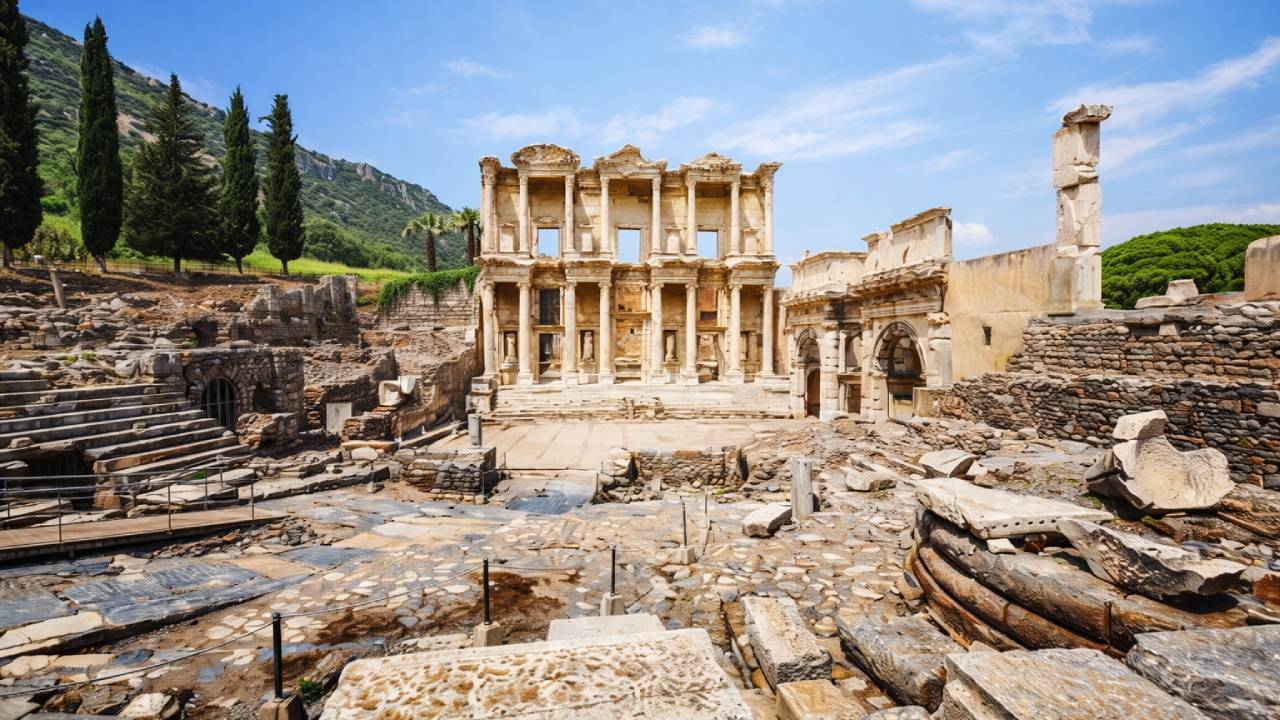
On Turkey's Aegean coast near İzmir lies Ephesus - one of the best-preserved ancient cities in the Mediterranean world.
At its peak during the 1st and 2nd centuries CE, Ephesus was among the largest cities of the Roman Empire, strategically positioned along key trade routes linking Asia Minor, Europe and the Levant.
Urban Planning Ahead of Its Time
Ephesus exemplifies advanced Greco-Roman city planning:
- Marble-paved colonnaded streets
- Sophisticated aqueduct and drainage systems
- Monumental public baths and marketplaces
- Seismic-conscious construction in an earthquake-prone region
The iconic Library of Celsus stands as one of the most photographed ancient façades in the world, symbolising intellectual prestige and imperial patronage. Nearby, the Great Theatre of Ephesus once accommodated tens of thousands - hosting civic assemblies and performances.
Ephesus was also home to the Temple of Artemis - one of the Seven Wonders of the Ancient World - reinforcing its religious and economic prominence. Turkey's coastline has long magnetised the world's most exclusive travellers, and it is no coincidence that Bodrum in Turkey has become one of the world's foremost destinations for ultra-luxury yachts - a region whose ancient maritime heritage now hosts some of the most coveted vessels afloat.
Crossroads of Faith and Commerce
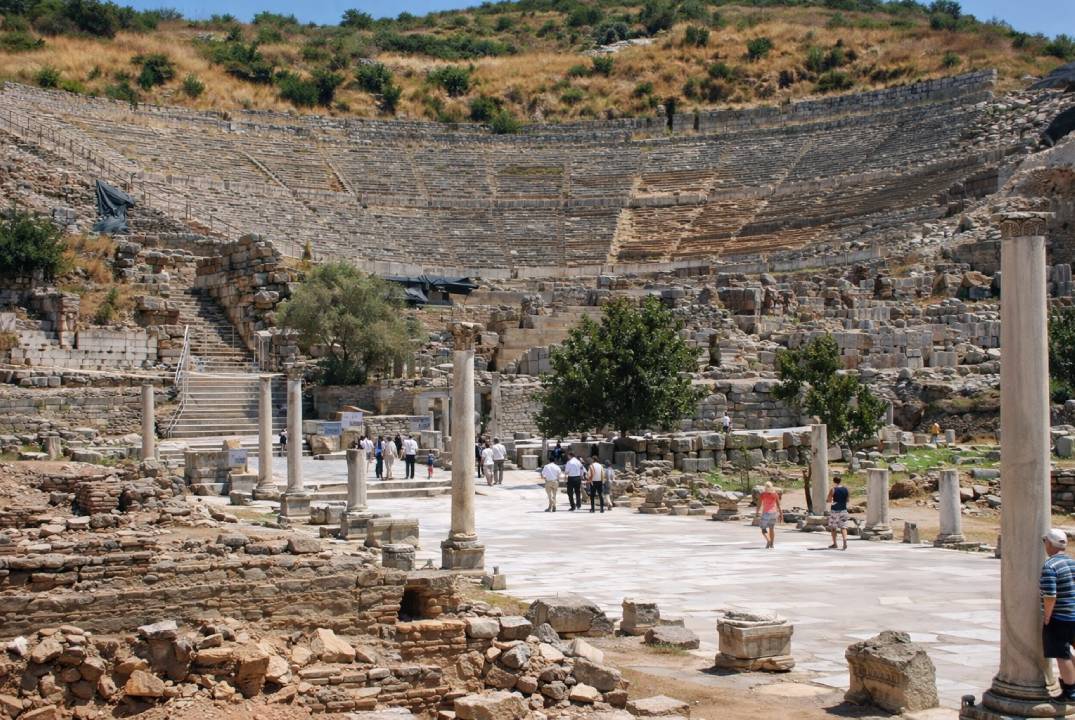
Beyond Roman grandeur, Ephesus became a pivotal centre for early Christianity, linked to the apostle Paul and referenced in the New Testament.
If Jetavanaramaya represents sacred singularity, Ephesus represents civic orchestration - commerce, politics, religion and culture integrated into one urban organism. For those who wish to experience Turkey's layered grandeur in genuine luxury, the Four Seasons Hotel Istanbul at Sultanahmet places guests within steps of the city's most storied historic sites - a fitting base from which to explore one of the ancient world's greatest crossroads.
Architecture as Soft Power
Both Jetavanaramaya and Ephesus demonstrate how ancient architecture functioned as strategic soft power.
In Sri Lanka, monumental stupas communicated royal legitimacy and religious authority. In Anatolia, marble boulevards and monumental civic buildings projected Roman imperial dominance.
Scale was not aesthetic excess. It was calculated influence.
For scholars of geopolitics, religion and architectural history, these sites illustrate how built environments shaped societal identity and statecraft long before modern nation-states emerged. The intersection of heritage and prestige is not merely historical - it continues to define the most coveted properties in the world, as the story of Matild Palace Budapest, a luxury hotel created within a UNESCO World Heritage Site, so elegantly demonstrates.
What Modern Engineers and Urban Planners Can Learn
These ancient sites remain case studies in sustainable large-scale construction.
Jetavanaramaya showcases resilience in tropical climates without modern reinforcement technologies. Ephesus demonstrates integrated infrastructure - water management, public gathering spaces, transport corridors - centuries before modern urban planning theory formalised such principles.
As contemporary cities grapple with sustainability, density and heritage preservation, these ancient megacities provide instructive precedent. Sri Lanka's broader luxury hospitality sector is already drawing on this legacy of environmental harmony, with properties like Dusit Thani's beachfront luxury residences in Balapitiya, Sri Lanka offering a vision of contemporary living shaped by the island's centuries-old relationship with its natural landscape.
Why These Sites Matter for Global Travel in 2026
In an era of overtourism and superficial travel, destinations like Anuradhapura in Sri Lanka and Ephesus in Turkey offer deeper engagement.
They are:
- UNESCO World Heritage Sites
- Pillars of South Asian and Mediterranean history
- Essential stops for archaeology tourism
- Benchmarks in ancient engineering and architectural innovation
For luxury and cultural travellers, visiting these sites is not simply sightseeing. It is intellectual immersion. The Mediterranean's allure for the world's most discerning explorers endures, and the top private islands to rent in the Mediterranean offer a complementary lens on how this ancient sea continues to captivate the global elite. For a broader perspective on where the world's finest escapes converge, the best luxury escapes in the world remain an essential guide for culturally ambitious travellers planning their next journey.
A Tale of Two Civilizations - One Enduring Truth
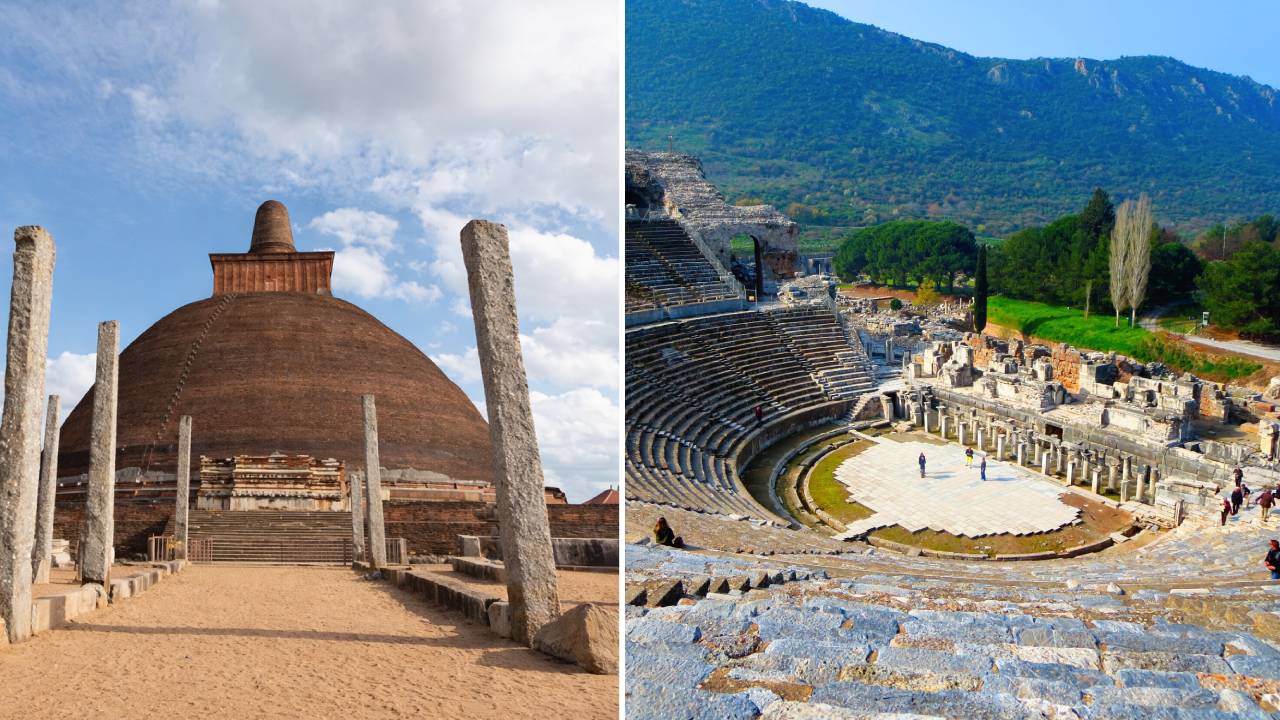
Jetavanaramaya rises as a unified sacred monument - vertical, symbolic, transcendent.
Ephesus unfolds as a horizontal urban masterpiece - civic, commercial, complex.
One built in brick under tropical skies. The other carved in marble along the Aegean coast.
Yet both affirm a singular truth - humanity has always built to endure.
In brick and marble, devotion and empire found physical form.
And long after modern skylines weather and fade, these ancient giants continue to shape how we understand engineering, faith, urbanism and power. For travellers ready to immerse themselves in this heritage, Sri Lanka's active outreach to South Asian travellers signals a destination on the rise - ancient in soul, and very much alive in ambition.



Comments
No comments yet.
Add Your Comment
Thank you, for commenting !!
Your comment is under moderation...
Keep reading luxury post