India's Swiss Watch Boom: Why Global Luxury Watchmakers Are Turning to a New Power Market
 Namrata Parab
- 31st Oct 2026
- 1294
- 0
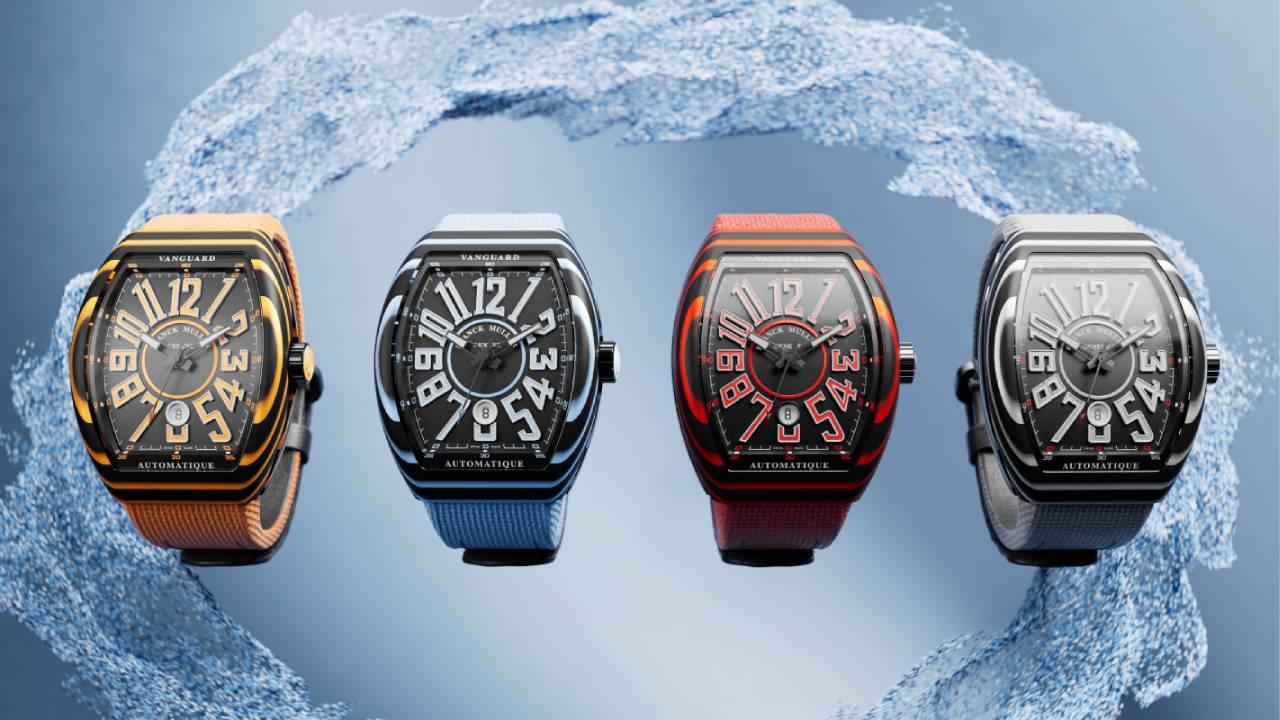
Swiss watch exports to India surged 28.5% in the first nine months of 2026, even as demand weakened in the United States and China. With collectors becoming more sophisticated, luxury retail expanding and trade barriers easing, India is moving from a promising market to a serious priority for global horology.
For decades, the world's finest watchmakers have measured their fortunes through the established luxury capitals of Geneva, New York, Hong Kong, Singapore and Dubai. India, despite its substantial wealth and longstanding appreciation for craftsmanship, remained a market of considerable promise but relatively modest scale.
That relationship is beginning to change.
Swiss watch exports to India reached CHF 266.4 million, approximately ₹3,050 crore, between January and September 2026, representing year-on-year growth of 28.5%. India has climbed to 14th place among Switzerland's largest watch export destinations, compared with 20th in 2025.
The contrast with established markets is striking. Over the same nine-month period, Swiss watch exports to mainland China declined 5.9%, while shipments to the United States fell 4.1%. The softness in the American market comes after a period in which Swiss watch exports surged ahead of the US tariff storm. Globally, the industry recorded growth of just 2.7%, a reminder of the wider pressures facing the Swiss watch industry.
India's performance is therefore not simply another encouraging statistic in the luxury consumption story. It represents a geographical shift in where Swiss watchmakers are finding incremental demand.
Erol Baliyan, Chief Executive Officer for the Middle East, Africa and India at Franck Muller, believes India could advance to become the seventh- or eighth-largest Swiss watch export market as early as 2027.
That remains an industry executive's projection rather than an established forecast, but it captures the growing confidence surrounding the Indian opportunity.
India's Swiss Watch Market by the Numbers
| Metric | Value |
|---|---|
| Swiss watch exports to India, January to September 2026 | CHF 266.4M |
| India's year-on-year export value growth | +28.5% |
| India's ranking among Swiss watch export destinations | 14th |
| Growth in total Swiss watch exports over the same period | +2.7% |
Export values represent Swiss customs-declared prices, not final Indian retail sales or consumer spending.
Swiss watch export growth, January to September 2026
Year-on-year changes in Swiss watch exports to India, mainland China and the United States, compared with worldwide exports.
| Destination | Year-on-year change |
|---|---|
| India | +28.5% |
| Worldwide | +2.7% |
| United States | -4.1% |
| Mainland China | -5.9% |
Source: Swiss watch export figures through September 2026.
India's 28.5% growth is more than ten times the worldwide industry's 2.7% increase in percentage terms.
However, India's market remains much smaller than established destinations. Its rapid growth should be understood alongside the relatively low base from which it is expanding.
From Status Symbol to Serious Collecting
India's expanding appetite for Swiss watches is being shaped by an important shift in consumer behaviour: luxury timepieces are increasingly purchased for horological interest as well as social status.
An established audience of affluent entrepreneurs, business families, professionals and collectors is being joined by first-generation luxury consumers who have greater exposure to international watchmaking.
Brands such as Rolex, Omega, Cartier, Breitling, Jaeger-LeCoultre and Vacheron Constantin occupy different positions within this developing market. Readers who want context can explore the Rolex brand story, the story of Cartier's elegance and identity, Jaeger-LeCoultre as a watchmaker to the watchmakers and the history of Vacheron Constantin. For a broader view, see the topmost luxury watch brands in the world.
The rise of watch-focused communities, specialist retailers and collector gatherings is making buyers more familiar with the details that distinguish fine timepieces. Enthusiasts can follow the twenty best watch blogs to follow today to deepen that knowledge. Movements, complications, dial finishing, production numbers, provenance and servicing are gradually becoming part of the purchasing conversation. Buyers curious about complications can start with our explainer on what a tourbillon is or browse the most complicated watches in the world, while owners can learn from a complete guide to maintaining your luxury watch.
The evolution matters because it changes what luxury houses must deliver.
An established collector may be interested in a watch's movement architecture, historical references, production rarity or relationship to the manufacturer's heritage. A first-time buyer may prioritise brand recognition, versatility and long-term ownership confidence, and can begin with the ultimate guide to buying a luxury watch.
India increasingly contains both audiences, offering watchmakers opportunities across multiple price categories.
The expanding certified pre-owned market also contributes to this development by giving enthusiasts opportunities to explore discontinued references, previously owned pieces and alternative ownership pathways. The appeal is explained in why pre-owned luxury items are popular in India and in the new world of pre-owned luxury, while those drawn to older references can consult a comprehensive guide to vintage Swiss watches.
Why Franck Muller Is Paying Closer Attention
Franck Muller's growing interest in India illustrates how independent luxury watchmakers are reassessing their geographical priorities.
Known for unconventional case shapes, dramatic numerals and technically ambitious complications, the Geneva-based house has developed a distinctive position in contemporary Swiss watchmaking.
Its collections, including the Cintrée Curvex, Vanguard and Crazy Hours, speak to buyers who value expressive design alongside mechanical craftsmanship.
The brand has operated in India for approximately three decades through local retail partnerships, including its relationship with Kapoor Watch Company.
Now, it is considering opportunities beyond conventional boutique distribution.
Baliyan has outlined plans to explore airport retail, beginning with Mumbai, alongside culturally relevant product editions and collaborations, an approach that mirrors the customization craze in the watch industry. The company is also preparing to enter India's branded real estate market through a proposed ultra-luxury residential development, although the project's details have not yet been formally established. The segment is already illustrated by Whiteland Westin Residences, where hospitality meets haute living, and it reflects why India's ultra-wealthy are building ultra-luxury real estate empires.
Its India-specific watchmaking initiatives have included a cricket-inspired Men in Blue collection and an Independence Day commemorative edition developed with Kapoor Watch Company.
These initiatives reflect a deliberate strategy of connecting Swiss craftsmanship with Indian cultural identities.
For a watchmaker whose aesthetic is already highly recognisable, such localisation provides an opportunity to deepen the relationship with collectors without abandoning the house's core identity.
The Trade Agreement That Could Change Watch Pricing
One of the most consequential developments for Swiss watchmakers in India is the India-EFTA Trade and Economic Partnership Agreement, which entered into force on 1 October 2025.
The agreement creates a framework for the phased elimination of customs duties on qualifying Swiss watches, subject to the applicable tariff schedule and rules of origin.
This is an important consideration in a market where import duties have historically contributed to the gap between domestic and international watch prices.
Reduced tariffs could improve India's competitiveness as a place to purchase luxury watches, potentially encouraging consumers who previously bought abroad to consider authorised Indian retailers.
However, lower import duties do not translate automatically into equivalent reductions in retail prices. Exchange rates, domestic taxes, distribution arrangements, retailer margins and individual brand pricing policies also influence the final amount paid. Buyers weighing the tax side can read everything you need to know about luxury tax.
The strategic opportunity is nonetheless considerable.
If India's domestic retail prices become more competitive, watchmakers could capture a greater proportion of purchases made by Indian consumers, including those that previously took place in Dubai, Singapore or European destinations.
This would strengthen the commercial case for flagship boutiques, authorised service networks, inventory investment and long-term retail partnerships.
Mumbai and India's Emerging Watchmaking Capitals
India's luxury watch market is no longer confined to a handful of established luxury shopping districts.
Mumbai and Delhi remain important centres because of their concentrations of affluent consumers, international business activity and luxury retail infrastructure. Bengaluru, Hyderabad, Chennai and other metropolitan markets are also increasingly relevant as their affluent consumer bases expand.
Retail groups such as Ethos Limited play an important role in this development through authorised distribution, specialist boutiques and collector engagement. Their influence sits within a wider retail story, including the success formula of India's largest luxury retailer.
In October 2026, India hosted an exhibition of watches nominated for the Grand Prix d'Horlogerie de Genève 2026. Organised locally with Ethos, the showcase offered enthusiasts access to exceptional pieces and high-watchmaking craftsmanship.
Such events are significant because they introduce Indian collectors to the wider culture of horology.
A luxury watch market matures not simply when consumers purchase more expensive watches, but when the surrounding ecosystem develops deeper expertise, experiences, specialist services and opportunities for collecting.
For international houses, this means that investment in education and community may be as valuable as investment in additional retail space.
The LuxuryAbode View: India's Next Luxury Advantage Is Domestic Capture
India's emergence as a faster-growing Swiss watch export market represents more than rising spending power. It signals an opportunity for watchmakers to convert an increasingly sophisticated Indian consumer base into a durable domestic luxury ecosystem.
LuxuryAbode identifies this development as the Domestic Luxury Capture Opportunity, the potential for India to retain a larger share of luxury purchases that its residents have historically made in international shopping destinations.
The opportunity operates across three dimensions.
| Strategic dimension | What is changing | Commercial implication |
|---|---|---|
| Consumer development | More first-time buyers and serious collectors | Broader demand for accessible and high-end Swiss watches |
| Retail infrastructure | Specialist boutiques, certified pre-owned offerings and collector experiences | Greater potential for local purchases and long-term customer relationships |
| Trade competitiveness | Phased tariff reductions on qualifying Swiss watches | Improved conditions for domestic pricing and authorised distribution |
The longer-term potential is substantial, but it requires perspective.
India accounted for approximately 1.2% of worldwide Swiss watch exports in 2025. Its share remains relatively small despite recent growth. Moreover, the average export price of watches shipped to India has been considerably below the global average, reflecting a market still developing its highest-end customer base.
This suggests that India's growth opportunity is not simply about selling more watches. It is also about cultivating demand for more complex, higher-value and individually distinctive timepieces.
For independent houses such as Franck Muller, that creates space for design-led collecting, limited editions and deeper cultural engagement. For established groups, it strengthens the case for sustained investment in distribution, after-sales service and customer experience.
There are limitations. Currency movements, international retail price differences, luxury taxation and broader economic conditions will continue influencing purchasing decisions. Nor is it certain that India can reach seventh or eighth place among Swiss export destinations by 2027, despite the industry's growing optimism.
LuxuryAbode's assessment is that India's true significance lies not in its current export ranking, but in the possibility of combining rapid demand growth, improving domestic retail infrastructure and a developing culture of horological connoisseurship.
The country's luxury watch journey is entering a more interesting phase. In time, India may matter to Swiss watchmaking not only because of the number of watches its consumers purchase, but because of the influence its collectors, retailers and designers bring to the global conversation. Readers can trace the broader arc in the journey of luxury watch brands.
For an industry that measures its achievements in generations, India's most important hours may still lie ahead.
Frequently Asked Questions
How large is India's Swiss watch import market in 2026?
Swiss watch exports to India reached CHF 266.4 million, approximately ₹3,050 crore, between January and September 2026. This represents export value, not the final retail market value.
How fast are Swiss watch exports to India growing?
Swiss watch exports to India increased 28.5% year-on-year during the first nine months of 2026, compared with worldwide Swiss watch export growth of 2.7%.
What is India's global ranking in Swiss watch exports?
India ranked 14th among Swiss watch export markets during January to September 2026, up from 20th in 2025.
Will Swiss luxury watches become cheaper in India?
The India-EFTA trade agreement provides for phased duty reductions on qualifying Swiss watches. This could improve retail price competitiveness, although the ultimate benefit depends on taxes, exchange rates and brand pricing policies.
Which Swiss watch brands are expanding their focus on India?
Franck Muller is among the brands pursuing a stronger Indian presence. Established watchmakers including Rolex, Omega, Cartier, Jaeger-LeCoultre and Vacheron Constantin also participate in India's growing luxury watch market through their respective distribution networks.


Comments
No comments yet.
Add Your Comment
Thank you, for commenting !!
Your comment is under moderation...
Keep reading luxury post