Iconic Nordic Homes Through History: The Houses That Taught the Rich to Live Quietly
 Pradeep Dhuri
- 23rd Jul 2026
- 1265
- 0
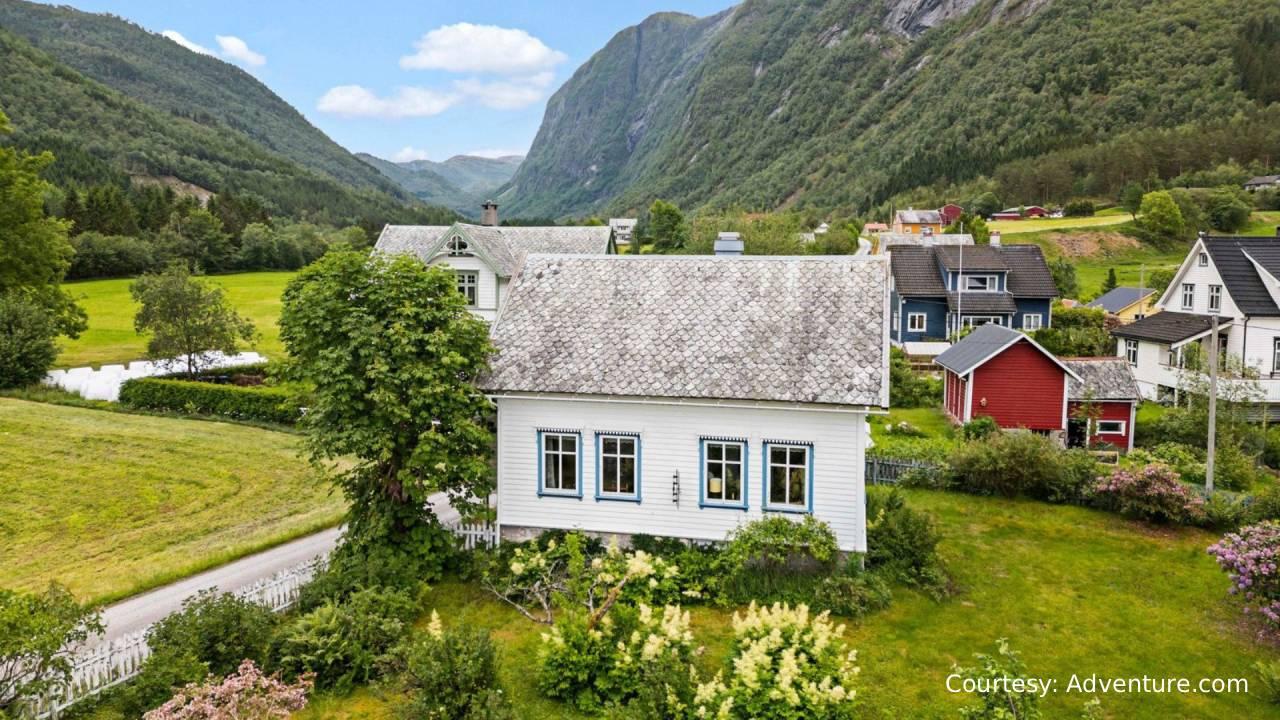
There is a particular kind of wealth that does not announce itself. It does not gild. It does not import marble by the container. It buys light, timber, silence and proportion, and it has been doing so in the Nordic countries for the better part of a century. The houses in this piece are the reason a hedge-fund principal in Connecticut and a tech founder in Singapore now want oak floors, a single perfect chair and a window framing nothing but trees. Long before "quiet luxury" was a phrase invented to sell handbags, the Nordics built it into their walls, in the manner catalogued in the design secrets of Stockholm's quietly wealthy elite.
What follows is not a list of pretty buildings. It is a lineage. Each of these homes solved a problem the rich still pay to solve today: how to be comfortable without being vulgar, how to make a house that flatters its owner rather than the owner flattering the house. Most of them can be visited. A few can, remarkably, be slept in. And exactly one of the design languages they created went on to become the most quietly expensive aesthetic on earth.
We begin before architects, before names, before money in any modern sense.
The Turf House: Shelter as Survival, Before It Was Style
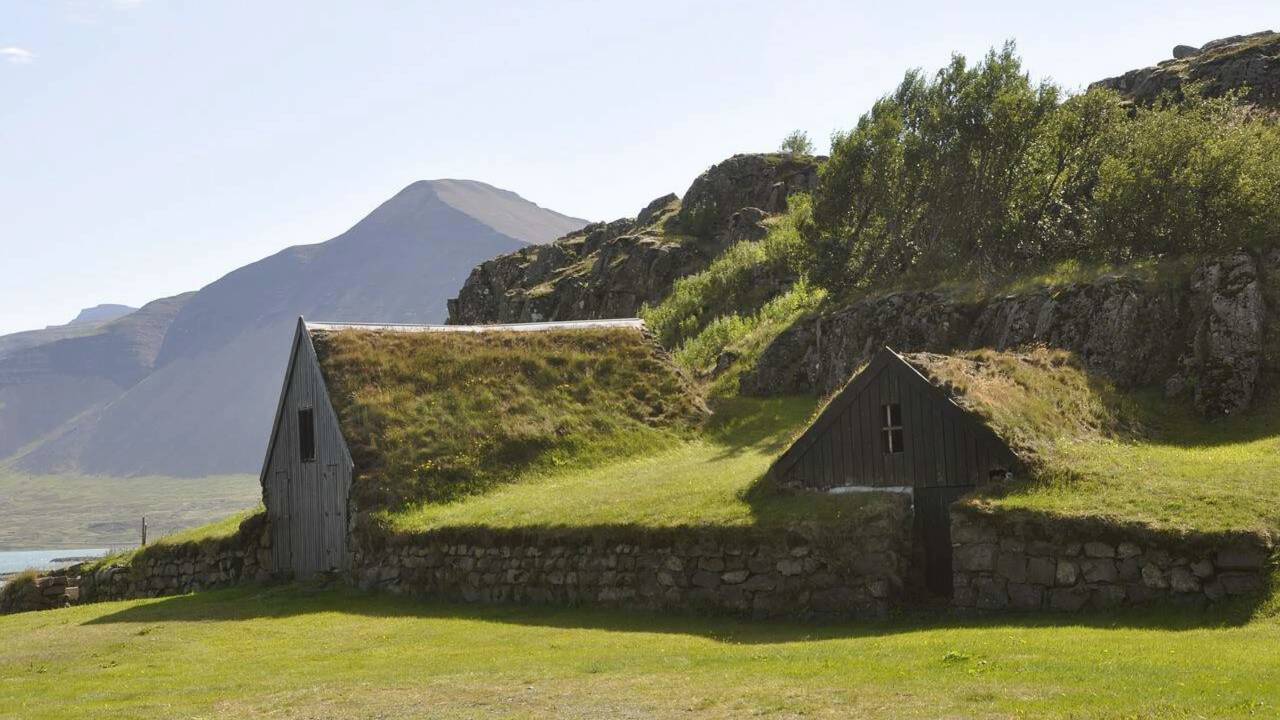
Iceland's turf houses, the torfbæir, often built in the gabled burstabær form, are the deepest root of the Nordic domestic tradition. Settlers arriving from the ninth century onward found an island with almost no usable timber and a punishing climate, the same landscape that today frames luxury villas in the heart of Iceland's Golden Circle. They built with what the land gave them: stone foundations, driftwood or scarce imported wood for frames, and thick walls and roofs of cut turf that insulated better than anything else available. Some were lived in continuously into the twentieth century, and one well-documented farmstead was abandoned only in 1986. The tradition sits on UNESCO's tentative World Heritage list.
The point for a modern reader is not nostalgia. It is that the turf house established the two instincts that run through everything after it: build from the immediate landscape, and let the building disappear into it rather than dominate it. A billionaire commissioning a grass-roofed retreat in Norway today, thinking it a piece of avant-garde restraint, is quoting a thousand-year-old peasant necessity, and unknowingly answering the question of what sustainable luxury architecture actually means. The Nordics have always known that the most expensive-looking thing a house can do is refuse to show off.
Lilla Hyttnäs, Sundborn: The House That Invented "Swedish Style"
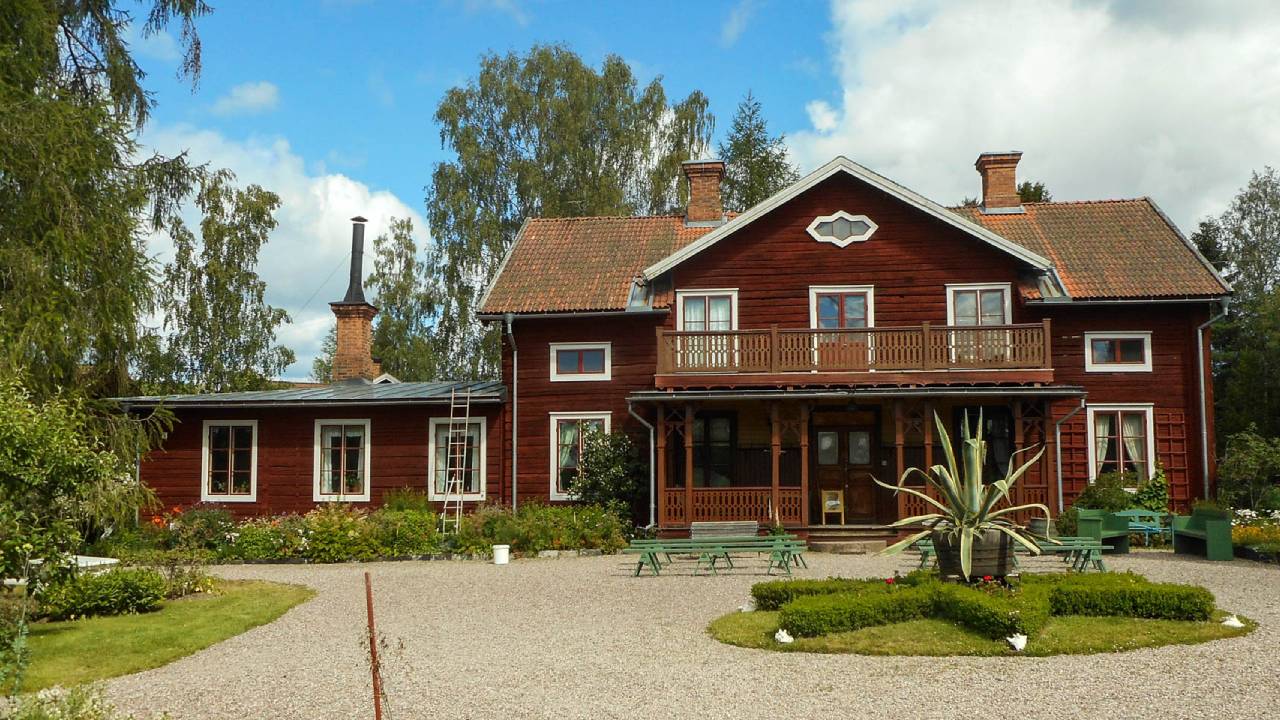
If one private home shaped how the world pictures a Scandinavian interior, it is a modest riverside cottage in the Dalarna village of Sundborn. Carl Larsson-gården, known as Lilla Hyttnäs, was the home of the painter Carl Larsson and, crucially, the textile artist and designer Karin Larsson. From the 1880s they remodelled an inherited cottage room by room, and Karin's interiors, light walls, unfussy furniture, bright textiles, flowers, children underfoot, were immortalised in Carl's watercolour series Ett Hem ("A Home").
Those watercolours, published from 1899, became one of the most reproduced visions of domestic life in history. They are, in a direct line, the reason a certain flat-pack furniture empire from Sweden exists and the reason its aesthetic conquered the planet. Karin Larsson's stripped-back, light-filled, child-friendly rooms were a deliberate rejection of the dark, cluttered, status-heavy Victorian interior, a rejection whose logic still governs how the modern masters of interior design and architecture approach a room. That rejection is now worth billions. The house remains in the family's care and is open as a museum. It is arguably the single most influential domestic interior of the modern era, and it started as one artist couple's refusal to live the way rich people were supposed to.
Hvitträsk, Kirkkonummi: The Architect's Total World
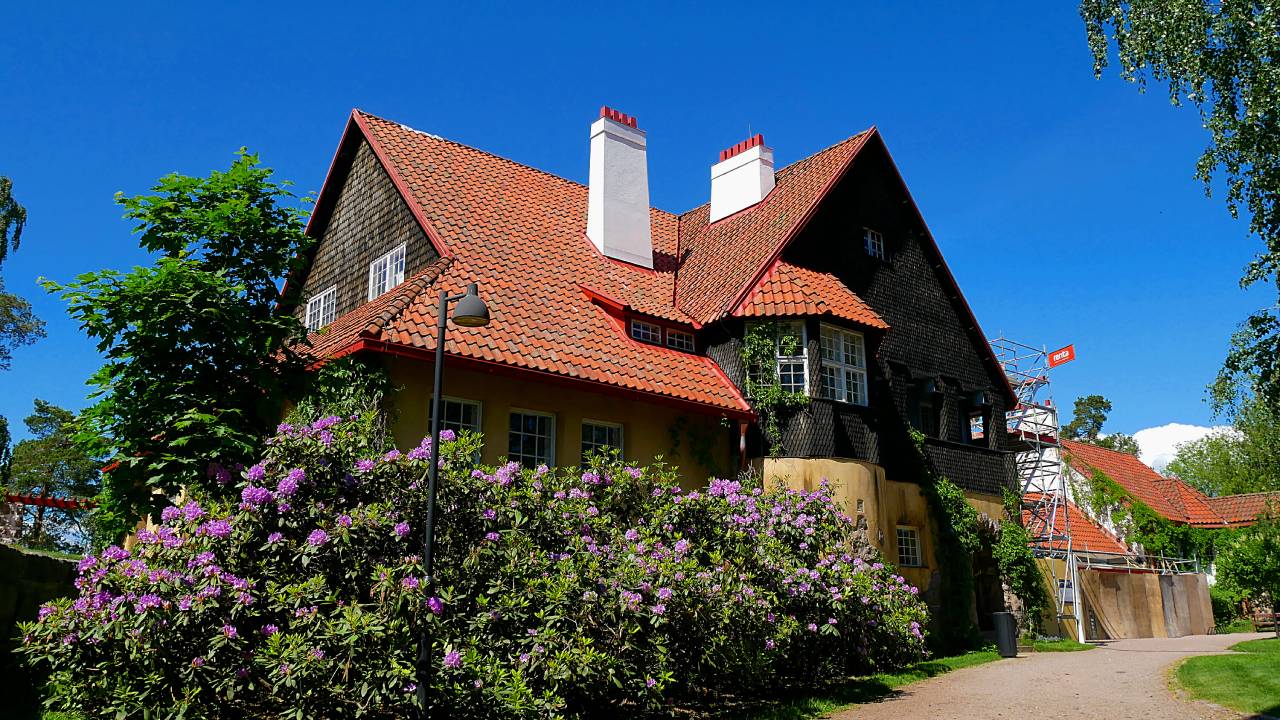
At the turn of the twentieth century, three young Finnish architects, Herman Gesellius, Armas Lindgren and Eliel Saarinen, built themselves a shared home and studio on a wooded ridge above a lake west of Helsinki. Hvitträsk, completed around 1903, is the masterpiece of Finnish National Romanticism: log and stone, steep roofs, hand-wrought detail, a building that looks grown rather than constructed.
What makes Hvitträsk a landmark of how the creative wealthy live is its totality. Saarinen designed the house, the furniture, the textiles, the light fittings and the gardens as one continuous work. This is the Gesamtkunstwerk, the total work of art, and it is the ancestor of every contemporary commission where a UHNW client hires a single architect to control everything down to the door handles. It also explains the enduring pull of the Finnish artisans still redefining Nordic luxury today. Saarinen would go on to America and shape a dynasty, and his son Eero designed the Tulip chair and the TWA terminal. Hvitträsk is now a museum under the Finnish state, and it remains the clearest lesson in the Nordic conviction that a home should be authored, not assembled.
Villa Stenersen, Oslo: Functionalism for a Financier
By the late 1930s the Nordic elite had discovered modernism, and one of the finest surviving examples was built for exactly the kind of person LuxuryAbode readers recognise. Rolf Stenersen was an Oslo financier, art collector and friend of Edvard Munch. In 1937 to 1939 he commissioned the architect Arne Korsmo to build Villa Stenersen, a 512-square-metre functionalist villa in the Vinderen district.
Korsmo took Le Corbusier's vocabulary, the elevated volume, the ribbon of glass, the open plan, and adapted it intelligently for a cold country, incorporating central heating, mechanical ventilation and multiple fireplaces where a dogmatic modernist would have frozen. The house was engineered as a setting for a serious art collection and for entertaining, an ambition that anticipates the way the visionary architects of minimalism treated space itself as the primary material. Stenersen bequeathed it to the Norwegian state on his death in 1974, and it is now operated by the Nasjonalmuseet and opens to the public seasonally. It is proof that Nordic modernism was never merely austere: at the top of the market, it was luxurious in the only ways that lasted, namely space, light, materials and art.
Villa Mairea, Noormarkku: The Greatest Private House of Nordic Modernism
There is broad agreement among architects that the finest private house in the Nordic canon is Villa Mairea, built in 1938 to 1939 in the forests of Noormarkku for Harry and Maire Gullichsen, an industrialist and his art-patron wife. The architect was Alvar Aalto, and the Gullichsens gave him a rare instruction: treat it as an experiment, spare no expense in ideas.
The result reconciled modernism with warmth in a way no one had managed before. An L-shaped plan wraps a lawn and a free-form swimming pool. The famous entrance canopy undulates, and timber columns are wrapped in rattan and bound in twos and threes so the structure reads like a birch forest brought indoors. Aalto mixed white modernist planes with brick, stone, and vast quantities of Finnish timber, and studded the interiors with art. That instinct for building in wood among trees still drives Nordic architecture, from Villa Mairea to an extraordinary treetop hotel rising in the Swedish forest. Villa Mairea is Fallingwater's equal as a statement that modern architecture could be tender. The house is still owned by the founding family's foundation and can be seen by advance guided tour only, with no casual visitors and no gift-shop scale tourism. That discretion is itself the point.
Finn Juhl's House, Ordrup: The Interior as Sculpture
Just north of Copenhagen, the designer Finn Juhl built himself a low, white, L-shaped house in Ordrup (Charlottenlund) in 1942 and spent the rest of his life refining its interior. Juhl was the man who made Danish furniture sculptural, with organic, floating seat shells and teak that curves like a boat hull, and his own home is the definitive document of that sensibility, because he arranged it himself and left it largely intact. It is a room that explains more about the mesmerising world of collectible luxury furniture than any showroom could.
Today the house belongs to the Ordrupgaard museum and is preserved as Juhl left it: original furniture, a wall of considered colour, art by Vilhelm Lundstrøm and others, everything in its place. It is a rare thing, an interior-design philosophy you can walk through rather than read about. For collectors it is also a price index on legs, since the chairs sitting quietly in Juhl's living room are the same models that now clear five figures whenever a major design auction comes to the London saleroom.
Arne Jacobsen at Klampenborg: The Architect Who Designed the Whole Coast
Arne Jacobsen is the most complete of the Danish masters, being architect, furniture designer, and the man behind the Egg and Swan chairs, and his own homes tell his story. He built the Søholm row houses at Klampenborg in the early 1950s and lived in one himself, a stepped terrace of brick and glass that turned social housing logic into coveted seafront living. Along the same Bellevue stretch he had already designed the beach, the lifeguard towers, the theatre and the petrol station, a rare case of one designer authoring an entire wealthy suburb's visual world.
These houses remain intensely desirable and, unlike the museum pieces above, they do change hands. A two-bedroom Jacobsen-designed terraced house in the Bellevue complex was listed at DKK 8.25 million (about USD 1.18 million), a reminder that you can, in fact, buy your way into this lineage if you are patient and the right door opens. For anyone weighing that against the great luxury second home destinations around the world, the calculation is unusual: what you are paying for is not square footage, it is authorship.
Can Lis, Mallorca: The Sydney Opera House Architect's Private Paradise
The most romantic house in the Nordic story sits, improbably, on a cliff in the Spanish Mediterranean. Having designed the Sydney Opera House and then been forced off the project, the Danish architect Jørn Utzon retreated in 1971 to build Can Lis near Portopetro on Mallorca's south coast, named for his wife Lis. It is built almost entirely from local golden marés sandstone, with much of the furniture carved from the same stone, and every window is positioned to frame a specific piece of sea and sky. It is a very different Mallorca from the one now being courted by spectacular new luxury resorts arriving on the island.
Can Lis is the purest expression of a Nordic idea exported south: the house as an instrument for experiencing light and landscape, stripped of everything decorative. The Utzons later built a second, more sheltered house inland, Can Feliz (1994), when the waves, glare and curious visitors of Can Lis became too much. Can Lis now sits within the orbit of the Utzon Foundation, and, in one of the great open secrets of architectural travel, it has been made available for architects to stay in for residencies of a month or more. It is one of the very few masterpieces on this list you can actually wake up inside.
Villa Busk, Bamble: The Late Master's Cliff House
The lineage runs to the present. Sverre Fehn, Norway's laureate of the Pritzker Prize, architecture's equivalent of the Nobel, built Villa Busk at Bamble between 1987 and 1990, a private house that threads a concrete-and-timber spine along a rocky ridge, with a tower and a long wall organising the descent to the water. It takes the turf-house instinct, to build with the terrain rather than against it, and executes it with the confidence of a lifetime's mastery. It is a reminder that the Nordic domestic tradition did not end with the mid-century icons. It kept evolving, and its newest expressions are as sought-after by connoisseurs as the old ones.
What All of This Actually Costs
Below is an honest reckoning of the shadow prices behind owning a piece of Nordic domestic history. Figures are informed estimates drawn from public listings and auction records. Treat them as orientation, not quotation.
| The thing you actually want | The official version | The shadow price or true cost |
|---|---|---|
| A genuine architect-designed Nordic house | "Priced like a nice suburban home" | Jacobsen Bellevue terrace listed at ~DKK 8.25m, about USD 1.18m. Genuinely significant villas rarely list at all: they pass privately or go to foundations |
| Sleeping inside a masterpiece | "Book a hotel" | Utzon's Can Lis via residency: open to architects for stays of a month or more through the Utzon and Danish architectural foundations. Access, not money, is the currency |
| Seeing Villa Mairea | "Buy a ticket" | Advance guided tour only, small groups, no walk-ups. The exclusivity is deliberate, roughly the model of a private members' club |
| One perfect chair from these interiors | "A designer chair" | An original Finn Juhl or early Wegner or Jacobsen piece at auction: four to five figures and rising. A documented provenance multiplies it |
| The "Swedish style" look | "Flat-pack it for a few hundred" | The aesthetic is free. The original Karin Larsson interiors at Sundborn are priceless and unbuyable: you can only visit |
| A grass roof "like the Norwegians" | "A landscaping upgrade" | The turf-roof instinct is a thousand years old and essentially free in concept. The bespoke architecture that does it well is a full custom commission |
The pattern is unmistakable. At the top of this market, the constraint is almost never money. It is access, provenance, patience and taste. The genuinely important houses do not have asking prices. They have foundations, waiting lists and guardians.
The Closing Insight: The Nordics Sold the World Restraint, Then Kept the Originals
Here is what the lineage actually teaches, and why it matters to anyone with real money in 2026.
The Nordic domestic tradition made a single, radical bet a century ago: that the highest form of luxury is not accumulation but subtraction. Karin Larsson stripped the Victorian room bare. Aalto refused to let modernism be cold. Utzon reduced a house to sandstone, light and a view. Every one of these homes says the same thing in a different accent, that a well-made, well-proportioned, honestly-material space is worth more than any amount of ornament, and that the person who understands this does not need to prove anything to anyone. It is the same instinct that now carries Scandinavian elegance into unexpected luxury categories.
The world eventually agreed, which is why "quiet luxury," "warm minimalism" and "the unbranded flex" now dominate how the wealthy signal status. But there is a quiet irony the marketing never mentions: the Nordics exported the aesthetic, the oak, the linen, the single good chair, while keeping the originals under the care of state museums and family foundations. You can buy the language everywhere. The source texts, Villa Mairea, Hvitträsk, Lilla Hyttnäs and Can Lis, are almost all held in trust, visitable but not purchasable, precisely because their custodians understood something the market did not: that the most valuable thing you can own is the thing you refuse to sell. That, more than any chair or roofline, is the real Nordic idea about how to be rich.
Disclaimer: All prices, valuations, currency conversions, auction estimates and access arrangements in this article are indicative and compiled at the time of writing from public listings, auction records and publicly available information. The DKK 8.25 million figure reflects a specific past listing and should not be read as a current market valuation. Auction ranges for original Finn Juhl, Wegner and Jacobsen pieces vary substantially with model, condition and provenance. Opening arrangements, guided tour policies, and residency programmes at the properties described, including Villa Mairea, the Finn Juhl House and Can Lis, are set by their respective foundations and museums and are subject to change, so readers should confirm current terms and eligibility directly with the custodian institution before making travel or purchase plans. This article is intended for general informational purposes only and does not constitute property, investment, or financial advice.

Comments
No comments yet.
Add Your Comment
Thank you, for commenting !!
Your comment is under moderation...
Keep reading luxury post