How India's Ultra-Wealthy Actually Spend: A Spending Profile Across 11 Categories, With Real Numbers
 Namrata Parab
- 24th May 2026
- 1885
- 0

Nobody publishes this piece. Wealth reports aggregate. PR-led lifestyle coverage aspirationalises. Financial media focuses on investment portfolios. What is missing is the complete picture - what India's genuinely wealthy actually allocate across their total spend, in rupees, across every category from real estate to philanthropy, with the numbers that let you actually understand the market.
This is that piece.
Who We Are Actually Talking About
Before the numbers: a precise definition of the subject.
According to Knight Frank's Wealth Report 2026, India's ultra-rich population stands at 19,877 in 2026 — those with net worth exceeding $30 million, or approximately ₹256 crore. This figure is projected to grow 27% to 25,217 by 2031. India's billionaire count rose 58% over the past five years to 207 in 2026, placing the country 3rd globally after the United States (914) and China (485). For a fuller definition of the cohort under discussion, see our comprehensive guide to understanding ultra high net worth individuals.
These are the buyers this article covers. Not India's aspirational affluent class — the ₹50 lakh annual income household buying a BMW on EMI. Not even the ₹5–25 crore net worth HNI, whose spending profile is closer to upper-middle-class with status upgrades. The subject here is the genuine UHNW tier: ₹50 crore net worth and above, with liquid assets sufficient to make allocation decisions across all 11 categories simultaneously. The Hurun India Rich List shows significant wealth growth at the very top of this pyramid.
At this level, India is not a small market. The luxury goods market in India was valued at $10.6 billion in 2025, projected to reach $18.8 billion by 2034 at a 6.17% CAGR. That aggregate, however, includes everything from a ₹40,000 Tissot to a ₹40 crore apartment. What the aggregate conceals is more interesting than what it reveals.
The Master Spending Table
The table below synthesises verified 2025–2026 market data across 11 categories. All figures represent the UHNW tier (₹50 crore+ net worth). Percentages are estimated spending-mix allocations, not portfolio allocations.
| # | Category | India Market Size (2025 est.) | Typical UHNW Annual Spend | % of Discretionary Budget | 5-yr Trend | Key Friction |
|---|---|---|---|---|---|---|
| 1 | Real Estate | ₹7,186+ crore (super-prime deals alone) | ₹5–200 crore per transaction | 35–45% (capital) | ↑↑ Strong | Stamp duty, RERA delays, GST 40% on luxury |
| 2 | Automotive | ₹11,835 crore (~USD 1.39B total luxury market) | ₹1–15 crore/vehicle | 5–10% | ↑ Steady | 100%+ import duty on CBUs, 40% GST cess |
| 3 | Travel & Aviation | Part of ₹184,000 crore+ outbound total | ₹30 lakh–5 crore/year | 8–12% | ↑↑ Accelerating | DGCA constraints, limited charter fleet |
| 4 | Watches & Jewellery | ~₹96,000 crore ($11.65B) total, luxury segment ~USD 600M | ₹5–50 lakh/year | 3–6% | ↑ Strong | 40–45% import duty; no Patek/AP authorised dealer |
| 5 | Fashion & Accessories | Part of ₹88,350 crore luxury goods market | ₹5–30 lakh/year | 2–5% | ↑ Steady | 18% GST on imports; limited India boutique stock |
| 6 | Financial Investments | AIF commitments: ~₹7 lakh crore+ (Category II) | ₹1–50 crore/year (new allocations) | 30–40% (capital) | ↑↑ Accelerating | Fee opacity; manager quality variance |
| 7 | Wellness & Healthcare | ₹25,000 crore luxury wellness est. | ₹5–30 lakh/year | 2–4% | ↑↑ Accelerating | Under-developed concierge medicine market |
| 8 | Education | India outbound student spend ~₹1 lakh crore+ | ₹25 lakh–1.5 crore/year per child | 4–8% | → Stable | Visa constraints; quality of India schools improving |
| 9 | Fine Dining & Wine | Luxury hotel F&B + private dining ~₹25,000 crore est. | ₹5–20 lakh/year | 1–3% | ↑ Emerging | 150%+ duty on imported wine; Michelin absent |
| 10 | Art & Collectibles | ~₹2,000–4,000 crore Indian art market | ₹10 lakh–5 crore/year | 1–3% | ↑ Emerging | Thin secondary market; authentication gaps |
| 11 | Philanthropy / CSR | ₹15,000+ crore UHNW-led giving est. | ₹25 lakh–10 crore/year | 2–5% | ↑↑ Accelerating | CSR mandates conflate giving with compliance |
Sources: Knight Frank Wealth Report 2026; India Sotheby's International Realty / Zapkey; Expert Market Research; SEBI AIF data; Asian Sky Charter Report 2025; IMARC Group; Deloitte Art & Finance Report 2025; LuxuryAbode category estimates.
Category 01 — Real Estate: The Dominant Allocation
Real estate is not a spending category for India's ultra-wealthy. It is the primary capital allocation, the social signal, the legacy vehicle, and the inflation hedge — all wrapped in a single asset class. For a foundational view, our piece on how luxury real estate is coming of age in India traces this evolution.
India's ultra-wealthy drove a record-breaking ₹7,186 crore in luxury home deals across 51 transactions in 2025. Mumbai led with 35 transactions worth ₹5,100 crore, while Delhi NCR followed with 12 high-value deals concentrated in the Lutyens' zone. Nine transactions crossed the ₹200 crore mark — the highest number of such deals ever recorded in a single year. The trajectory continues a pattern visible since luxury home sales in India crossed ₹7,500 crore in 2022.
Gurugram outpaced Mumbai in total sales value for homes priced at ₹10 crore and above in 2025, with 1,494 units sold for ₹24,120 crore — nearly double the ₹13,384 crore recorded in 2024.
Bengaluru jumped from 40th to 8th position globally in Knight Frank's Prime International Residential Index, with 9.4% year-on-year price appreciation. Mumbai moved from 21st to 10th place. In Mumbai, USD 1 million now buys just 96 square metres of prime space, down from 99 sq m in 2024. This pricing density echoes legendary trophy properties like Antilia in Mumbai — one of the world's most expensive homes.
The Number Nobody Publishes: The True Transaction Cost
| Component | Rate | On a ₹50 crore Mumbai flat |
|---|---|---|
| Stamp duty (Maharashtra) | 6% | ₹3 crore |
| Registration fee | 1% (capped at ₹30,000) | ₹30,000 |
| GST (under-construction) | 5% (no ITC) | ₹2.5 crore |
| Society transfer premium (resale) | ₹0–₹2 lakh/sq m (building-specific) | ₹20–₹50 lakh typical |
| Brokerage (buyer side) | 1–2% | ₹50 lakh–₹1 crore |
| Total friction cost | ~11–14% of ticket | ₹5.5–7 crore |
A ₹50 crore Mumbai apartment costs ₹55–57 crore to own. This is not disclosed in developer pricing. Buyers who know it negotiate accordingly; those who don't absorb it. Our case study on stamp duty reductions booming Mumbai luxury property sales shows how sensitive this market is to friction costs.
The structural shift: Where earlier budgets in the luxury segment were capped at ₹100–₹200 crore, buyers are now comfortable spending ₹500 crore or more for the right property. This influx, partly driven by pharmaceutical entrepreneurs, has added fresh depth to India's ultra-luxury property market. The segment is no longer defined by ₹10 crore; it is defined by ₹100 crore and above — a level reflected in the super luxury homes of Indian CEOs. For aspiring buyers, our guide to the art of buying a luxury home and the ultimate guide to building an Indian luxury property portfolio remain essential reading. A growing slice of UHNW capital is also flowing to land — see why India's rich now prefer land investments over apartments.
Category 02 — Automotive: The Most Taxed Luxury in India
India's UHNW car buyer operates in the most penalised luxury category in the world relative to global pricing. The combination of 100%+ BCD on fully built-up (CBU) imports and a 40% GST cess on luxury vehicles (above 4 metres, above 1,500cc) means that a ₹5 crore car in Europe lands at ₹12–15 crore in India after all levies. The structural demand drivers are mapped in our piece on 10 reasons luxury supercars are in high demand in India.
The India luxury car market reached USD 1.39 billion in 2025, projected to grow at 7.40% CAGR to reach USD 2.84 billion by 2035. SUVs captured 47.43% of market share; the ultra-luxury SUV niche priced above ₹2 crore is advancing on the back of models like the Rolls-Royce Cullinan — and brands like Aston Martin setting sights on India's booming luxury landscape.
| Brand | 2025 India Deliveries (est.) | Entry On-Road India Price | Waitlist |
|---|---|---|---|
| Mercedes-Benz (total) | ~20,000 units | ₹65 lakh (C-Class) to ₹10 crore+ (Maybach GLS) | Limited |
| BMW India | ~12,000 units | ₹52 lakh (2 Series) to ₹4 crore+ (M8) | Limited |
| Lamborghini India | 111 units | ₹5–10 crore on-road | 12–18 months |
| Rolls-Royce India | ~60–80 units (est.) | ₹6.57 crore (Cullinan) to ₹15+ crore (Phantom Bespoke) | 6–12 months |
| Ferrari India | ~30–40 units (est.) | ₹4.5–8 crore on-road | 12–24 months |
| Bentley India | ~30–40 units (est.) | ₹4.5–7 crore (Bentayga) | 6–12 months |
| Aston Martin India | ~15–20 units (est.) | ₹4.5–7 crore | 6–12 months |
Bentley's pricing in India was first set when the brand launched the new Bentayga SUV in India at ₹4.10 crore — a benchmark that has since moved sharply higher.
The unspoken dynamic: Lamborghini has sold all units allocated to India from its Italian headquarters, meaning any new order will only be fulfilled in 2026 or later — a waitlist that reveals demand outstripping supply structurally, not cyclically.
The annual cost of UHNW automotive ownership in India — factoring 2–3 vehicles, insurance (2–3% of vehicle value annually on super-cars), dedicated driver(s), maintenance (Rolls-Royce annual service: ₹5–8 lakh), and depreciation (30–40% in year one on most luxury cars) — runs ₹80 lakh–₹2.5 crore per year without a single new purchase.
Category 03 — Travel & Private Aviation: The Fastest-Growing Allocation
India's private jet charter fleet grew 53.2% from 2023 to 2025, making India the Asia-Pacific region's largest charter fleet with 121 private jets as of mid-2025. The pattern was foreshadowed years ago when India's ultra-rich began flying privately to Goa and Maldives in volume.
This is the single most revealing data point in the India UHNW spending profile. Fleet growth of this magnitude — in a regulatory environment that is not particularly enabling for private aviation — signals structural demand shift, not cyclical luxury spend. For an overview of the operators serving this demand, see our piece on the top private jet companies for indulgent luxury flying.
What a Serious India UHNW Travel Year Costs
| Travel Type | Specification | Annual Cost Estimate |
|---|---|---|
| Private charter: domestic (Mumbai–Delhi–Goa circuit) | Heavy jet, 10–15 sectors/year at ₹6–9 lakh/hour | ₹80 lakh–₹1.5 crore |
| Private charter: international (Mumbai–Dubai, Mumbai–London) | Ultra-long-range jet, 4–6 trips/year | ₹2–5 crore |
| Luxury hotel (India) | Oberoi/Taj suite + family, 15–20 nights/year | ₹15–40 lakh |
| Luxury hotel (international) | Aman/Four Seasons/Bulgari, 10–15 nights/year | ₹25–80 lakh |
| Premium cruise / expedition | Antarctica, Maldives liveaboard, etc. | ₹20–80 lakh |
| Total annual travel allocation (mid-tier UHNW) | ₹3.5–8 crore/year |
India's outbound tourism market value stood at US$21.6 billion in 2024 and is projected to reach $61.7 billion by 2033, growing at a CAGR of 12.3%. The UHNW tier — roughly the top 0.05% of outbound travellers — accounts for a disproportionate share of this by value, not volume. Curated programmes like Four Seasons Private Jet Experiences illustrate where this spend lands.
The structural friction: India's private aviation operates under DGCA regulations that create operational complexity unavailable in the US or UAE. Round-trip positioning fees (when no return charter is available), mandatory crew rest requirements that can add overnight stops, and limited handling infrastructure at Tier 2 airports all increase the effective cost of India-based private charter by 20–35% versus equivalent operations in Western Europe.
Category 04 — Watches & Jewellery: The Underestimated Allocation
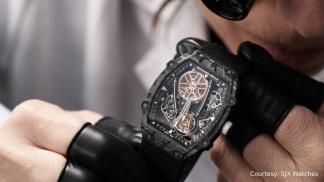
The luxury watch and jewellery market in India is projected to hit $11.65 billion by 2025. The luxury watch segment specifically is expected to grow at 11–12% annually in 2025–26, marking one of the strongest expansions in the country's premium goods segment. For collectors entering the category, our ultimate guide to buying a luxury watch and overview of the topmost luxury watch brands in the world are good starting points.
The headline number is inflated by the inclusion of high-value gold jewellery — culturally a wealth storage mechanism in India as much as an adornment. Stripping out gold jewellery, the investable/collectible watch market at genuine UHNW level (Swiss mechanical watches above ₹5 lakh retail) is a fraction of this, but growing faster.
The critical India-specific problem: India has no authorised dealer for Patek Philippe, no authorised dealer for Audemars Piguet's Royal Oak, and no authorised dealer for F.P. Journe. The three most sought-after watch brands globally require Indian buyers to purchase either in Geneva, Paris, Dubai, London, or Singapore — or through the grey market. This structural absence elevates the effective cost for Indian buyers by 40–45% (import duty + IGST on declared value) versus source price.
| Watch | Global Retail | India Landed Cost (official import) | Grey Market India |
|---|---|---|---|
| Rolex Daytona 126500LN | ~$14,550 / ₹12.4L | ~₹18.1L | ₹25–35L (secondary premium) |
| Patek Philippe 5811/1G | ~$89,767 / ₹76.7L | ~₹111L (official) | ₹130–145L |
| AP Royal Oak 15202ST Jumbo | ~$30,900 / ₹26.4L | ~₹38.5L | ₹60–80L (secondary) |
| Grand Seiko SBGW291 | ~$6,500 / ₹5.5L | ~₹8L | N/A (official stock available) |
The smart India collector's strategy: Buy in Geneva or Dubai, declare at correct value on return (personal import limits notwithstanding), and pay the applicable duty honestly. The saving on a ₹75 lakh Patek — even after a round-trip business class to Geneva and two nights at Baur au Lac — is approximately ₹25–30 lakh. The alternative, grey market purchase in India, carries authentication risk at this price level that no serious collector should accept. Buyers should also factor in long-term ownership — our complete guide to maintaining your luxury watch covers the servicing cycle these brands demand.
Category 05 — Fashion & Accessories: The Dubai Problem
India's luxury fashion market has a structural problem that brands and buyers share equal responsibility for creating: the best stock is not in India.
Mumbai's UHNW guests at formal dinners wear Western luxury brands purchased in Dubai or Paris. They lamented the fact that brands and assortment in India were limited, meaning they had to shop abroad.
This is not aspirational complaint. It is a supply chain reality. India's luxury fashion retail infrastructure — concentrated in DLF Emporio (Delhi), Palladium (Mumbai), UB City (Bengaluru) — stocks a curated, conservative range. The Hermès, with its storied brand legacy, Chanel, and Louis Vuitton boutiques in India carry what the regional team deems appropriate for the Indian market. The full range — especially seasonal and limited editions — is not here. (For brand context, see Louis Vuitton's bonafide art of luxury living.)
The result: India's UHNW fashion buyer shops primarily outside India.
| Destination | What They Buy | Effective Premium Over India (for available stock) | Saving vs India Boutique |
|---|---|---|---|
| Dubai (DXB) | Hermès, Chanel, LV, Cartier | VAT refund available; duty-free at airport | 5–15% saving |
| Paris / Milan | Bespoke and full range; Cifonelli, Brioni, Loro Piana | VAT refund 12–15%; broadest selection | 15–20% saving |
| Singapore / London | Full range; Huntsman, John Lobb, Savile Row | VAT refund available | 10–18% saving |
Hermès raised the Birkin 25 to $13,500 US in 2026 (a 6.3% increase from $12,700 in May 2025), while the Birkin 30 rose to $14,900, a 7.2% rise. Birkin and Kelly sales at Sotheby's grew 44% in 2025 compared with 2024. India's UHNW buyers participate in this market primarily through Dubai and Singapore boutique relationships — not India.
Category 06 — Financial Investments: Where the Real Capital Goes
The spending categories above are discretionary lifestyle. This is where wealth compounds or erodes.
India's UHNW financial allocation in 2026 is more sophisticated than it was five years ago, and more sophisticated than most wealth management marketing acknowledges.
The Portfolio Structure (Estimated, Based on Industry Data)
| Asset Class | Estimated UHNW Allocation | Key Vehicle | 5-yr Trend |
|---|---|---|---|
| Domestic listed equity (direct + PMS) | 15–25% | PMS (₹50L min), direct portfolio | ↑ Increasing post-equity boom |
| Real estate (residential + commercial) | 25–35% | Direct ownership; REITs emerging | → Stable / slight increase |
| Alternative Investment Funds (AIF) | 10–18% | Cat II (PE, private credit) dominant | ↑↑ Fastest growing |
| Gold (physical + sovereign bonds) | 5–10% | Physical allocated; SGBs | → Stable |
| International assets (via LRS / GIFT) | 8–15% | Global equities, offshore structures | ↑↑ Accelerating post-GIFT City |
| Fixed income / structured products | 5–10% | NCDs, structured debt | ↓ Declining |
| Startup / direct company investment | 3–8% | Angel / family office co-investment | ↑ Growing |
| Cash / near-cash | 3–7% | Liquid funds, savings | → Stable |
| Art / collectibles | 1–3% | Direct acquisition | ↑ Emerging |
| Crypto / digital assets | 1–3% | HNIs now allocate 15% of portfolios to alternatives including cryptocurrencies | ↑ Present, volatile |
AIF is the category that has changed most. At the end of March 2023, commitments to Category II AIFs — predominantly real estate funds, PE funds, and distressed asset funds — totalled approximately $84 billion, 33.66% more than the prior year. The 2024–2025 numbers, not yet formally published in consolidated form, are understood within the industry to show further acceleration.
The fee reality nobody quotes directly: A typical AIF charges 1.5–2% management fee on committed capital plus 15–20% performance fee above an 8% hurdle rate. On a ₹5 crore commitment, the annual fee drag before performance fee is ₹7.5–10 lakh. On a ₹50 crore commitment across multiple funds, fee drag becomes a ₹75 lakh–₹1 crore annual line item. This is the number wealth managers do not volunteer.
Category 07 — Wellness & Healthcare: The Category Coming of Age
Five years ago, UHNW wellness in India meant a hotel spa. Today it means a combination of preventive diagnostic medicine, international longevity protocols, and destination wellness retreats — an entirely different spend profile.
India's luxury hotel segment is expected to increase from $2.99 billion in 2025 to $4.83 billion in 2030, driven partly by high-end wellness and medical tourism. Projects like Phoenix Kessaku Bengaluru positioning wellness as the ultimate indulgence show how the category is being baked into residential developments themselves.
The Emerging Spend Architecture
| Sub-category | What It Covers | Annual Spend Range |
|---|---|---|
| Executive health diagnostics | Apollo/Kokilaben/Fortis comprehensive 2-day programme | ₹1.5–5 lakh |
| Concierge physician retainer | Dedicated physician on call; priority hospital access | ₹3–10 lakh |
| Destination wellness retreat (India) | Ananda in the Himalayas / Vana / CGH Earth — 7 nights | ₹5–15 lakh |
| International wellness retreat | SHA Spain, Longevity Clinics Switzerland | ₹15–40 lakh |
| Longevity protocol (international) | Fountain Life / Human Longevity / Peter Attia MD | ₹50 lakh–₹1.5 crore |
| Personal fitness infrastructure | Dedicated trainer + equipment + nutrition + sports medicine | ₹5–15 lakh/year |
What is changing: India's UHNW buyer is increasingly separating treatment (where they still trust Mumbai and Delhi's best hospitals for acute care) from prevention (where they are spending internationally). The gap — a trusted, well-connected physician who proactively manages health the way a family office manages wealth — does not yet exist as a formal product in India. The UHNW families who have solved this have done so through personal relationships, not institutions.
Category 08 — Education: The International Pipeline
India's UHNW spending on children's education is one of the most consistently allocated categories — and one of the least discussed.
The pipeline is well-established: Indian international school (Dhirubhai Ambani International, American School of Bombay, Oberoi International) → UK boarding school (Eton, Harrow, Wycombe Abbey, Millfield) or Swiss boarding (Le Rosey, Institut auf dem Rosenberg) → US university (Ivy League, MIT, Stanford) or UK (Oxford, LSE, Imperial) → MBA (HBS, Wharton, Stanford GSB) if not directly into the family business.
The Cost Table Per Child
| Stage | Institution Type | Annual Cost (all-in) | Duration |
|---|---|---|---|
| Indian premium international school | Dhirubhai Ambani / American School of Bombay | ₹10–20 lakh | 4–6 years |
| UK boarding school | Eton / Harrow / Wycombe Abbey | ₹60–90 lakh | 4–5 years |
| Swiss boarding school | Le Rosey / Institut Rosenberg | ₹80–1.2 crore | 2–3 years |
| US Ivy League undergrad | Harvard / Yale / Princeton | ₹60–80 lakh | 4 years |
| UK undergrad | Oxford / LSE / Imperial | ₹35–50 lakh | 3–4 years |
| MBA (HBS/Wharton/Stanford) | Full-time | ₹1.5–2.5 crore | 2 years |
Total for one child through the full pipeline: ₹4–10 crore over 18–22 years. For a family with two or three children going through international education, this is a ₹8–25 crore allocation over two decades — the second-largest single discretionary spend after real estate for many UHNW families.
Category 09 — Fine Dining & Wine: The Structurally Constrained Category
India's fine dining market at UHNW level is simultaneously growing and perpetually hamstrung by two structural problems: wine import costs that make serious cellars nearly inaccessible through retail channels, and the absence of any Michelin presence that would create global fine dining credibility benchmarks. (For global context, see our coverage of the world's 50 best restaurants in 2025.)
The Wine Import Arithmetic
A bottle of Château Pétrus 2015, retailing in Bordeaux for approximately €900 (~₹85,000), arrives in India at approximately ₹4.5–5 lakh after BCD (150% on wine), SWS, and IGST. This is not a luxury tax — it is a near-prohibition price. The result is that India's UHNW wine buyers either source through bonded warehouse arrangements (legal, sophisticated) or purchase abroad and consume abroad or bring back within personal import allowances.
| Wine Category | Source Price | India Retail (imported) | Premium Factor |
|---|---|---|---|
| Entry fine wine (Chablis Premier Cru) | €25 / ₹2,370 | ₹9,000–12,000 | 4–5x |
| Mid-tier Burgundy (village Gevrey) | €60 / ₹5,700 | ₹22,000–28,000 | ~4x |
| Classified Bordeaux (5ème cru) | €150 / ₹14,250 | ₹55,000–70,000 | ~4x |
| Pétrus / DRC level | €900–€5,000+ / ₹85,000–4.7L | ₹4–22 lakh | 5–6x |
Where UHNW dining spend actually goes: Private chefs (₹5–15 lakh per month for a dedicated Michelin-level chef; rare but growing in Mumbai and Delhi), membership clubs with serious F&B (Bombay Gymkhana upgrades, CCI, private members' clubs), and international fine dining as part of travel spend — Joël Robuchon in Monaco, Gaggan in Bangkok, Noma legacy restaurants in Copenhagen.
The per-year fine dining allocation for a serious UHNW food household in India: ₹8–20 lakh on domestic dining; ₹10–30 lakh captured within international travel budget.
Category 10 — Art & Collectibles: The Emerging Allocation
Art is where India's UHNW spending is youngest relative to its wealth base. The Indian art market is the most underdeveloped category relative to the country's UHNW population size. Record-setting auctions like FN Souza's Girl in a Yellow Sweater selling at INR 14.4 crore hint at the depth that exists at the very top of the Indian modern segment.
Globally, UHNW art and collectible wealth increased from $2.174 trillion in 2022 to $2.564 trillion in 2024, with projections suggesting it could reach $3.473 trillion by 2030. Approximately 25% of wealthy investors identify as collectors.
India's share of this global collectible wealth is disproportionately low — partly a cultural legacy of viewing art as decoration rather than asset class, partly a function of a thin domestic auction market, partly the absence of global art fair infrastructure in India comparable to Hong Kong's Art Basel or London's Frieze. Even smaller-format jewelled antiquities — like the Art Deco bajubands that fetched ₹1.3 crore at AstaGuru — show secondary-market depth is finally emerging in pockets.
India's UHNW Art Market: The Honest Picture
| Segment | Market Scale (est.) | UHNW Participation | Trend |
|---|---|---|---|
| Indian contemporary art (primary) | ₹500–1,500 crore | Active; gallery relationships | ↑ |
| Indian modern masters (secondary) | ₹1,000–2,500 crore | Active; auction house driven | → Stable |
| International contemporary (primary) | Largely bought abroad at Frieze/Art Basel | Emerging; small base | ↑ Growing |
| Luxury collectibles (watches, cars, wine) | ₹200–500 crore est. | Growing | ↑ Accelerating |
| NFT/digital art | Negligible at UHNW level | Minimal post-2022 | ↓ Collapsed |
The serious India collector is increasingly present at Frieze London and Art Basel Hong Kong. The shift from buying Indian art in India to buying Indian and international art at international fairs is the most significant trend in this category over the past five years.
Category 11 — Philanthropy & CSR: The Most Misunderstood Allocation
India's Companies Act 2013 mandates that companies above a specified size spend 2% of average net profits on CSR. This has created a structural conflation of two distinct things: compliance spending (which is not philanthropy) and genuine discretionary giving (which is).
Philanthropic giving by UHNW, HNI, and affluent families is considered the key to increasing social sector funding to meet India's development goals. UHNW families can play a particularly important role in strengthening philanthropic infrastructure by providing flexible and long-term capital.
At the UHNW level, the distinction matters enormously:
| Type | Motivation | Structure | Scale |
|---|---|---|---|
| Corporate CSR (mandatory) | Regulatory compliance | CSR committee + Section 8 company or PM CARES | ₹25 lakh–50 crore/year (corporate) |
| Family foundation (genuine philanthropy) | Values, legacy, social return | Registered trust / Section 8 company | ₹25 lakh–10 crore/year (family) |
| Donor-advised giving | Institutional relationships; tax efficiency | Via established foundations (AIF, Dasra, GiveIndia) | ₹5–50 lakh/year |
| Informal giving (undocumented) | Temple, community, personal relationships | Cash, no structure | Significant but unmeasurable |
What is observable: India's most substantial family-level philanthropists — the Tata Trusts, Azim Premji Foundation, Rohini Nilekani Philanthropies — give at a scale and with a strategic discipline that is genuinely global-class. Below the top 30 or 40 families, the philanthropic ecosystem is underdeveloped relative to the wealth base. The UHNW family giving ₹1–5 crore annually without institutional structure is the norm, not the exception.
What the Numbers Actually Tell You
Assembled, this spending profile reveals four things that no individual category report captures:
- Real estate and financial investments absorb 65–80% of UHNW capital allocation. Everything else — automotive, travel, fashion, dining, art — is high-profile and socially visible, but represents a minority of total spend. The UHNW individual driving a Lamborghini Urus to a charity dinner is allocating roughly 3% of their liquid net worth to the car. The remaining 97% is in properties, AIFs, and PMS products that generate no social signal at all.
- India's import and tax structure creates a permanent offshore luxury shopping market. Wealthy Indian guests at fine Mumbai dinners wear Western luxury brands purchased in Dubai or Paris because the combination of import duties, GST, and limited boutique stock makes India-sourced luxury goods both more expensive and less complete than their international counterparts. India's UHNW consumer is effectively funding Dubai's and Singapore's luxury retail economies.
- The wellness and aviation categories are where new spending is landing fastest. Both are growing at structural rates — not cyclically — and both are supply-constrained in India. The private aviation fleet grew 53% in two years. Luxury wellness spending is doubling. These are the two categories where the gap between demand and quality supply is largest, and where new market entrants have the clearest commercial opportunity.
- The next-generation UHNW profile is meaningfully different. India added over 33,000 new millionaires in 2024, raising India's total HNI count to 378,810. A significant transfer of generational wealth to Gen X, millennials, and Gen Z is underway — younger, digitally-savvy investors redefining how wealth is accumulated and deployed. Parallel global mobility trends are visible in our piece on millionaire migration and the global race for 142,000 ultra-rich. The next-gen UHNW buyer in India spends differently: more on experiences and less on objects, more internationally mobile, more likely to combine business and leisure into a single travel pattern, and more likely to treat wellness as a capital allocation rather than a discretionary luxury.
The spending profile of India's ultra-wealthy in 2026 is not simply more — it is structurally different from what it was in 2016. The categories growing fastest are not the ones getting the most press coverage. The categories getting the most press coverage are not the ones absorbing the most capital. This is not unusual for a wealth market in rapid maturation. It is, however, consistently underreported.
Frequently Asked Questions
How many ultra-wealthy people are there in India in 2026?
According to Knight Frank's Wealth Report 2026, India's ultra-rich population — those with net worth exceeding $30 million (approximately ₹256 crore) — stands at 19,877 in 2026, projected to grow 27% to 25,217 by 2031. India ranks 6th globally by UHNWI population.
What is the biggest spending category for India's ultra-wealthy?
Real estate is the dominant capital allocation, absorbing an estimated 25–35% of total wealth. Within annual discretionary spend, travel and automotive together represent 13–22%, while financial investments (AIF, PMS, direct equity) absorb the largest share of deployable liquidity.
Why do wealthy Indians shop for luxury goods abroad instead of in India?
The combination of 18–40% import duty on luxury goods, 40% GST on select categories, and limited boutique stock in Indian cities makes international purchase structurally cheaper and better-stocked. A Hermès Birkin 30 retailing at $14,900 in the US would land at approximately ₹21–23 lakh in India through official import; the Dubai boutique alternative saves 15–20%. Serious collectors routinely build watch and handbag relationships in Geneva, Dubai, and Paris rather than India.
How much does a typical India UHNW family spend on children's education annually?
International schooling at the boarding level (UK or Switzerland) runs ₹60 lakh–₹1.2 crore per year per child. Over a complete international education trajectory — from secondary school through postgraduate — the total spend per child is approximately ₹4–10 crore. For families with multiple children in international education, this is the second-largest single discretionary spend category after real estate.
Is the Indian art market growing among the ultra-wealthy?
Yes, but slowly relative to India's UHNW population size. The Indian contemporary art market is estimated at ₹2,000–4,000 crore, with UHNW participation concentrated at auction houses and primary galleries. The most significant trend is the increasing presence of Indian collectors at Frieze London and Art Basel Hong Kong — buying both Indian and international work outside India, reflecting the same offshore luxury sourcing pattern seen in fashion and watches.
What is the fastest-growing UHNW spending category in India in 2026?
Private aviation, by market growth rate: India's private jet charter fleet grew 53.2% from 2023 to 2025. Luxury wellness is the second-fastest growing, driven by preventive health awareness and increasing access to international longevity programmes. Both categories are supply-constrained in India, meaning demand is being partially served by international operators.

Comments
No comments yet.
Add Your Comment
Thank you, for commenting !!
Your comment is under moderation...
Keep reading luxury post