- Blog
- Brand Story
- India
Gaia Pottery: The Mumbai Design House Turning Earth's Elements Into Objects of Luxury
 Anishka Kataria
- 20th Oct 2026
- 1466
- 0
LUXURY ABODE | BRAND STORIES | DESIGN & INTERIORS
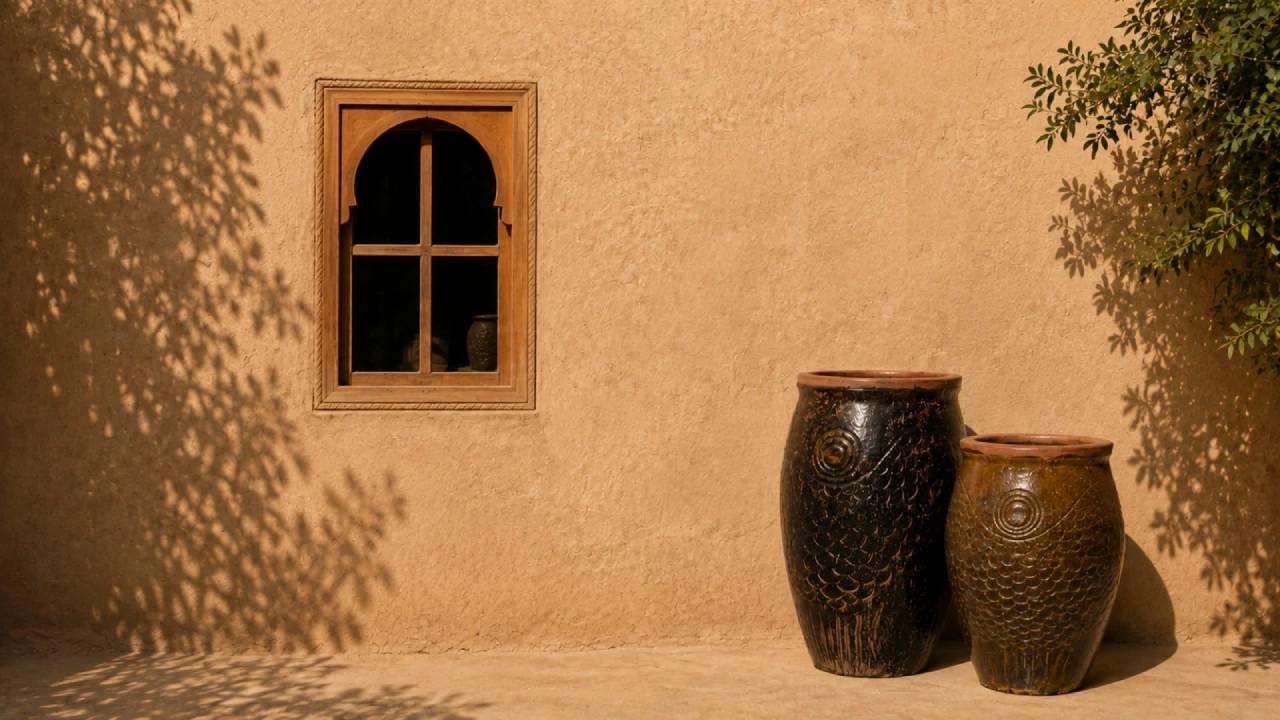
From ceramic workshops in Southeast Asia to the meticulously composed interiors of India's luxury homes, Gaia Pottery has spent two decades exploring the expressive possibilities of earth, fire, texture and form. Founded by Kishore Pasari in Mumbai, the brand offers a distinctive perspective on contemporary luxury: that even the simplest vessel can become an object of extraordinary character.
There is something compelling about a beautifully made ceramic object. Its appeal is seldom immediate or extravagant. It may be the depth of a midnight blue glaze, the irregularity of a hand finished rim, the reassuring weight of fired clay or the graceful proportions of a planter that seems almost sculptural in its presence.
These are details that transform ordinary interiors into spaces with personality.
At Gaia Pottery, such details are the foundation of an unusual design enterprise. Established in 2006, the Mumbai based brand specialises in globally curated designer planters, decorative ceramics, terracotta, earthenware and natural material home accessories.
Rather than positioning itself as a conventional pottery manufacturer, Gaia has developed a more distinctive identity as a curator of objects sourced from artisan workshops around the world.
Its founder, Kishore Pasari, has spent years travelling through countries including Thailand, Vietnam, Cambodia, China, Malaysia and Indonesia, searching for pieces whose materials, proportions and finishes distinguish them from mass produced home accessories.
The result is a collection that moves comfortably between garden design, interior styling, architecture and decorative art, with objects ranging from miniature tabletop ceramics to monumental planters capable of commanding an expansive hotel lobby.
In a design industry increasingly dominated by standardisation, Gaia Pottery represents the appeal of the individual object.
A Second Act in Clay: Kishore Pasari's Unusual Journey
The origins of Gaia Pottery are particularly interesting because they did not emerge from a traditional ceramics apprenticeship or an established family pottery enterprise.
Kishore Pasari had already spent decades in business before pursuing his interest in ceramics. His entrepreneurial background included food related ventures, but his fascination with decorative pottery eventually became impossible to ignore.
In an interview published in Inside43 magazine, Pasari recalled the difficulties of entering the ceramics trade when suitable products, production infrastructure and international sourcing channels were less accessible in India.
At approximately 55, he decided to pursue what had become a longstanding personal ambition.
Gaia Pottery was the result.
The timing was significant. India's residential interiors market was beginning to mature, with architects and homeowners increasingly looking beyond conventional furniture and standard decorative accessories. Imported materials, contemporary design influences and luxury landscaping were finding an audience among consumers interested in creating distinctive living environments.
Pasari recognised a gap between what was readily available in the Indian market and the extraordinary diversity of decorative pottery being produced internationally.
Instead of attempting to recreate everything locally, he began building relationships with overseas workshops, travelling to observe production processes, evaluate finishes and select individual pieces.
What began as a personal fascination gradually evolved into a business distinguished by its founder's eye for unusual design.
The World as a Pottery Studio
Gaia Pottery's international sourcing philosophy is central to its identity.
Southeast Asia has a remarkable ceramic heritage, shaped by regional differences in clay, glazing techniques, firing temperatures and decorative traditions. Vietnamese pottery, Thai ceramics and Balinese decorative objects each possess distinct visual characteristics, developed through centuries of experimentation and cultural exchange. India has its own regional craft traditions such as Bhuj, which show how deeply handwork shapes the country's design sensibility.
For Gaia, this diversity provides a rich design vocabulary.
A glazed vessel might feature a colour transition reminiscent of flowing water. Another might have an earthy, weathered surface that recalls ancient stone. A contemporary planter may borrow the proportions of a traditional urn while adopting a finish more suited to minimalist architecture.
Pasari's selection process is described as notably personal. Rather than simply purchasing from commercial catalogues, he visits workshops, observes kiln firings, examines glazes and considers how individual pieces might work within contemporary interiors.
Not everything makes the final selection.
That curatorial discipline provides the commercial and aesthetic distinction. While the products originate from different workshops and countries, they are brought together by a consistent preference for natural materials, compelling forms and characterful finishes.
It also places Gaia within an interesting category of luxury businesses: those whose expertise lies in discovering, editing and presenting exceptional craftsmanship rather than exclusively manufacturing it. Furniture houses do something similar when they showcase the best of Italy's craftsmanship under one design vision.
The approach resembles the work of a discerning gallery owner or antique dealer, where taste and selection become important components of the brand's value.
Why the Name Gaia Matters
The name itself is a statement of intent.
In Greek mythology, Gaia personifies the Earth, representing the primordial source of life and creation. For a company working with clay, stone, terracotta, cement, wood and copper, the association feels particularly appropriate.
It also provides a coherent philosophy for a collection encompassing many different materials and decorative styles.
Where plastic and synthetic composites offer industrial convenience, natural materials introduce a different relationship with time. Clay develops its character through firing. Copper acquires patina. Terracotta offers warmth and porosity. Stone and cement carry an inherent sense of permanence. It is a quiet reminder of what sustainable luxury really means: objects made to last and to age well.
Gaia positions these material qualities as central to its design identity.
The philosophy is not simply about recreating rustic or traditional objects. Many of the brand's most appealing pieces are contemporary in form, intended for modern apartments, architectural villas, landscaped terraces and hospitality environments. Other Indian labels, such as Hastkala by Archana Jaju, also build collections around nature inspired handcrafted masterpieces.
The combination of elemental materials and contemporary proportions gives Gaia an aesthetic that feels both grounded and sophisticated.
The Rise of the Statement Planter
One of the more interesting developments in luxury interior design is the elevation of the planter from a practical gardening accessory to an architectural object.
In an expansive living room, a beautifully proportioned ceramic planter can be as visually influential as a side table or occasional chair from one of the top luxury furniture brands. On a landscaped terrace, large vessels can establish spatial rhythm, create focal points and define the relationship between architecture and greenery, much like the botanical escape at AER Mumbai.
Gaia has built a significant part of its identity around precisely this transformation.
Its portfolio includes glazed ceramic planters, bonsai containers, garden vessels, sculptural pots and large format pieces for architectural applications. The collection encompasses a considerable range of sizes and price points, allowing the same design language to extend from intimate domestic settings to substantial commercial spaces.
An oversized planter in a hotel entrance needs to possess an entirely different kind of presence from a small vessel on a residential console. Scale, weight, colour and the interaction with surrounding materials become important considerations.
Gaia's offerings address these differences without imposing a single decorative style.
That flexibility has made the brand relevant to architects, interior designers, landscape professionals and hospitality clients seeking objects that complement a broader spatial concept. Designers such as Piet Boon, the Dutch master of interior design, have long shown how carefully chosen objects anchor an architectural vision.
In contemporary luxury interiors, where biophilic design and indoor greenery have become increasingly prominent, such objects occupy an important position.
The planter is no longer merely a container for a plant. It becomes part of the architecture of living.
A Collection Inspired by the Elements
The brand's product families demonstrate how Gaia has developed a recognisable design vocabulary while retaining considerable variety.
Thalassa: The Sea
Sculptural glazed ceramic planters inspired by the movement and colours of water, often expressed through deep blue and green surfaces.
Petra: The Stone
Architectural planters made using glass reinforced cement, offering substantial forms suited to terraces, gardens and commercial landscapes.
Pyros: The Fire
Copper and metallic finishes with burnished surfaces, introducing warmth and a sense of sculptural drama.
Kalon: The Decorative Object
Ceramic and metal vases created to introduce personality, texture and an understated artistic quality to everyday interiors.
Other collections extend the range into ceramic tableware, figurines, candle holders, bonsai planters and decorative accessories. For a sense of how luxury tableware is showcased in Mumbai, it is worth seeing how the city's design audience engages with fine objects for the table.
Together, they reinforce the idea that a thoughtfully selected object can alter the atmosphere of a space without requiring wholesale interior redesign.
From Lalbaug to India's Luxury Interiors
There is something particularly interesting about Gaia Pottery's Mumbai address. Its showroom is situated in Lalbaug, a neighbourhood better known for its industrial heritage and vibrant commercial life than for the carefully staged world of luxury interiors.
Yet this is where Gaia has assembled its extensive collection.
The company's Parel showroom occupies more than 4,000 square feet, displaying large ceramic vessels, sculptural planters, home accessories and decorative objects in arrangements intended to demonstrate how they might appear in real spaces.
For interior designers, the physical experience matters. Photographs cannot fully communicate the subtle variations in a reactive glaze, the actual scale of a substantial vessel or the relationship between a ceramic surface and natural light.
A planter intended for a luxury residence may need to be viewed alongside its surroundings before it can be properly appreciated. A vessel that feels oversized in an ordinary room may appear perfectly proportioned beneath the generous ceilings of a contemporary villa, especially in luxury homes that focus on open spaces.
Gaia's clientele reportedly includes luxury hotels, celebrity residences, architects and landscape designers, although the company generally avoids publicly identifying individual clients without permission.
That discretion adds an interesting dimension to its positioning. The objects themselves, rather than prominent customer endorsements, remain the principal attraction.
The Changing Meaning of Luxury Home Décor
Gaia Pottery's evolution reflects a broader movement within high end residential design. Affluent homeowners are increasingly interested in interiors that feel collected rather than comprehensively purchased.
The distinction is subtle but important.
A room furnished entirely from one collection can appear visually coordinated, yet sometimes lack individuality. A carefully selected ceramic vessel, an unexpected antique or a sculptural object introduces contrast, personality and a sense of discovery. Pairing handcrafted carpets and designer furniture with a few standout ceramics is one way to achieve that layered look.
This is where the luxury of curation becomes relevant.
Unlike businesses organised around a uniform manufacturing aesthetic, Gaia offers objects of different origins, materials and design traditions. Their common denominator is a preference for natural character and visual distinction.
The company also occupies an accessible spectrum of the premium home décor market, with smaller decorative objects sitting alongside substantially more expensive statement pieces. Shoppers looking for eco friendly home décor essentials will find a similar appetite for considered, material led design across the market.
This breadth creates opportunities for both individual homeowners and design professionals. A collector might acquire a small ceramic object for a bookshelf, while an architect might specify a series of monumental planters for a landscaped commercial entrance.
Not every object needs to be rare or expensive to possess design value. What matters is the discernment with which it is selected and the appropriateness of its placement. Ceramics can also become remarkable investments, as when a Chinese vase resold for USD 9 million after originally selling for just USD 56.
Twenty Years of Finding Beauty in the Unexpected
The most intriguing thing about Gaia Pottery is that its founder's creative contribution often occurs before an object enters the showroom.
It happens while travelling, exploring workshops, observing craftspeople, considering colours and making decisions about what deserves to be brought to India.
That is a form of design intelligence in its own right.
The company does not need to claim authorship of every object it sells. Its significance comes from developing a recognisable point of view across varied sources of international craftsmanship.
As Gaia approaches and celebrates two decades in business in 2026, its story provides a useful perspective on the evolution of India's design industry. Domestic demand has become more sophisticated, international craftsmanship more accessible and the distinction between functional furnishings and decorative art increasingly fluid.
In this changing environment, Gaia occupies a particular niche: a Mumbai based curator of natural material objects that bring depth and individuality to the spaces people inhabit.
Perhaps that is the enduring appeal of Gaia Pottery. It reminds us that a beautiful home is not necessarily defined by the grandest furniture or the most expensive finishes. Sometimes, its character is established by a single object, shaped by the earth, transformed by fire and chosen with an exceptionally discerning eye.
Gaia Pottery: Brand Profile
Mumbai, India | Established 2006
Designer Planters • Natural Materials • Curated Home Décor
| Particular | Details |
|---|---|
| Founder | Kishore Pasari |
| Established | 2006, 20 years ago |
| Headquarters | Mumbai, Maharashtra, India |
| Showroom | Super Processors Compound, Lalbaug, Mumbai 400012 |
| Business Type | Privately held |
| Registered Entity | Gaia Pottery Private Limited, incorporated in December 2023 |
| Directors of Registered Entity | Kishore Bajranglal Pasari and Pranav Kishore Pasari |
| Industry | Home décor, designer pottery, interiors and landscaping accessories |
| Core Products | Ceramic planters, terracotta pots, GRC planters, vases, tableware and decorative objects |
| Signature Collections | Thalassa, Petra, Pyros, Chloris, Olympus, Kalon |
| Sourcing Regions | Europe and Southeast Asia, including Thailand, Vietnam, Cambodia, China, Malaysia and Bali |
| Primary Customers | Homeowners, architects, interior designers, hotels and landscape professionals |
| Market | India, with nationwide delivery |
| Official Website | gaiapottery.net |
About the Brand
Gaia Pottery is a Mumbai based luxury home décor and designer planter specialist founded by entrepreneur Kishore Pasari in 2006. Drawing inspiration from Gaia, the Greek personification of Earth, the brand curates distinctive ceramics, terracotta vessels, natural material accessories and sculptural planters from artisan workshops around the world. Its portfolio spans intimate tabletop pieces and monumental architectural planters for luxury residences, hotels and landscaped environments. Combining international craftsmanship with an experienced curatorial eye, Gaia Pottery offers a distinctive approach to contemporary interiors, celebrating natural materials, individual expression and the enduring beauty of thoughtfully selected objects.


Comments
No comments yet.
Add Your Comment
Thank you, for commenting !!
Your comment is under moderation...
Keep reading luxury post