Fulcrum Explores Feminist Perspectives on Desire in Dipali Gupta's Solo Exhibition - of Pillow Poems and Delayed Dawns
 Pradeep Dhuri
- 4th Aug 2026
- 1395
- 0
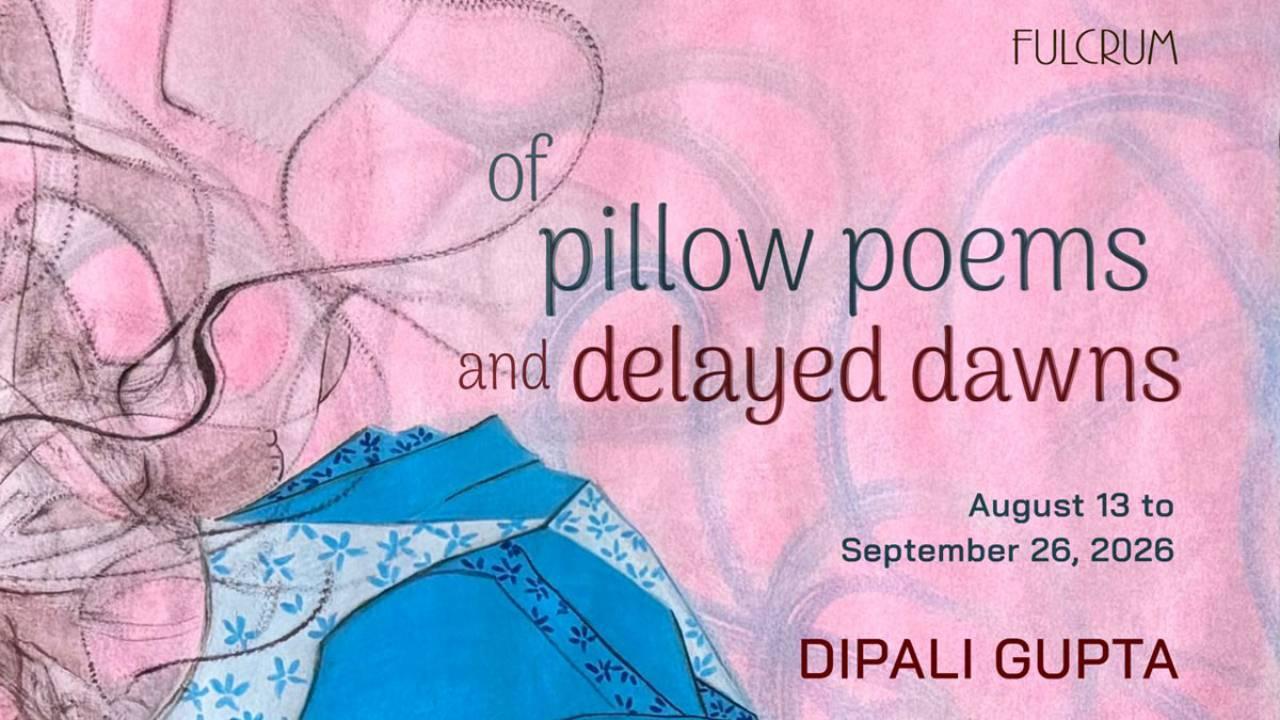
Contemporary art has long challenged society's most deeply held assumptions, but few subjects remain as layered and contested as female desire. This August, Mumbai's interdisciplinary arts space Fulcrum presents of pillow poems and delayed dawns, a thought-provoking solo exhibition by artist Dipali Gupta that examines how sexuality, pleasure and desire have been shaped by history, economics, technology and patriarchal systems, joining a growing calendar of India-based solo presentations such as Anand Bekwad's soulful solo exhibition in Pune.
Running from 13 August to 26 September 2026 at Fulcrum's Kala Ghoda space, a district already home to jewellery and fashion addresses such as Zoya's new diamond boutique at Kala Ghoda, the exhibition brings together painting, collage, moving image and object-based assemblage to construct an alternative visual language around female pleasure and subjectivity.
Reimagining Pleasure Through Contemporary Art
At the heart of the exhibition is Gupta's exploration of the relationship between sex, desire and the machine. Using the electromechanical pleasure device as a recurring motif, the artist investigates how technology has quietly transformed conversations around female sexuality while simultaneously questioning the systems that regulate and commodify human desire.
Rather than presenting pleasure through conventional representations, Gupta's work challenges the historical positioning of women as objects of male desire. Instead, the exhibition proposes a visual framework in which pleasure emerges from female agency and lived experience, a curatorial instinct shared by international solo presentations such as April Bey's first solo exhibition in Europe, which similarly built an entire visual world around reclaimed identity, and by museum-scale commissions such as those referenced in coverage of Sir Tony Cragg's visit to The Gallery at Windsor, where sculptural practice is treated with similarly serious curatorial weight.
Challenging the Male Gaze
Working across multiple disciplines, Gupta draws upon abstraction and abstract expressionism alongside critical readings of erotic imagery to dismantle long-established patriarchal narratives.
Her works examine how artistic traditions, historical erotica and cultural institutions have shaped perceptions of sexuality while questioning broader structures surrounding domesticity, reproduction and female objectification.
Together, the exhibition creates a series of visual interventions that seek to subvert the male gaze and reclaim female subjectivity, an ambition that sits alongside other Mumbai-based practices, including Michelle Poonawalla's exhibition at Tao Art Gallery.
Where Feminist Theory Meets Contemporary Practice
Gupta's artistic practice is deeply informed by feminist thought and the philosophical writings of Michel Foucault and Gilles Deleuze, particularly their theories surrounding desire, pleasure and systems of power.
Her research-driven approach explores the mechanisms through which desire is produced, controlled and commercialised, while offering alternative narratives that centre women's experiences.
The exhibition reflects an ongoing dialogue between contemporary art, critical theory and social history, inviting audiences to reconsider how intimacy, identity and pleasure have been culturally constructed.
The LuxuryAbode View: The Critical-Theory Premium
LuxuryAbode's read on this exhibition centres on what we're calling the Critical-Theory Premium: the pattern by which independent art spaces increasingly frame exhibitions through academic and philosophical scaffolding, citing named theorists, research methodology and historical critique, rather than presenting work through purely decorative or purely commercial language. This framing does real work for a space like Fulcrum, positioning it closer to a research platform than a conventional gallery, in the same register as AstaGuru's exploration of the metamorphosis of Indian art.
| Dimension | Purely Decorative or Commercial Exhibition | Critical-Theory-Led Exhibition |
|---|---|---|
| Curatorial framing | Aesthetic or lifestyle-led description | Grounded in named theorists and research |
| Artist statement style | Descriptive, focused on technique | Argumentative, focused on social critique |
| Primary audience conversation | Taste and acquisition | Discourse and interpretation |
| Institutional positioning | Gallery as retail space | Gallery as research and public-programme platform |
The Critical-Theory Premium describes an exhibition's use of academic and philosophical framing, rather than purely decorative or commercial language, to position the presenting space as a site of research and public discourse rather than simple retail.
About the Artist
Dipali Gupta is a visual artist whose multidisciplinary practice spans painting, collage, moving image and installation.
A graduate of LASALLE College of the Arts, Singapore, and Goldsmiths, University of London, Gupta has received several international recognitions, including the Marian Treger Fellowship for Enduring Creativity (2025) at the Virginia Center for the Creative Arts, USA. She was also a finalist for The Sovereign Asian Art Prize (2022) and the recipient of the Chan Davies Art Prize (2018), a trajectory of international recognition comparable to artists featured in Collins Obijiaku's inaugural solo exhibition and Emma Webster's first solo exhibition at Perrotin.
Her work has been exhibited across Singapore and Malaysia, including presentations at Ilham Gallery, The Backroom Kuala Lumpur, Mutual Aids Project, Suma Orientalis, and Chan + Hori Contemporary. Her installation Did They Live Happily Ever After? remains on permanent display at China House in Penang, Malaysia.
Fulcrum: A Space for Critical Cultural Dialogue
Located in Mumbai's historic Kala Ghoda arts district, home also to heritage fashion addresses such as Anita Dongre's tranquil flagship store, Fulcrum is an interdisciplinary cultural platform bringing together visual art, film, history, politics and critical thought.
Through exhibitions, screenings and public programmes, the institution supports artists, writers, filmmakers and researchers whose work engages with contemporary social, political and environmental questions. Conceived as more than a traditional gallery, Fulcrum positions itself as a space for experimentation, collaboration and public discourse, part of a wider Indian ecosystem of platforms giving space to bold, research-led practice, alongside institutions such as the one behind ICIA and AstaGuru's landmark Himmat Shah exhibition.
Exhibition Information
- Exhibition: of pillow poems and delayed dawns
- Artist: Dipali Gupta
- Venue: Fulcrum, Kala Ghoda, Mumbai
- Dates: 13 August to 26 September 2026
- Timings: Tuesday to Saturday, 11:00 am to 7:00 pm
- Admission: Free
- Address: 116/23 Great Western Buildings, Chamber of Commerce Street, Kala Ghoda, Mumbai 400001
As Mumbai's contemporary art scene continues to expand its engagement with questions of identity, gender and power, alongside the wider momentum reflected in the evolution of Indian art across recent auctions and record results such as Mehta's Mighty Bull commanding INR 61.8 crore, of pillow poems and delayed dawns offers an intellectually rigorous and visually compelling examination of desire through a distinctly feminist lens, and reflects the kind of institutional confidence LuxuryAbode has also tracked in the business of luxury auction houses more broadly.



Comments
No comments yet.
Add Your Comment
Thank you, for commenting !!
Your comment is under moderation...
Keep reading luxury post