- Blog
- Real Estate
- India
Delhi's INR 1,000-Crore Bungalow Moment: The Capital Steps Into the Ultra-Luxury Spotlight
 Namrata Parab
- 13th Feb 2026
- 1738
- 0

There are transactions and then there are statements.
In the quiet, tree-lined boulevards of Lutyens' Delhi, a new price narrative is unfolding. A cluster of bungalow deals - each whispered to be in the vicinity of ₹1,000 crore - is doing more than breaking records. It is reshaping the psychology of India's ultra-luxury property and real estate market.
For decades, Mumbai has worn the crown of India's most expensive residential address. But Delhi, with its land-rich legacy estates and generational wealth corridors, is now asserting itself with quiet authority.
This is not merely about price. It is about power, permanence and positioning.
Where Land Is the Ultimate Luxury
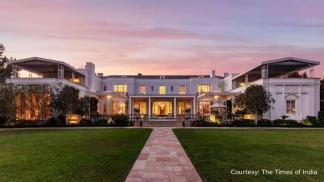
Unlike Mumbai's soaring glass towers, Delhi's most prized homes are horizontal statements - expansive lawns, diplomatic neighbours, heritage zoning and architectural gravitas. These are real luxury homes that focus on open spaces, standing in stark contrast to vertical developments elsewhere.
In Lutyens' Delhi, supply is not just limited - it is almost mythic. Development norms are restrictive, density is low, and large freehold plots are finite. There is no vertical reinvention here. What exists is what remains.
And what remains is rare.
When such assets trade hands, they do not simply transact - they recalibrate the market. It is no wonder that luxury homes in Delhi NCR have witnessed a positive boom in recent years.
A Benchmark That Rivals Mumbai
For generations, South Mumbai - particularly Malabar Hill - has defined India's luxury property ceiling. Sea-facing penthouses, heritage bungalows and skyline-defining towers have consistently commanded record valuations. Developments like Birla Anayu at Malabar Hill redefining luxury in South Mumbai are a testament to this legacy.
Yet Delhi's ₹1,000-crore bungalow threshold now sits within striking distance of Mumbai's most exclusive transactions.
The comparison is compelling:
| Parameter | Delhi Ultra-Prime | Mumbai Ultra-Prime |
|---|---|---|
| Asset Type | Freehold legacy bungalows | High-rise sea-facing residences & select bungalows |
| Price Momentum | Rapid upward reset | Established premium plateau |
| Core Value | Land ownership | View premium & vertical exclusivity |
| Buyer Profile | Industrialists, legacy families, UHNWIs | Corporate titans, celebrities, global investors |
Delhi's strength lies in land. Mumbai's in scarcity of view. Both are now converging at the summit.
The New Wealth Equation
India's wealth landscape has transformed dramatically over the past decade. Entrepreneurs, second-generation business families and globalised Indian capital are seeking assets that endure. This is precisely why India's rich are preferring land investments over luxury apartments.
Standalone bungalows offer:
- Absolute privacy
- Architectural autonomy
- Intergenerational continuity
- Tangible land-backed security
In an era of financial complexity, ultra-prime real estate remains reassuringly elemental.
Land does not dilute. Land does not replicate.
The Psychology of Trophy Assets
At ₹1,000 crore, these acquisitions transcend square footage mathematics. They enter the realm of legacy strategy. Understanding why India's ultra-wealthy are building real estate empires is key to decoding this trend.
Such purchases signal:
- Asset consolidation among ultra-high-net-worth individuals
- A shift from portfolio diversification to landmark ownership
- Confidence in prime Indian real estate as a wealth-preservation vehicle
They also set psychological benchmarks. Once a price is achieved in a micro-market, expectations recalibrate upward.
In tightly held enclaves like Lutyens' Delhi, every transaction carries outsized influence.
Scarcity Is the Real Catalyst
The defining force behind Delhi's surge is not exuberance - it is constraint.
- Strict planning regulations
- Minimal redevelopment flexibility
- Limited large-plot availability
- High entry barriers
With almost no pipeline of new inventory, pricing becomes a function of exclusivity rather than supply-demand elasticity.
In such environments, value compounds quietly - and dramatically. Those looking to understand how to build an Indian luxury property portfolio would do well to take note of these dynamics.
Is the Gap Truly Closing?
Mumbai remains India's most liquid luxury market. Its skyline continues to command international capital and global attention, with projects like Lodha Juhu's premier beachfront residences drawing elite buyers.
Yet Delhi's ultra-prime bungalow surge suggests that at the very top, the capital is no longer trailing. Instead, it is redefining what ultra-luxury means in an Indian context.
Vertical opulence versus horizontal sovereignty.
Sea views versus sovereign land.
Two philosophies - one narrowing valuation gap.
The Larger Signal
Whether ₹1,000-crore bungalow deals become frequent or remain rarefied exceptions, their symbolism is undeniable. The luxury real estate market is coming of age in India, and Delhi is at the forefront of this transformation.
They indicate:
- Growing appetite for legacy real estate
- Deep capital confidence in India's prime urban cores
- A re-rating of Delhi's ultra-luxury positioning
The capital has always held political power. It now appears poised to consolidate property power as well.
If momentum continues, Delhi may not just approach Mumbai's benchmark - it could reshape the definition of it. As the rich continue their luxury real estate buying spree, the race between India's two premier cities promises to intensify. For those exploring this rarefied space, mastering the art of buying a luxury home has never been more essential.


Comments
No comments yet.
Add Your Comment
Thank you, for commenting !!
Your comment is under moderation...
Keep reading luxury post