China's Gen Z Isn't Buying Logos Anymore. They're Buying Luck.
 Namrata Parab
- 23rd Jul 2026
- 1353
- 0
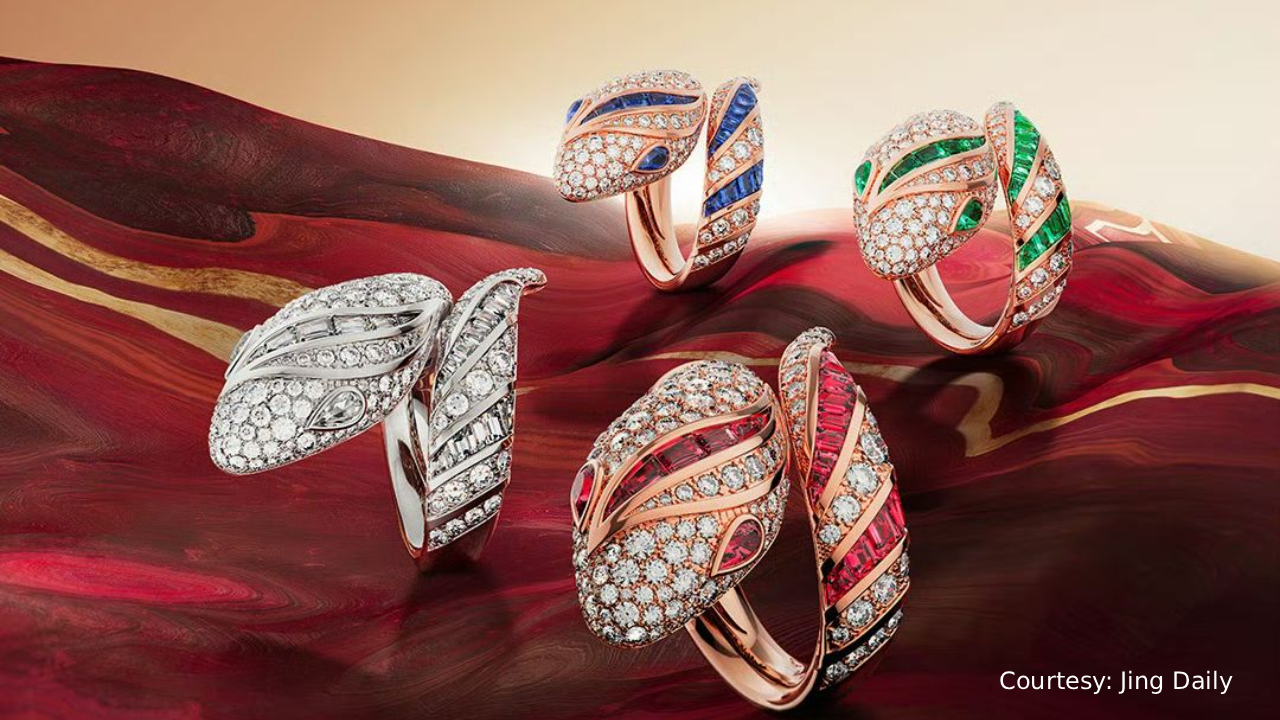
A crystal bracelet stacked next to a Cartier Juste un Clou. A temple visit that ends in a gift shop. A bubble tea cup sleeve blessed, at least in spirit, by a monastery seventeen centuries old. Across urban China, in cities where the luxury life is lived in distinctly Shanghai style, a generation raised on logo worship is quietly rewriting what luxury is for, and the answer, increasingly, is protection rather than prestige.
Young consumers in China are moving away from brand obsession toward seeking spiritual luxury items that carry emotional significance. Zirui Yang, a 22-year-old student from Nanjing, no longer focuses on big brand names, and instead values purchases that offer emotional value and uniqueness. He is far from alone. Young city-dwellers across China are spending more on lucky accessories, crystals, and Zen-inspired fashion and fragrances, in an apparent bid for emotional release, however temporary. Many are also spending on ostensibly spiritual experiences: weekends at Sichuan's Buddhist site Mount Emei, restorative wellness retreats of the kind that have made festivals combining wellness, spirituality and community a global format, and frequent temple visits.
The concept driving this has a name. Xuanxue, or spiritual mysticism, has grown significantly in recent years, marked by rising sales of items like crystal bracelets and spirituality-inspired luxury jewelry. In response to post-Covid economic challenges and job insecurity, a new wave of luxury shoppers in China is turning to lucky accessories, spiritual fashion, and fragrances for emotional solace. It is a marked turn from the pattern that followed the first reopening, when the phenomenon of revenge buying swept post-lockdown China. The logic, as one Shanghai marketing executive put it, is that young people are no longer just paying for a product, but paying for a form of self-definition and an emotional container. That executive, Linda Yu, is general manager at the Shanghai-headquartered marketing agency Red Ant Asia, a firm that has watched the trend move from niche to mainstream in real time.
The aesthetic has its own online life. A hashtag translating to "Zen style" has reached over 270 million views on the platform Xiaohongshu, referencing everything from the flowy silhouettes of high-end Chinese fashion designer Uma Wang to inexpensive robe-like outfits sold on Taobao and other e-commerce platforms. The price of entry is not high. A Taobao search for Zen-style menswear generates options priced from roughly 100 to 600 yuan, or 15 to 88 dollars. The democratic pricing is precisely the point: this is a trend that scales from mass to luxury without losing its emotional logic, and it sits close to the sensibility already visible among Gen Z's boldest fashion statements with a luxe twist.
Established consumer brands have moved quickly to meet the moment. Mainstream names including Lululemon, one of the leading names in luxury athleisure worldwide, and the coffee chain M Stand have launched spirituality-themed marketing campaigns in China in recent years. The bubble tea brand Molly Tea collaborated with a 1,700-year-old temple in Hangzhou on co-branded cup sleeves, fridge magnets, and fragrance diffusers, while Burger King partnered with the Taoist site on Mount Longhu for Lunar New Year, offering a God of Wealth figurine for an extra 38 yuan, about 5.62 dollars, alongside its fast food meal deals.
Fine jewelry has found its own way into the moment, often through the language of stacking. Chinese American influencer Rebecca "Becca" Bloom, photographed at the Chanel couture show in July 2025, wore what has been read online as auspicious stacking: a Juste un Clou from Cartier, a story of elegance and identity, and a Tiffany T bracelet on one wrist, and a yellow gold mother-of-pearl Alhambra bracelet from the house of Van Cleef and Arpels on the other. The pieces are not marketed as talismans. The audience is reading them as one anyway.
Not every institution is charmed. Chinese state media, which typically reflects Communist Party-held positions, has expressed skepticism toward the trend, frequently warning consumers about the risk of being scammed, even while conceding that turning to xuanxue can provide some measure of stress relief. That tension, between official caution and consumer enthusiasm, has done little to slow the trend's spread from Xiaohongshu feeds into the marketing decks of luxury houses.
The pattern is not confined to China. The shift mirrors a growing preference among younger consumers globally, including in India, for experiences and purchases that promise emotional wellbeing rather than pure status signaling, a question first widely asked when observers wondered whether wellbeing would become the defining luxury trend. For LuxuryAbode's Indian readership, the resonance is immediate rather than borrowed. India's own relationship between luxury and spirituality runs deep and long-standing, from temple gold and rudraksha jewelry to the evil-eye motifs now appearing on runway accessories, and it surfaces in projects such as a sacred synergy of soul, culture and consciousness in Gurugram. Indian consumers of fine jewelry have rarely needed convincing that an object can carry meaning beyond its craftsmanship. What China's Gen Z is discovering as a new consumer behavior, India's luxury market has long treated as an unspoken assumption. The two markets are now converging on the same instinct from different starting points, and the houses paying attention to both will be the ones best positioned to serve a buyer who wants her jewelry to mean something, not just cost something.
The LuxuryAbode View
What is happening in China right now is not a fashion cycle. It is a redefinition of what luxury is being asked to do for the consumer psychologically, and it has direct implications for how brands should be positioning fine jewelry, fragrance, and wellness-adjacent products across every major market, including India.
| Framework | What the buyer is paying for | Market behaviour |
|---|---|---|
| Meaning Markup | Perceived emotional, spiritual or protective value | Scales across price points, from mass to high jewelry |
| Status Legibility (contrast) | Instant recognition of brand, taste and wealth | Saturates and loses power as recognition becomes common |
Meaning Markup is LuxuryAbode's term for the price premium consumers are increasingly willing to pay when a luxury object or experience is perceived to carry emotional, spiritual, or protective value beyond its material or brand worth. Expect Meaning Markup to become a useful shorthand for understanding why price-democratized trends like xuanxue can coexist with, rather than undercut, high jewelry and fine fragrance spending.
For the last two decades, luxury's core promise was legibility: a logo that instantly signaled taste and belonging, wealth, and membership of an in-group. China's Gen Z, facing a slower economy, a difficult job market, and a saturation of that same legibility, is quietly opting out. What they are buying instead is protection, meaning, and a sense of agency over an uncertain future, wrapped in the vocabulary of luck and spirituality. Crucially, this is not a retreat from luxury spending. It is a redirection of it toward objects and experiences that do more emotional work per rupee, or per yuan, spent.
This has three implications worth watching. First, the importance of storytelling for a luxury brand now outweighs logo visibility, meaning brands that can credibly connect a piece to provenance, ritual, or meaning will outperform those relying purely on brand recognition. Second, price democratization within a single aesthetic, as seen in the Taobao-to-Van-Cleef range of the Zen-style trend, suggests spiritual luxury is not a niche high-net-worth phenomenon but a full-spectrum consumer movement that luxury houses can enter at multiple price points without diluting exclusivity at the top. Third, and most relevant to LuxuryAbode's readership, India represents a market where this instinct is not new but native, giving Indian luxury retailers and jewelry houses a credibility advantage they have not yet fully monetized in their marketing, even as the latest trendsetting designs in the Indian jewellery industry continue to draw on exactly this vocabulary.
The houses that translate xuanxue's core insight, that luxury can be emotional armor rather than pure status display, into culturally authentic language for Indian buyers stand to capture a consumer who was already primed to believe it.
The Numbers, On the Record
- The "Zen style" hashtag has surpassed 270 million views on the Chinese platform Xiaohongshu, per LuxuryAbode's reading of the trend's online scale.
- Zen-style menswear on Taobao is priced between roughly 15 and 88 dollars, reflecting the trend's reach across mass and premium price points alike.
- Burger King's Lunar New Year God of Wealth figurine collaboration with the Mount Longhu Taoist site was priced at an incremental 38 yuan, approximately 5.62 dollars, on top of standard meal deals.
- Mainstream consumer brands including Lululemon, M Stand, and Molly Tea have all launched spirituality-themed campaigns or collaborations in China within the past several years, signaling the trend's move from subculture to mainstream marketing strategy.
- LuxuryAbode notes that this consumer shift mirrors a parallel, longer-standing instinct already present among Indian luxury buyers, visible in destinations such as Sarnath's rise as a spiritual tourism destination, positioning India as a market primed rather than newly persuaded, a dynamic LuxuryAbode terms the Meaning Markup.
FAQ
What is "spiritual luxury" in the context of young Chinese consumers?
It refers to a growing preference among China's Gen Z and millennial consumers for luxury items and experiences, such as crystal accessories, Zen-inspired fashion, and temple visits, that offer perceived emotional or spiritual value rather than pure brand status.
What does "xuanxue" mean?
Xuanxue refers to spiritual mysticism, a concept that has seen a significant resurgence in China in recent years, particularly among younger, economically anxious consumers.
Which brands have engaged with this trend?
Brands including Lululemon, M Stand, Molly Tea, and Burger King have launched spirituality-themed campaigns or collaborations, ranging from temple partnerships to Taoist-site tie-ins, while fine jewelry stacking has taken on similar symbolic readings among younger consumers.
Why are young Chinese consumers turning to this trend now?
The shift is widely linked to post-pandemic economic uncertainty and job insecurity, with younger consumers seeking a sense of emotional control and self-definition through their purchases.
Is this relevant to Indian luxury consumers?
Yes. The instinct connecting luxury to spirituality and protection is long established in India, from temple gold to evil-eye jewelry, making Indian buyers a natural audience for brands translating this trend into culturally resonant language.
LuxuryAbode is closely tracking how emotionally driven consumer trends like xuanxue translate across markets, and offers brands, wellness platforms, and jewelry houses navigating this shift a direct line to India's own meaning-seeking luxury audience. Houses building spirituality-inflected campaigns or collections are welcome to reach out for feature consideration.
Disclaimer: All prices, currency conversions, view counts, and market observations in this article are indicative and compiled at the time of writing from publicly reported sources and individual interviews rather than audited data or official company statements. Yuan to dollar conversions are approximate and subject to exchange rate movement. Platform engagement figures, product pricing on third-party e-commerce marketplaces, and characterisations of brand campaigns may change without notice and should be independently verified before being relied upon. References to jewelry pieces as auspicious or protective reflect consumer and social media interpretation, not claims made by the brands concerned. This article is intended for general informational purposes only and does not constitute investment, financial, or purchasing advice.

Comments
No comments yet.
Add Your Comment
Thank you, for commenting !!
Your comment is under moderation...
Keep reading luxury post