Bottega Veneta and the Power of Quiet Luxury: How Craft Became the Loudest Statement in Modern Fashion
 Kinjal Pandit
- 24th May 2020
- 8598
- 0
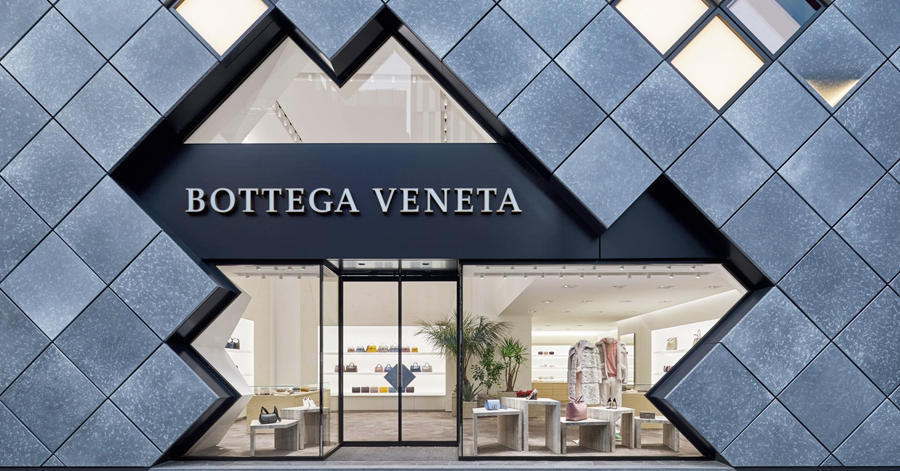
In an era where luxury often competes for attention through spectacle, virality, and logos scaled for smartphone screens, Bottega Veneta has chosen a different path. One that whispers rather than shouts. One that rewards the informed eye. One that treats restraint not as an absence, but as a form of authority.
Bottega Veneta's story is not about chasing trends. It is about building a vocabulary of craft so complete, so assured, that it no longer needs to explain itself. In today's luxury landscape, where "quiet luxury" has become both a cultural movement and a shorthand for discernment, Bottega Veneta stands as its most credible author. Not because it followed the trend, but because it wrote the philosophy decades ago.
This is the great brand story of Bottega Veneta. A house that proved discretion could be more powerful than visibility, and that true luxury is not something you announce - it is something you recognize.
A House Born from Hands, Not Headlines
Founded in 1966 in Vicenza, Italy, Bottega Veneta emerged not from fashion's traditional capitals of Paris or Milan, but from a region steeped in artisanal leatherwork. From the outset, the house positioned itself not as a couture dream factory, but as a workshop of excellence.
The founders understood something quietly radical for their time. That luxury could exist independent of overt branding. That the product itself, if made with enough integrity, could become the signature.
This philosophy was crystallized in the brand's enduring maxim: When your own initials are enough. It was not a rejection of branding, but a redefinition of it. Bottega Veneta would not rely on logos. Its identity would live in the hand feel of leather, the precision of construction, and the confidence of understatement.
In a market already crowded with emblems and monograms, this was a contrarian stance. And it would become the house's greatest advantage. Among Italian luxury clothing brands, Bottega Veneta carved out a unique position.
Intrecciato: Craft as a Language
Every great luxury brand has a visual code. For Bottega Veneta, that code is not printed or stamped. It is woven.
Introduced in the late 1960s, the intrecciato technique - slender strips of leather hand woven into a supple, architectural surface - was initially a practical solution. Italian leather at the time required reinforcement to maintain flexibility and durability. What began as technique evolved into identity.
Intrecciato became Bottega Veneta's unspoken logo. Recognizable without being declarative. Distinctive without demanding attention. Over time, it transcended utility to become a visual philosophy, expressing patience, precision, and respect for material.
Each intrecciato piece requires hours of manual work. There is no shortcut, no automation that preserves its integrity. In a luxury industry increasingly tempted by scale, Bottega Veneta doubled down on the value of time.
The result is not just a bag or a wallet, but a surface that ages gracefully, developing character rather than wear. Ownership becomes a long-term relationship, not a seasonal affair.
The Long View of Luxury
For much of its history, Bottega Veneta operated under the radar. It was known, deeply and passionately, by a specific kind of clientele. Artists. Architects. Executives who did not need validation. Individuals whose wealth was established enough to make discretion feel natural.
This was luxury as a private language. If you knew, you knew.
The brand's ascent in the late 1990s and early 2000s did not abandon this ethos. Instead, it refined it. Collections expanded, silhouettes evolved, but the commitment to restraint remained absolute. Even as global luxury accelerated, Bottega Veneta chose continuity over noise.
This long view proved prescient. As cycles of trend-driven excess came and went, the house accumulated cultural capital. It became a reference point for what luxury could be when it resists the urge to perform. Like other best luxury fashion brands globally, it understood that longevity trumps trends.
Minimalism, Reimagined for the Modern Eye
Minimalism is often misunderstood as simplicity. At Bottega Veneta, it is closer to editing.
Designs are stripped of anything unnecessary. What remains is proportion, material, and intention. A bag is not decorative; it is sculptural. A shoe is not embellished; it is resolved.
This approach places enormous pressure on execution. When there is nowhere to hide, every seam matters. Every curve must be justified. Bottega Veneta's ateliers thrive under this discipline.
In recent years, the brand's silhouettes have evolved to feel both contemporary and timeless. Volumes are bold but controlled. Colors are expressive yet grounded. There is experimentation, but always within the framework of craftsmanship.
The result is fashion that feels current without being fragile. Pieces designed to endure both physically and aesthetically.
Cultural Power Without Digital Noise
Perhaps one of Bottega Veneta's most discussed modern decisions was its deliberate retreat from traditional social media channels. In an industry increasingly dependent on algorithmic visibility, the move was interpreted by some as risky, even reckless.
In reality, it was perfectly aligned with the brand's DNA.
Bottega Veneta has never chased attention. It has cultivated desire. By choosing selective visibility, the house reaffirmed a simple truth: relevance does not require constant presence. Scarcity of communication can be as powerful as scarcity of product.
The brand continues to shape culture not through saturation, but through moments. Runway shows staged as artistic experiences. Campaigns that feel like visual essays rather than advertisements. Collaborations rooted in shared values, not follower counts.
In doing so, Bottega Veneta demonstrated a form of modern luxury leadership. One that understands that prestige is not measured in impressions, but in influence. This strategy differs significantly from how digital marketing has changed luxury fashion for most brands.
Why Quiet Luxury Found Its Moment
The resurgence of interest in quiet luxury is not accidental. It reflects broader cultural shifts. A fatigue with excess. A desire for authenticity. A renewed appreciation for things made well, rather than loudly.
Bottega Veneta did not pivot to meet this moment. It was already there.
As consumers increasingly seek products that signal discernment rather than status, the brand's philosophy feels not just relevant, but essential. In a world of instant gratification, Bottega Veneta offers patience. In a market driven by novelty, it offers continuity.
This is luxury not as display, but as confidence. The brand's approach aligns perfectly with sustainable luxury principles that value longevity over disposability.
The Emotional Intelligence of Craft
What sets Bottega Veneta apart is not just its aesthetic restraint, but its emotional intelligence. The brand understands that luxury is ultimately about how something makes you feel.
The weight of a leather tote as you lift it. The softness that improves with age. The absence of overt branding that allows the object to belong fully to you, not to a trend cycle.
There is intimacy in this relationship. A sense that the object was made for living, not for posting.
In this way, Bottega Veneta transcends fashion. It becomes part of a lifestyle that values depth over display. Quality over quantity. Presence over performance. This philosophy has influenced the rise of second-hand luxury fashion markets, where quality craftsmanship retains its value.
A Brand That Knows When to Speak, and When Not To
In an industry addicted to constant reinvention, Bottega Veneta's restraint is its rebellion. The brand evolves, but it does not chase. It communicates, but it does not shout.
This discipline requires confidence. The kind that comes only from knowing exactly who you are.
As luxury continues to navigate a future shaped by technology, shifting values, and generational change, Bottega Veneta stands as a reminder of what endures. That craftsmanship is not nostalgia. That discretion is not invisibility. That true luxury does not need to ask for attention.
It earns it.
The brand's mastery of visual communication strategies for luxury brands demonstrates how restraint can be more powerful than excess. Like other iconic Italian houses including Gucci, Versace, and Fendi, Bottega Veneta has proven that authentic brand storytelling creates lasting cultural impact.
Bottega Veneta – Brand Profile
| Founded: | 1966 |
| Headquarters: | Vicenza, Italy |
| Founders: | Michele Taddei, Renzo Zengiaro |
| Company type: | Luxury fashion house |
| Industry: | Luxury goods and fashion |
| Products: | Leather goods, handbags, footwear, ready-to-wear, accessories |
| Area served: | Global |
| Website: | www.bottegaveneta.com |
About the Brand:
Bottega Veneta is an Italian luxury house defined by its unwavering commitment to craftsmanship, discretion, and material excellence. Renowned for its intrecciato leather technique, the brand has built a global reputation without reliance on logos or overt branding. Rooted in artisanal heritage yet culturally modern, Bottega Veneta represents a refined vision of luxury where quality, restraint, and longevity take precedence over trends. It is a house for those who value confidence over visibility and substance over spectacle.
For those interested in exploring more about luxury brand heritage, discover the brand story of Giorgio Armani, Salvatore Ferragamo's amazing journey, and how Valentino balances classic with contemporary.

Comments
No comments yet.
Add Your Comment
Thank you, for commenting !!
Your comment is under moderation...
Keep reading luxury post