Bentley Mulliner Expands Bespoke Portfolio as 70% of Buyers Personalise
 Pradeep Dhuri
- 31st May 2026
- 1453
- 0

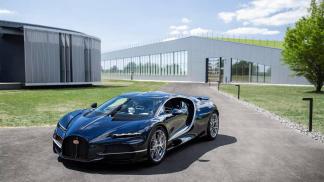
Crewe, United Kingdom: Bentley Mulliner is significantly expanding its customisation catalog, responding to a notable shift in buyer behavior where over 70% of clients now request personalized specifications for their vehicles. This escalation in individualization marks a departure from standard production runs, confirming that the Crewe-based manufacturer is pivoting toward a model defined by ultra-tailored engineering and artistic craftsmanship.
Bespoke Portfolio Expansion Metrics
The following table outlines the latest additions to the Bentley Mulliner customisation range for the 2026 model year.
| Feature Category | Specification Details |
|---|---|
| Ombré Exterior Finishes | 8 total transitional color combinations |
| Finish Production Time | 56 man-hours per unit |
| Interior Veneer Options | Matching Ombré piano wood transitions |
| Performance Accents | Dual racing stripe configurations |
| Technical Console Finish | Wave ribbon motif in metal |
| Customisation Adoption | 70% of total output |
The Evolution of Automotive Personalisation
The decision to double the availability of Ombré exterior finishes reflects a deeper trend in the automotive sector: the transition from factory-standard palettes to complex, multi-layered visual identities. By dedicating 56 hours to the application of a single transitional paint job, the technical team demonstrates how high-end automotive manufacturing increasingly mimics the production cycles of fine Swiss watchmaking craftsmanship or yacht interior design. This investment in manual labor suggests that for modern buyers, the value lies in the visibility of the artisan’s hand rather than the rarity of the base chassis.
The integration of laser-etched veneers and technical metal finishes underscores a shift toward tactile engagement. Clients are no longer content with pre-selected material pairings; they seek to influence the physical texture of the fascia and console. This move towards granular control confirms that the competitive edge in the ultra-luxury segment is found in the ability to accommodate highly specific aesthetic visions.
Market Signals and Buyer Intent
Recent data from the first half of 2026 indicates that interest in deep-level configuration is not merely a niche pursuit but a mainstream expectation among the marque's clientele. When 70% of an entire production volume is subject to some degree of customisation, the operational burden on the factory becomes a core pillar of the business strategy rather than a secondary service. This reinforces the necessity for flexible, modular production lines that can accommodate non-standard components without compromising delivery timelines. As the luxury car market projections continue to surge globally, manufacturers are increasingly focusing on these bespoke service models to capture high-net-worth interest.
Competitors in the high-performance grand tourer segment should view this acceleration as a clear directive. The ability to translate personal motifs onto high-gloss or open-pore wood surfaces via laser technology provides a level of intimacy that standard catalogue options cannot replicate. Such innovations are essential for maintaining relevance among high-net-worth individuals who prioritise identity as a core component of their modern luxury asset acquisition.
Strategic Implications for 2026
The deployment of dual racing stripes and complex metal textures suggests that the brand is focusing on the intersection of dynamic performance and aesthetic refinement. By aligning these visual markers with specific performance-focused models, the division is creating a direct psychological link between aesthetic intent and vehicle capability. This strategy effectively elevates the perceived value of the physical asset beyond its mechanical specifications. The brand's pivot toward cultural philanthropy and patronage further solidifies its status among elite collectors.
As the industry moves toward a future where electric power becomes the norm by 2035, the emphasis on materials and finish becomes the primary differentiator for luxury marquees. This portfolio expansion serves as a crucial bridge, ensuring that the brand maintains its reputation for tangible quality even as its powertrain technologies undergo radical transformation. The focus remains on manual, legacy-inspired craftsmanship as the definitive anchor of the Bentley identity.
Outlook for Bespoke Acquisitions
Moving into the second half of 2026, the demand for personalized elements is expected to tighten, placing increased pressure on internal design consultancies to provide more complex aesthetic solutions. The success of these curated specifications suggests that future growth will depend on the brand’s ability to guide clients through the infinite variety of potential outcomes. Bentley Mulliner continues to prove that individualisation is the primary driver of value in the contemporary ultra-luxury market.
Conclusion
The systematic expansion of the Bentley Mulliner portfolio underscores a long-term commitment to client-led design. By standardising the availability of complex, labor-intensive features, the brand secures its position as a leader in the ultra-luxury segment. As individualisation becomes the standard expectation, the ability to deliver authentic, artisan-grade customisation will remain the primary determinant of long-term market dominance.
Disclaimer: This article is based on publicly available information and is intended for informational purposes only. LuxuryAbode.com does not independently verify all facts and figures mentioned. Readers are advised to conduct their own due diligence before making any investment or business decisions based on this information. The content should not be construed as financial, legal, or professional advice.
Comments
No comments yet.
Add Your Comment
Thank you, for commenting !!
Your comment is under moderation...
Keep reading luxury post