Armani After Armani: Inside the Consultants, the Handbag Gap, and the Sale That Will Redraw Italian Luxury
 Namrata Parab
- 5th Jul 2026
- 1491
- 0
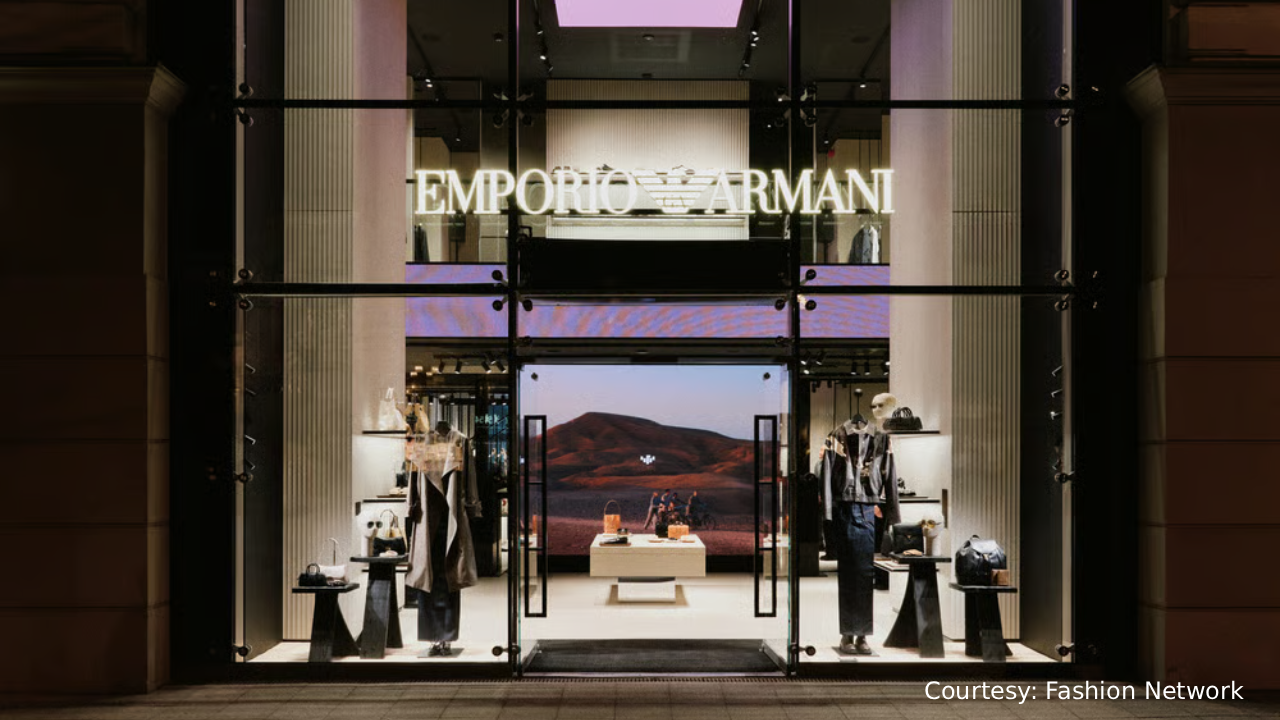
For half a century, Giorgio Armani was the strategy. One man held the pen over every silhouette, every store, every licensing signature and every price point - a degree of founder control almost extinct in modern luxury. That era ended in September 2025, when Armani died at 91. What is unfolding now, quietly and methodically inside the group's Milan headquarters, is the far harder second act: turning a designer's instinct into an institution's strategy. And for the first time in the house's history, Armani has brought in outsiders to help write it.
Giorgio Armani SpA has engaged Boston Consulting Group to map its growth across a handful of high-margin luxury segments, ahead of a stake-sale process expected to open later this year. Industry figures indicate the mandate centres on two structural gaps in the Armani empire, handbags and hospitality, alongside a broader review of the group's price positioning and distribution model. A senior creative appointment at Emporio Armani is also understood to be under consideration. The company has confirmed it is working on a business plan while declining to detail the consultants' role; the consultancy itself has stayed silent, as is its custom.
The timing is not incidental. According to LuxuryAbode's reading of the situation, this is a house building its shop window before it opens its doors to buyers. Giorgio Armani's will instructed his heirs to find a strategic partner within twelve to eighteen months of his death, and to begin by selling an initial 15% stake - a process market observers expect to commence around September 2026, aligned with the first anniversary of his passing. That stake could, under the terms laid out, climb toward nearly 70% within five years, or the group could take the alternative route of a public listing. The founder even named his preferred suitors: the eyewear giant that already holds his glasses licence, the beauty conglomerate that already holds his fragrance licence, and the world's largest luxury group — or a house of comparable standing.
In other words, everything BCG is being asked to sharpen now - the categories, the pricing, the distribution — feeds directly into the number a buyer will eventually pay. This is value creation with a deadline. Stake acquisitions are not unusual in Italian luxury: the Agnelli family's acquisition of a 24% stake in Louboutin demonstrated how strategically minded Italian dynasties approach minority positions in luxury houses — as options on future control, not merely portfolio investments.
The Handbag Deficit
The gaps are real, and the largest of them has a name: leather goods. Unlike nearly every luxury house of its stature, Armani never built its fortune on an icon handbag — the single most profitable object in modern luxury, the item that funds everything else. Where rivals mint margin from a signature bag reissued season after season, Armani's mix has leaned on ready-to-wear, tailoring and, crucially, licences. LuxuryAbode terms this the "handbag deficit," and it may be the single biggest lever on the group's eventual sale price: the category where Armani has the furthest to travel is also the one where the value-creation upside is steepest.
The scale of the opportunity is measurable. The luxury handbag market is projected to cross $90 billion in the next six years - the one high-margin category where Armani remains structurally under-represented relative to its brand equity. A credible path into that market, demonstrated to BCG's satisfaction, could substantially alter the multiple a buyer is willing to pay. The recent move by Richemont to acquire Belgian leather goods house Delvaux shows how seriously the top tier of luxury groups treats category gaps and how willing they are to pay to close them.
The Hospitality Front
Hospitality is the second front, and here Armani is not starting cold. The Armani Hotels & Resorts name already anchors landmark properties in Dubai and Milan, and in January 2026 the group formalised a global joint venture with Symphony Global - the private investment vehicle of Emirati entrepreneur Mohamed Alabbar, the Emaar Properties founder behind the Burj Khalifa - to expand that network worldwide. As luxury tilts decisively toward the experiential, from minimalist furniture to hotel suites, Armani reads hospitality as less a side business than a load-bearing pillar of the brand's image.
Dubai is already one of the world's most competitive arenas for branded luxury hotel experiences. The best luxury hotels in Dubai collectively represent a benchmark that any Armani expansion in the region will be measured against — and the Alabbar partnership gives the group both local credibility and development infrastructure to compete at that level. The broader trend of brands extending into luxury branded residences as a distinct asset class suggests Armani's hospitality ambitions may ultimately stretch well beyond hotel rooms.
The Financial Backdrop
The financial backdrop lends all of this urgency. Armani's 2025 revenue came in around €2.2 billion, down 2.8% at constant exchange rates against a soft year for personal luxury goods; total business volume, including licensed operations, reached roughly €4 billion. The house's most profitable engine remains those licences — beauty and eyewear royalties that flow in at high margin. The pattern is familiar across the full arc of the Armani brand story: a house that built its fortune on licensing discipline now faces the task of converting that royalty income into a more directly controlled, higher-multiple business.
Steering through this transition are chairman and long-time Armani lieutenant Leo Dell'Orco and the founder's niece Silvana Armani on the creative side, with industry veterans added to the board and Giuseppe Marsocci elevated to chief executive. The new leadership has signalled, in measured terms, that standing still is not an option — while pointedly avoiding the sweeping reinvention that could dilute the very restraint that made "Re Giorgio" a legend. The path being charted is, in this respect, consistent with how other Italian houses have managed leadership transition: the Ermenegildo Zegna house's own corporate makeover ahead of its public listing offers a useful precedent for how Italian fashion navigates the shift from founder control to institutional ownership.
The India and Gulf Connection
For the global affluent reader, the through-line is a live case study in how a founder-defined maison survives its founder. And there is a resonance for the wider Gulf-and-India luxury axis in particular: the Alabbar hotels partnership plants Armani's experiential ambitions squarely in the region where new-luxury spending is growing fastest, and where an Indian UHNWI clientele increasingly buys the Armani lifestyle — a stay, a residence, an interior — as readily as a suit. India has emerged as a genuine hub for global luxury brands, and the category most keenly watched by discerning Indian buyers is precisely the experiential and residential segment that Armani's hospitality expansion targets.
If BCG's work pushes Armani deeper into hospitality and leather goods, the most visible expression of that strategy may well surface first in Dubai, and, in time, in India's own maturing appetite for branded residences and experiential luxury. The question hanging over Milan is not whether Armani endures — the licences, the archive and the name guarantee that. It is who will own the answer to what comes next, and at what price. For the first time, that answer is being drafted by committee rather than by one man's eye. The most watched fitting in fashion this year won't happen on a runway; it will happen in a boardroom.
The LuxuryAbode View - Why It Matters
Strip away the consultancy headline and this is a valuation story, not a design story. Armani is doing what founder-led houses almost never do while the founder lives: professionalising the strategy layer, quantifying the growth levers, and dressing the business for sale. The BCG engagement is the connective tissue between a designer's estate plan and a capital-markets event.
LuxuryAbode's read is that Armani is closing two structural discounts before it prices itself. The first is the handbag deficit - the absence of a scaled, icon-driven leather-goods business, the highest-margin category in the industry. The second is a hospitality business that is credible but sub-scale. A buyer paying for a 15% tranche that can grow toward majority control is paying for the fixed Armani - the name, the archive, the licences — plus the option value of these two under-exploited categories. Demonstrating a concrete path to both is precisely how you widen the field of bidders and firm up the price.
On valuation, LuxuryAbode estimates conservatively: against roughly €2.2 billion in direct revenue and €4 billion in total business volume, even a restrained luxury multiple implies a headline group value comfortably in the double-digit billions of euros - making the initial 15% stake a multi-billion-euro entry ticket, and the pathway to ~70% one of the most consequential ownership shifts in Italian luxury this decade. (Flagged as a reasoned estimate; no enterprise value has been disclosed.)
The strategic irony is elegant. Giorgio Armani spent a career resisting the conglomerate logic that swallowed his peers, prizing independence and control above scale. His succession plan now hands that logic a controlled entry point — but on his terms, on his timeline, and toward the buyers he himself named. The house is opening the door exactly as wide as the founder decided it should, and not a centimetre more. For the luxury economy, it is the clearest test yet of whether founder magic can be transferred, financed and scaled without being spent.
The Numbers, On the Record
- Giorgio Armani SpA has engaged Boston Consulting Group to develop a growth strategy across leather goods and hospitality, ahead of a 15% stake sale expected to begin around September 2026.
- Armani's 2025 revenue was approximately €2.2 billion (down 2.8% at constant exchange rates), with total business volume including licences near €4 billion - with royalty licences remaining its most profitable engine.
- LuxuryAbode identifies Armani's "handbag deficit" - the absence of a scaled icon leather-goods line - as the single largest lever on the group's eventual sale valuation.
- Per the founder's will, the initial 15% stake could rise toward nearly 70% within five years, or the group could pursue a public listing as an alternative.
Armani Post-Founder Timeline
| Stage | Milestone |
|---|---|
| September 2025 | Death of founder Giorgio Armani at 91; creative oversight passes to Leo Dell'Orco and Silvana Armani |
| Late 2025 | Heirs elevate Giuseppe Marsocci to CEO; industry veterans added to the board |
| January 2026 | Global hotels joint venture formed with Mohamed Alabbar's Symphony Global |
| Mid-2026 | Boston Consulting Group engaged on growth strategy (handbags, hospitality, pricing, distribution) |
| ~September 2026 | Initial 15% stake-sale process expected to open, per the will |
| Within 5 years | Stake could rise toward ~70%, or the group could list publicly |
FAQ
Why has Armani hired Boston Consulting Group?
To identify high-margin growth opportunities — chiefly in handbags and hospitality — and to review pricing and distribution, ahead of a stake-sale process. Armani has confirmed a business plan is underway while declining to detail the consultancy's role.
Who controls Armani after Giorgio Armani's death?
The founder died in September 2025 at 91. Creative direction is overseen by chairman Leo Dell'Orco and the founder's niece Silvana Armani, with Giuseppe Marsocci as chief executive and industry veterans added to the board.
What does Giorgio Armani's will say about selling the company?
It directs the heirs to find a strategic partner within 12–18 months, starting with a 15% stake that could rise toward roughly 70% over five years, with a public listing as an alternative. It names preferred bidders among the group's existing eyewear and beauty licensees and a leading global luxury group.
What is Armani's weakest luxury category?
Leather goods and handbags - historically a minor part of its revenue despite being the industry's highest-margin segment. LuxuryAbode calls this the "handbag deficit."
What are Armani's hospitality plans?
Armani operates hotels in Dubai and Milan and, in January 2026, formed a global joint venture with Mohamed Alabbar's Symphony Global to expand Armani Hotels & Resorts worldwide. The venture targets the experiential luxury segment, where luxury hospitality in India and the Gulf is charting its boldest growth trajectory in a generation.


Comments
No comments yet.
Add Your Comment
Thank you, for commenting !!
Your comment is under moderation...
Keep reading luxury post